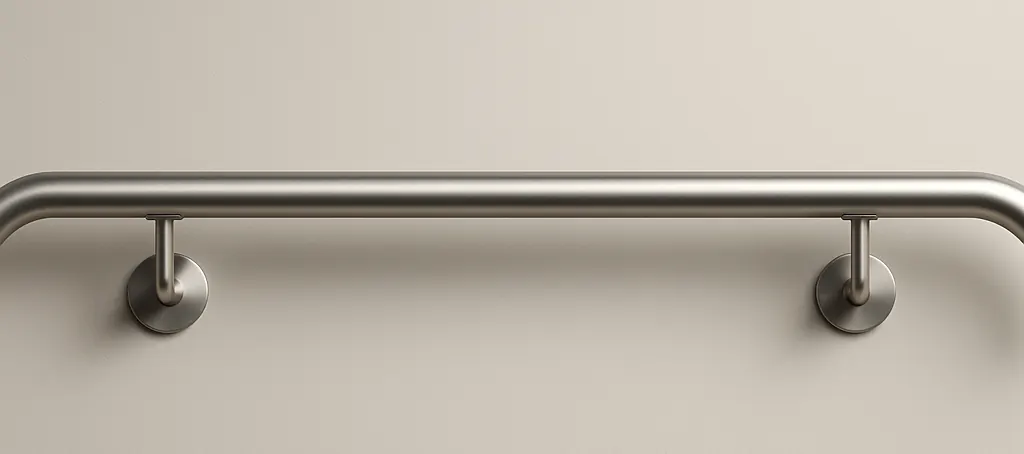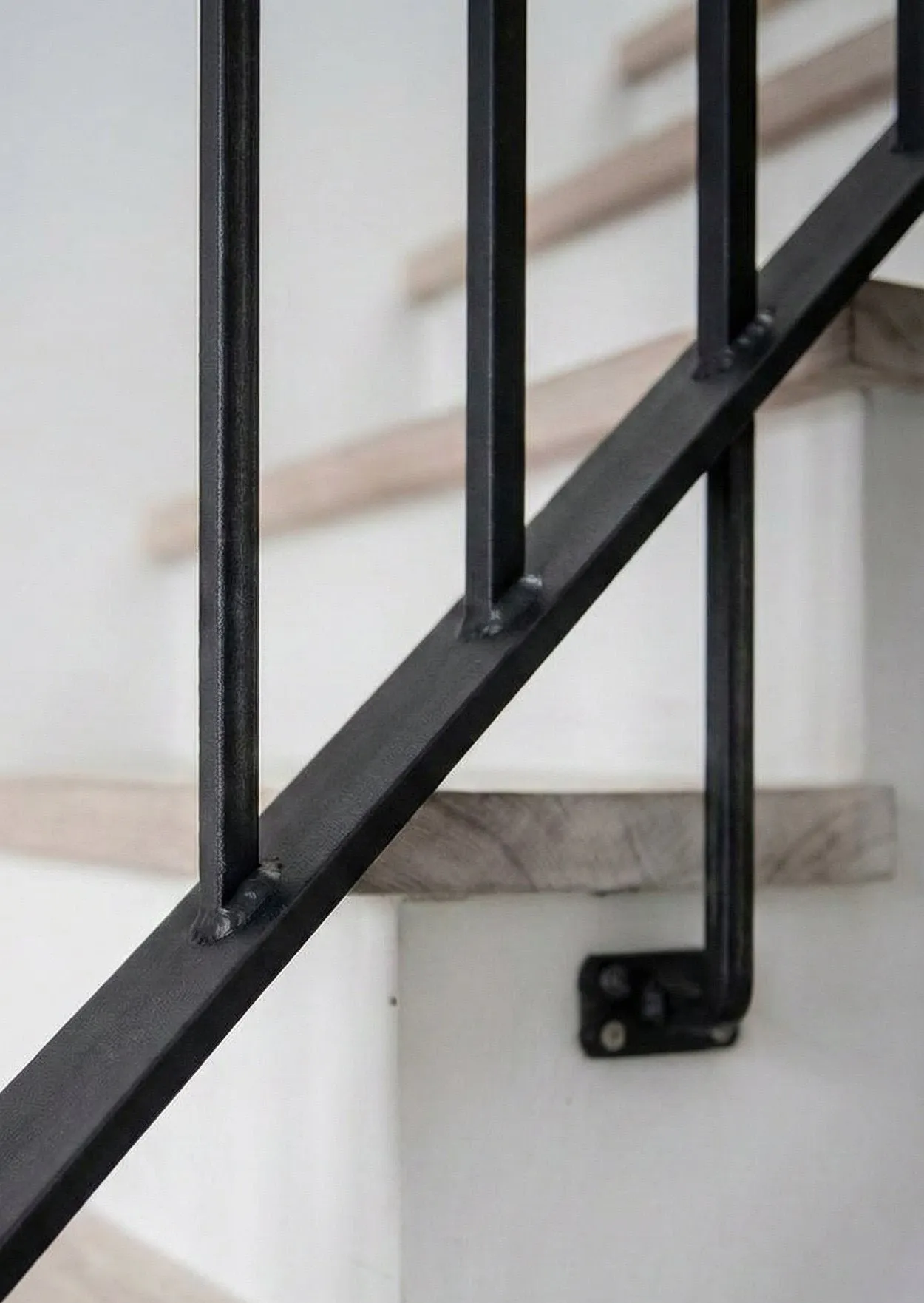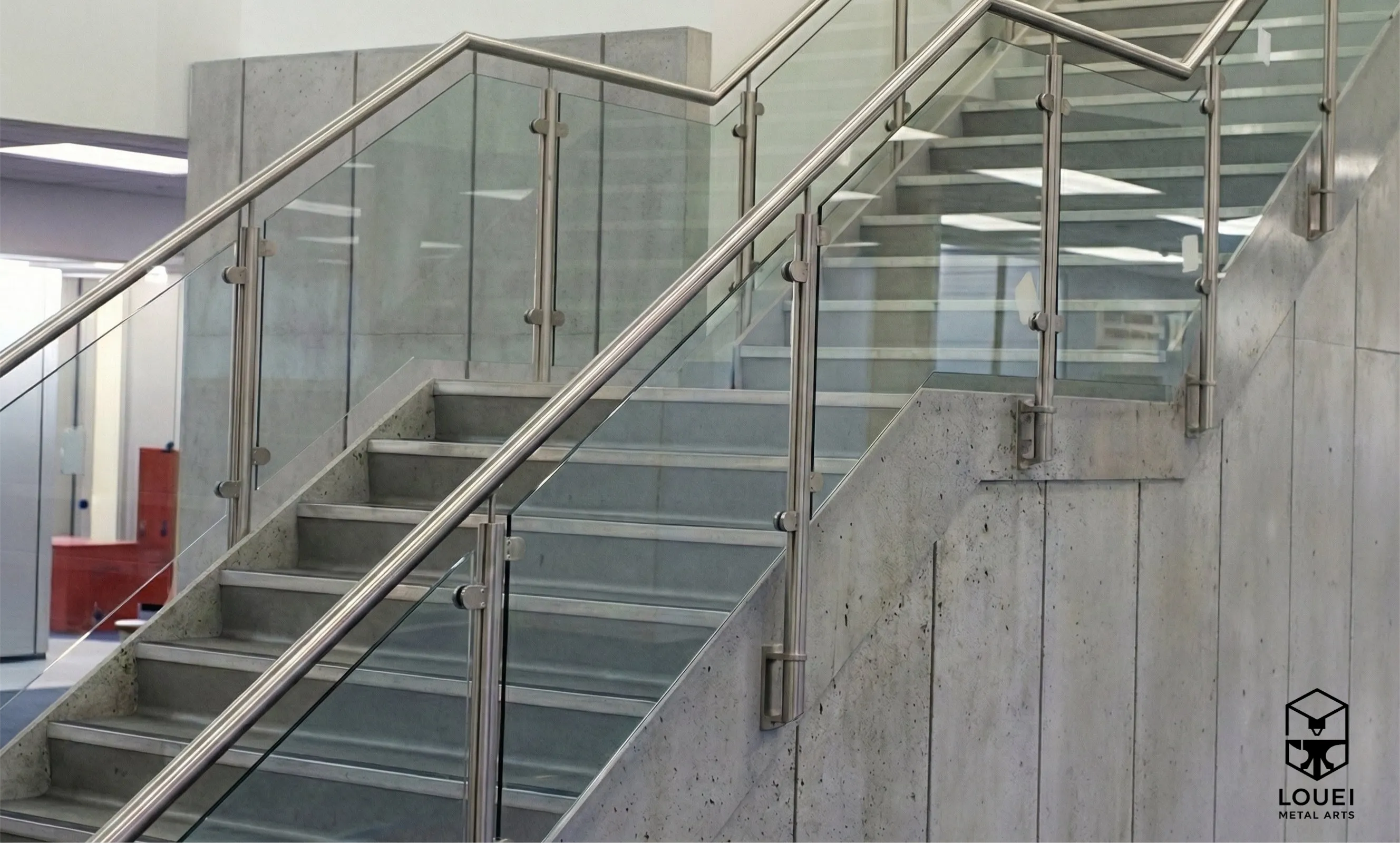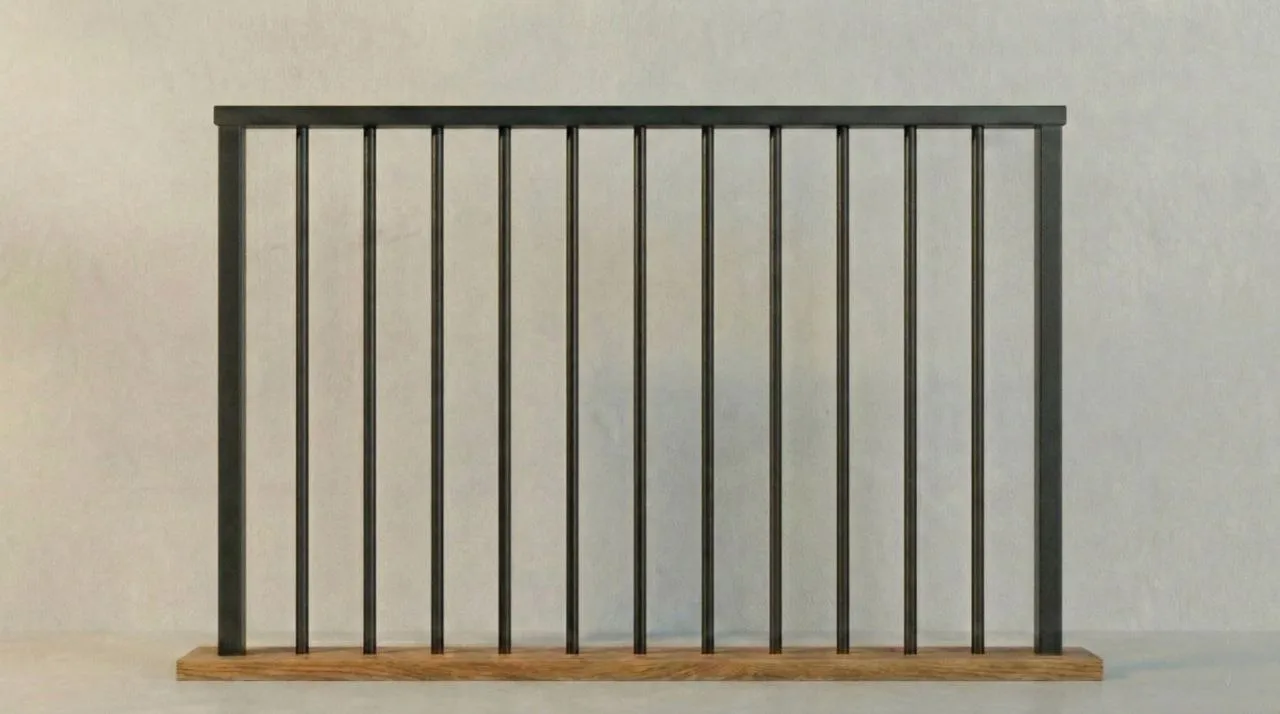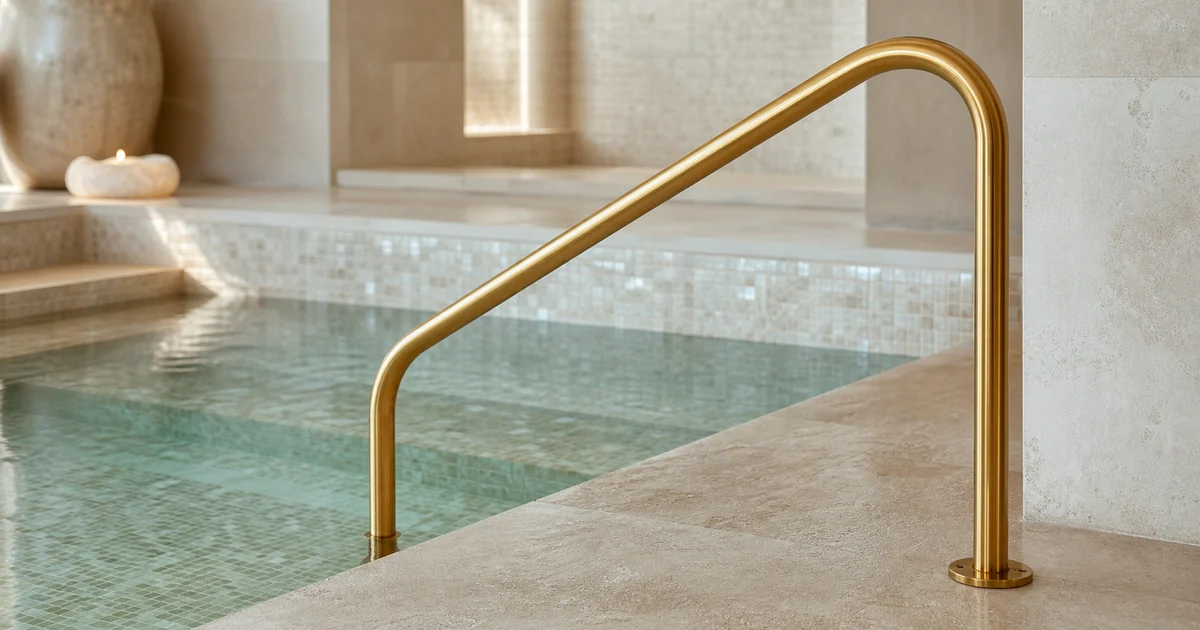
A handrail beside water has two jobs: look right for the space, and survive the water that quietly destroys most metals.
Wet all the time
Pools, spas, and ritual baths combine moisture, chlorine or salt, and constant humidity.
Choosing by colour
A finish can look perfect on install day, then stain, pit, or rust if the substrate is wrong.
What survives?
Base metal, surface prep, coating system, hardware, and anchoring have to work together.
This guide is the fabricator's view: which material actually survives the water, how custom colours work in wet spaces, and how to specify a wet-area custom handrail without guessing.
Disclaimer: This is general guidance, not a specification for your project. Material, finish, coating system, anchoring, and code requirements should be chosen for your exact environment. For general guard and handrail code basics, see our BC railing code guide.
If you only read one part
316 stainless first
For pools, spas, and ritual baths, the base metal matters more than the colour. Start with 316 stainless.
Gold is only one option
Black, bronze, white, pearl, champagne, gold, and project-specific colours can all be considered as part of a proper finish system.
Plain steel near water
Regular powder-coated steel can look perfect at install, then fail from one deep scratch in a wet chlorinated space.
Pool Handrail Materials at a Glance
| Material | In a wet / chlorinated environment |
|---|---|
| Regular steel + powder coat | Not recommended — one deep scratch can start corrosion underneath |
| Aluminum | Naturally rust-resistant, but may not fit every strength/detailing requirement |
| Solid brass | Naturally gold and beautiful, but a premium specialty material |
| 304 stainless steel | Better than regular steel, but not the preferred choice for chloride-heavy wet areas |
| 316 stainless steel | The reliable base — molybdenum improves resistance to chloride pitting and crevice corrosion |
| Custom colour finish in a wet area | Gold, black, bronze, pearl, white, champagne, and project-specific colours can be considered with the right coating system |
| The real decision | Base metal first, finish second, detailing always |
Why a Pool Handrail
Is a Different Problem
What makes a pool handrail harder than a normal railing? A pool, spa, or ritual-bath handrail lives in constant moisture, with chlorine or salt and high humidity attacking the metal around the clock. Those conditions cause staining, pitting, coating failure, and corrosion far faster than a dry indoor or typical outdoor setting.
What attacks the handrail
Chlorides find the weak point: a scratch, a crevice, an iron particle left from fabrication, a mismatched fastener, an unsealed anchor, or a coating applied over the wrong substrate.
A dry interior finish can be chosen mostly for appearance. A pool, spa, or ritual-bath finish has to be chosen for appearance and exposure at the same time.
For more on how local moisture and exposure damage the wrong railing materials, see our guide to salt air, rain, and freeze-thaw damage.
The Material Question:
What Survives the Water
What is the best material for a pool handrail? Marine-grade 316 stainless steel is the reliable answer for pool, spa, and ritual-bath handrails. Its molybdenum content gives it better resistance to chloride pitting and crevice corrosion than 304 stainless or regular steel. Brass and aluminum each have a place, but 316 is the safest long-term base for constant moisture.
Regular steel + powder coat
A good coating is still only a barrier. If it is breached, corrosion can start under the finish.
Aluminum
Lightweight and rust-resistant, but not always the right fit for spans, mounting, or heavy-use handrails.
Solid brass
The gold colour is the metal itself, but it is a premium path and not the practical answer for every project.
304 stainless
Fine in many settings, but not the grade we would choose for chloride-heavy wet environments.
316 stainless
The molybdenum in 316 improves resistance to chloride pitting and crevice corrosion.
For broader material choices across BC exposure zones, see our guide to choosing railing materials for coastal BC. For outdoor or semi-exterior wet conditions, we also explain how we approach exterior railing built for Vancouver exposure.
The Honest VerdictIn a pool or ritual bath, the material decision is really a corrosion decision. Get the base metal right — usually 316 stainless — and the finish has something durable to live on.
Custom Colours,
Including Gold
Can you choose a colour other than gold? Yes. Gold is only one example. A pool, spa, or ritual-bath handrail can be finished in a wide range of custom powder-coat colours and finish directions — black, white, bronze, champagne, pearl tones, gold, or a project-specific colour — when the system is specified for wet exposure.
The secret is not the colour itself. The secret is the base metal, surface preparation, coating system, handling, installation, and maintenance expectations.
Custom colour that lasts is a sequence
- 01Choose 316 stainless as the base.
- 02Prepare the smooth stainless surface with controlled abrasion.
- 03Choose the custom colour or finish direction.
- 04Specify the coating system for wet exposure.
- 05Protect the finish during handling and installation.
Any colour over plain steel
Gold, black, bronze, or white can all fail if the coating is breached and corrosion starts underneath.
Custom colour over prepared 316
The colour is chosen for the design; the 316 stainless substrate is chosen for the wet environment.
When specified with an AAMA 2604-compliant architectural coating system, these finishes are formulated for high-performance durability. That still does not make them magic or maintenance-free. The substrate, preparation, coating specification, environment, and care all matter.
For colour inspiration, see our gold finishes guide and our broader RAL powder-coat colour guide. For a project-specific custom railing finish, the colour should always be specified together with the base metal and exposure.
Ritual Baths and
Sacred Wet Spaces
Some of the most meaningful wet-environment handrails are not around pools at all. They are in sacred spaces.
Visual warmth
Gold, pearl-gold, bronze, black, white, or another custom finish can be chosen to suit the room without making the piece look industrial.
Private by default
Project details can stay private while still using the technical lesson: warm finish, corrosion-resistant substrate.
Built for touch
The handrail still has to be safe, graspable, stable, and serviceable when hands and floors are wet.
LOUEI fabricated a pearl-gold Mikvah handrail for a cultural centre in Vancouver, built from 316 stainless steel and finished with a double pearl-gold powder coat. The project remains private; the useful lesson is technical: warmth in the finish, corrosion resistance in the base metal, and wet-environment detailing throughout.
For cultural and institutional projects, that combination matters. A handrail in a ritual space has to feel appropriate to the room, but it also has to be safe, stable, graspable, corrosion-resistant, and serviceable. For high-end interior railings, the same rule applies: beauty is not separate from build quality.
Critical for Ritual and Wet SpacesGold over plain steel in a ritual bath is a finish waiting for trouble. Gold over properly prepared 316 stainless is the right conversation.
The Details
That Make It Last
The material gets you most of the way. Fabrication discipline gets you the rest.
Passivation after welding
Post-weld cleaning helps restore stainless steel's corrosion-resistant surface where heat has affected it.
No iron contamination
Stainless should not pick up particles from tools used on regular steel, because those particles can rust.
Matched hardware
Fasteners, anchors, and brackets should be chosen for the same wet exposure as the handrail.
Water-shedding details
Avoid trapping standing water around brackets, anchors, seams, and returns where possible.
Graspable profile
Diameter, profile, returns, and mounting all matter when someone reaches for support with wet hands.
Finish as a system
Base metal, prep, coating, cure, handling, installation, and maintenance all affect the final result.
This is where custom metalwork matters more than a catalogue part. If an inspection or safety review is part of the project, our guide to what inspectors check when railings fail explains the kinds of issues that can become problems later.
BC Code and
Pool-Design Rules
A handrail by a pool or on steps still has to meet code and safety requirements, beauty aside.
A pool or stair handrail may need to satisfy the BC Codes / BC Building Code, especially where stairs, guards, fall protection, graspable handrail dimensions, or 100 mm opening limits apply. We cover the homeowner-facing railing basics in our BC railing code guide.
Pool projects can also fall under the BC Pool Regulation, which sets the regulatory framework for pool construction and operation in relation to sanitation, water quality, and public safety.
The Province's B.C. Guidelines for Pool Design help designers, operators, and regulators interpret the Pool Regulation for pool design, and should be reviewed alongside applicable building code and local requirements.
Code-conscious essentials
- Secure anchoring
- Graspable where required
- Guard height where required
- Openings controlled where guard infill is involved
- Fasteners chosen for wet exposure
- Material durable enough to remain safe over time
The railing has to stay both code-conscious and solid for years in moisture. Designing to code and to the environment at the same time is the job.
For public, commercial, strata, or institutional spaces, pool handrail safety and compliance should be treated as part of the project risk, not as an afterthought.
Planning a pool, spa, or
ritual-bath handrail?
LOUEI designs, fabricates, and finishes wet-environment handrails entirely in-house — 316 stainless steel, custom powder-coat colours, gold when the design calls for it, and detailing built for moisture.
From a pool handrail to a ritual-bath piece that has to last, one crew handles measurement, fabrication, finishing, and installation. No subcontractors.
Related guides
FAQ
Common questions about pool and wet-area handrails.
What is the best material for a pool handrail?
+
For a pool, spa, or ritual-bath environment, marine-grade 316 stainless steel is the safest long-term material choice. Its molybdenum content gives it better resistance to pitting and crevice corrosion from chlorides than 304 stainless or regular steel, making it better suited to constant moisture.
Will a custom colour finish on a pool handrail rub off or rust in water?
+
A custom colour or metallic finish can perform well in a wet environment when it is specified correctly: a properly prepared 316 stainless steel base, careful surface abrasion, and a high-performance double powder-coat system. Gold over plain steel is much riskier because a deep scratch can allow rust to begin underneath.
Can pool handrails be finished in colours other than gold?
+
Yes. Gold is only one example. LOUEI can specify a wide range of custom powder-coat colours and finish directions for pool, spa, and ritual-bath handrails, including black, white, bronze, champagne, pearl tones, and project-specific colour directions. The right coating system still depends on the base metal, preparation, exposure, and maintenance expectations.
Can stainless steel be powder coated in custom colours?
+
Yes. Stainless steel can be powder coated in custom colours, including metallic tones like gold, but the smooth stainless surface must be properly prepared first. Light abrasion creates a surface key for the coating, and the coating system must be specified for the exposure. The substrate and prep are what make the finish last.
Is regular powder-coated steel okay for a pool handrail?
+
We do not recommend regular powder-coated steel as the base for a pool handrail. Even with a good coating, a deep scratch or chip in a wet chlorinated environment can allow corrosion to start under the finish. For wet environments, 316 stainless steel is the safer base material.
Can you make a handrail for a Mikvah or ritual bath?
+
Yes. LOUEI can fabricate handrails for Mikvahs and other ritual-bath environments using 316 stainless steel and custom finishes such as pearl gold. The project details must remain private, but the principle is simple: symbolic warmth in the finish, corrosion resistance in the base metal.
Does a pool handrail need to meet building code in BC?
+
Yes. Pool, spa, stair, and wet-area handrails in BC may need to satisfy the BC Building Code, the BC Pool Regulation, and pool-design guidance depending on the project. Graspability, anchoring, guard height, openings, and wet-environment durability all need to be considered.
Official sources
- BC Pool Regulation — BC Laws; official regulation for pool construction and operation framework in British Columbia.
- B.C. Guidelines for Pool Design — Province of British Columbia / Ministry of Health; official pool-design guidance for interpreting the Pool Regulation.
- Recreational Water Quality — Province of British Columbia; official landing page for pool design and operations guidelines.
- BC Codes / BC Building Code — Province of British Columbia; official source for BC Building Code access and updates.
- Codes Canada — National Research Council Canada; official source for Canada's National Model Codes and code-development system.

Written by LOUEI Metal Arts
This guide reflects our in-house work fabricating wet-environment handrails across Metro Vancouver — including custom colour powder-coat systems and pearl-gold ritual-bath handrail work built from 316 stainless steel. Project details are kept private. CWB-certified welders, in-house powder coating, WorkSafeBC coverage, and Commercial General Liability.
About LOUEI Metal Arts
LOUEI Metal Arts is a custom metal fabrication studio in Coquitlam, building and installing cable railing, glass railing, picket railing, and handrails for homes, businesses, wellness spaces, and cultural spaces across Metro Vancouver. No subcontractors — one crew handles measurement, fabrication, powder coating, and installation.