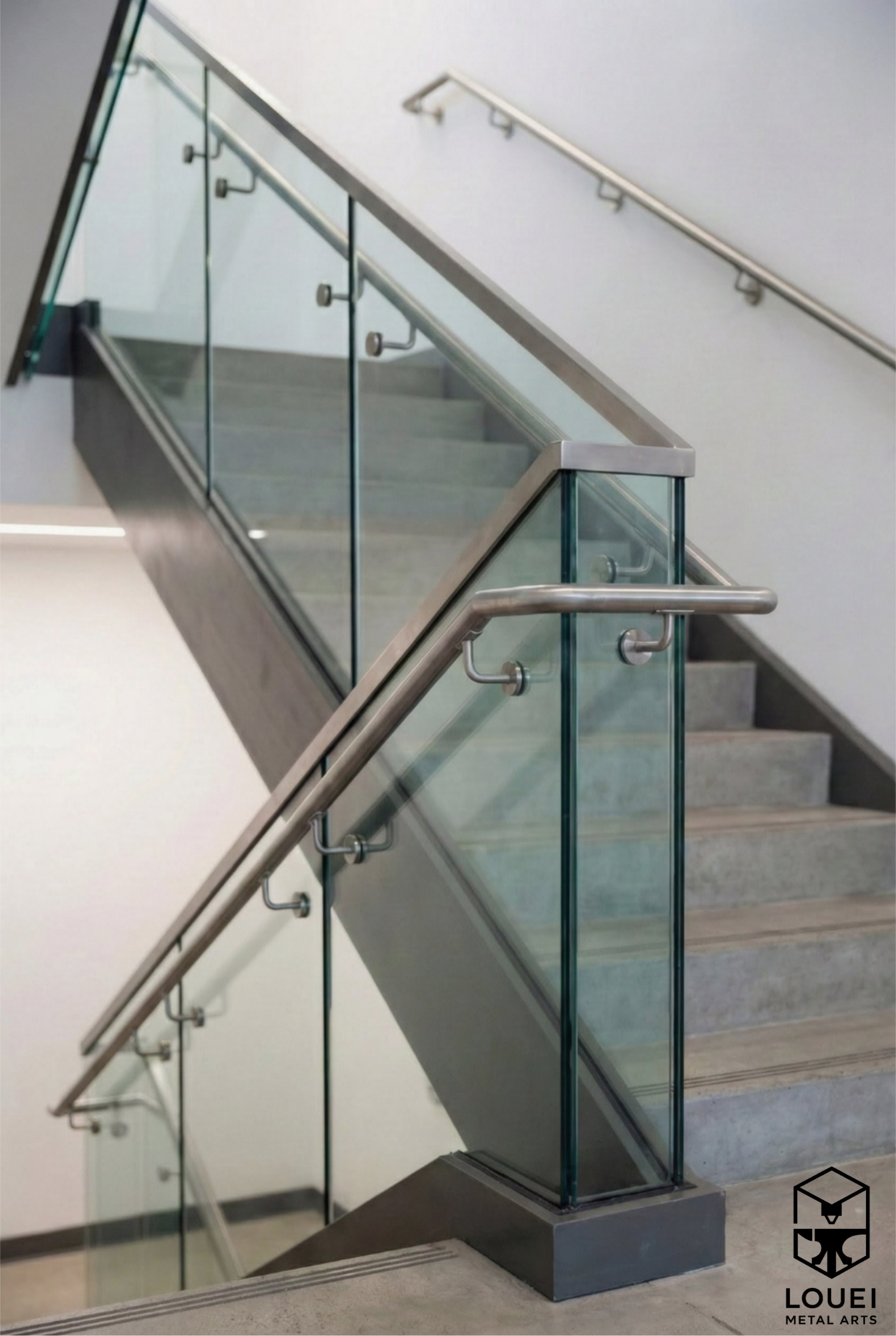
Office
Class A, B, C; base-building shell or tenant fit-out.
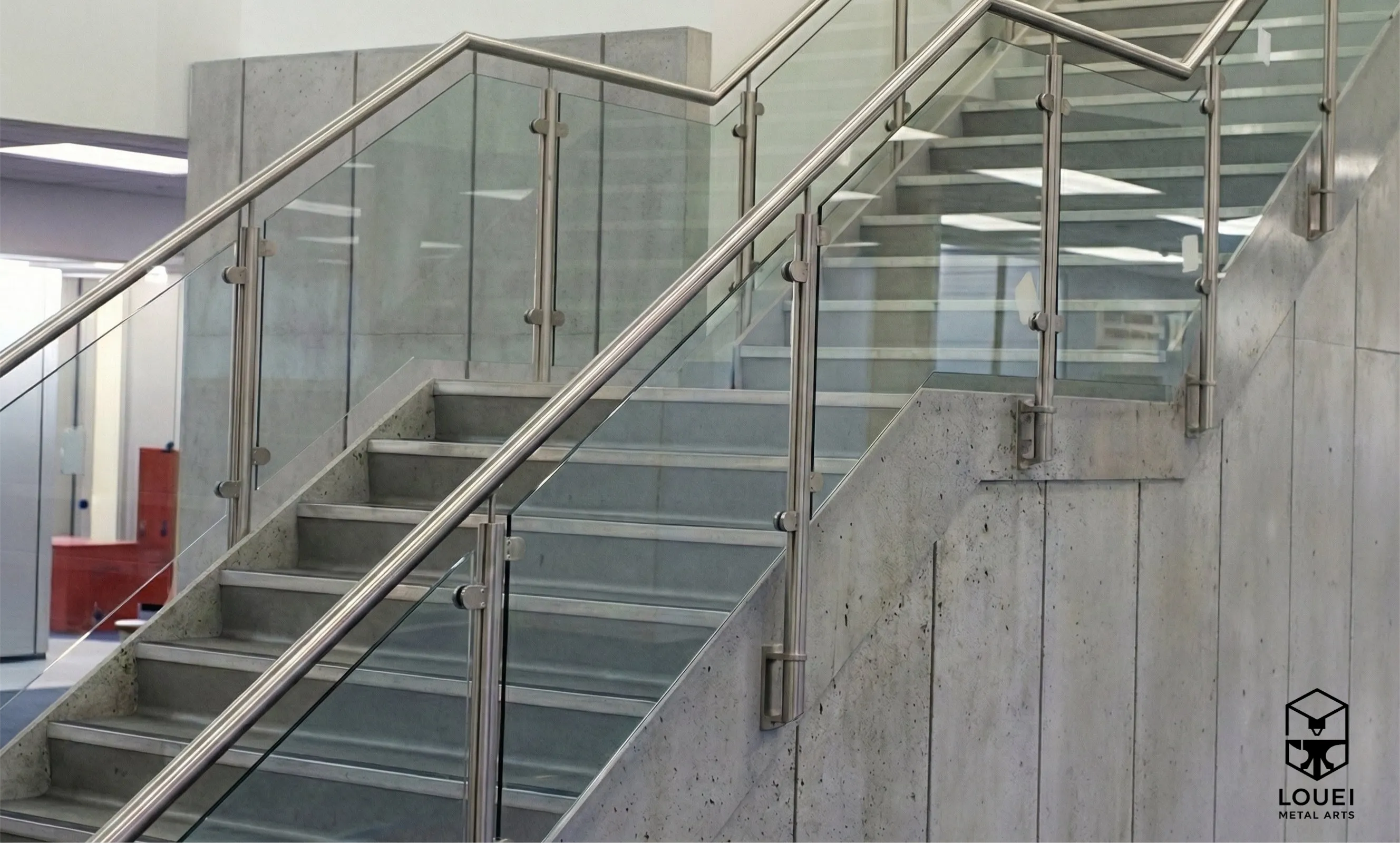
Commercial · GC · Spec · Closeout
For commercial railings in Vancouver, LOUEI works as a commercial railing contractor for office, retail, strata common area, institutional, and builder-led projects that need coordinated fabrication, installation, submittal, and closeout documentation. Commercial railing goes sideways at three predictable points: bid, submittal, and closeout; this is the commercial project layer under our Custom Railings service. For residential scope, start with Vancouver custom railings.
Drawings + bid due date are enough to start.
Three things to clarify first: building type, project phase, and railing function. Quoting without those is guessing.
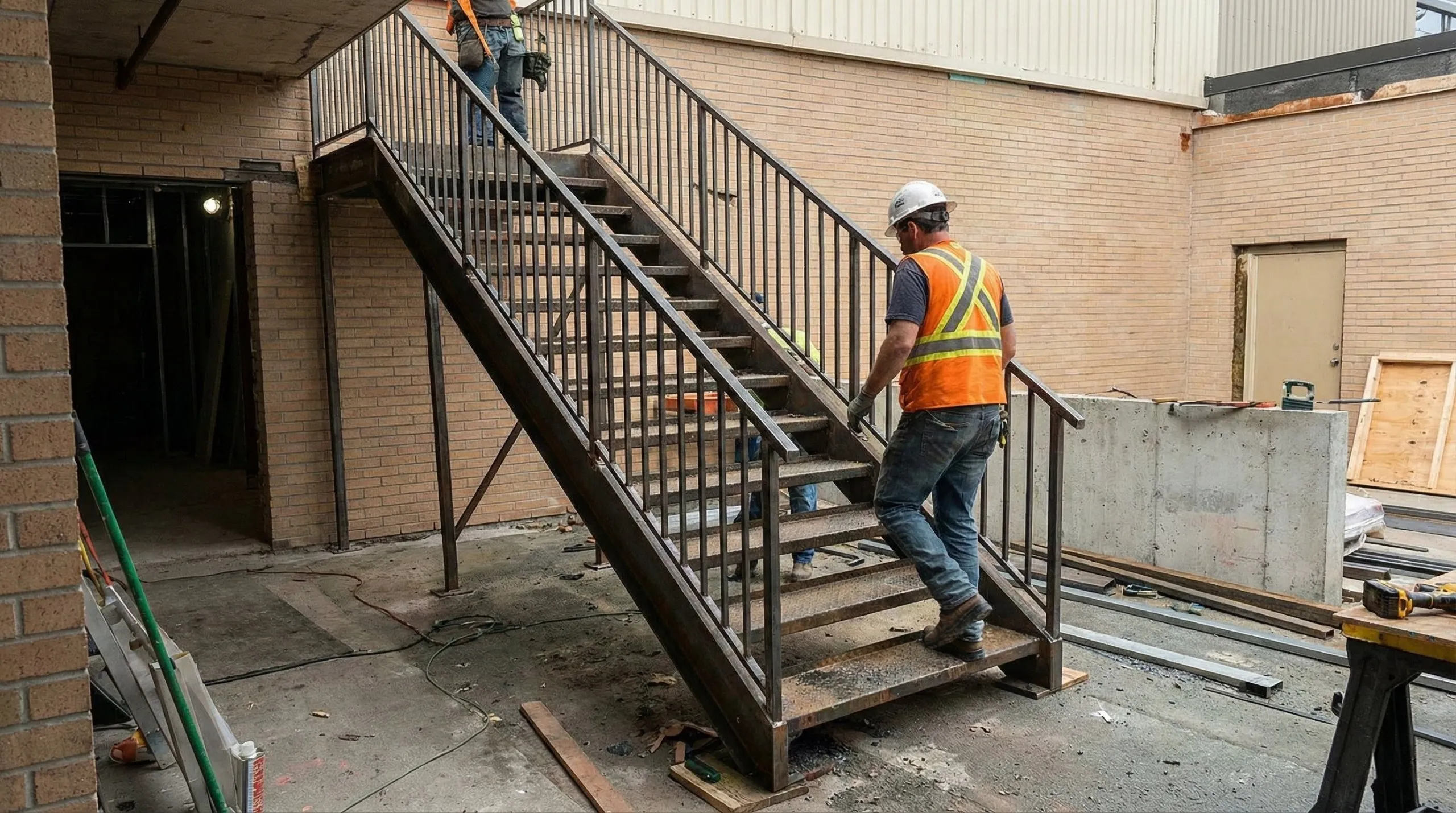
Commercial install · Custom steel stair
Real site work — fabricated in Coquitlam, installed by the same team.
Building types
Class A, B, C; base-building shell or tenant fit-out.
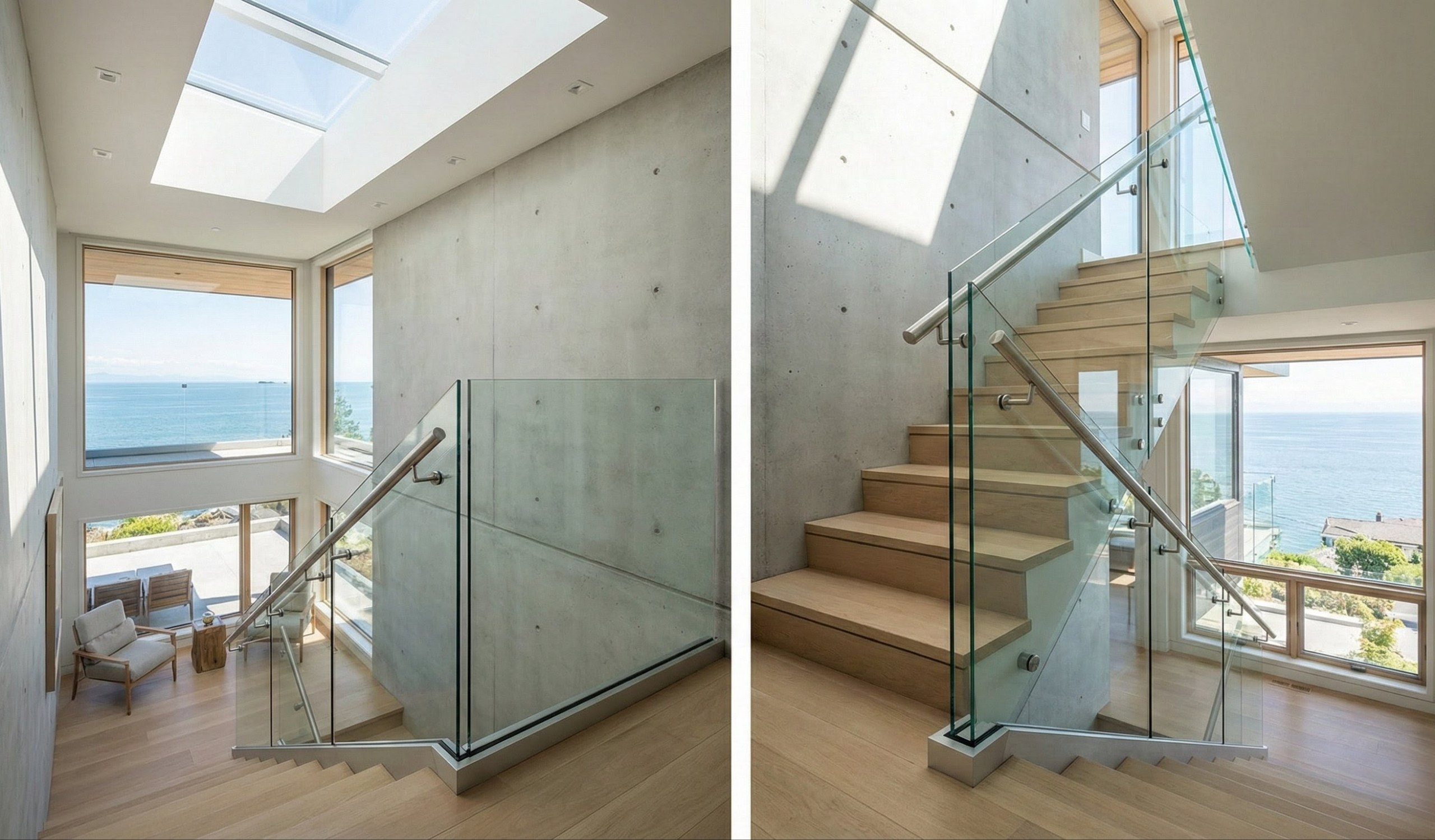
Storefronts, multi-tenant retail, restaurants, hotels, common areas.
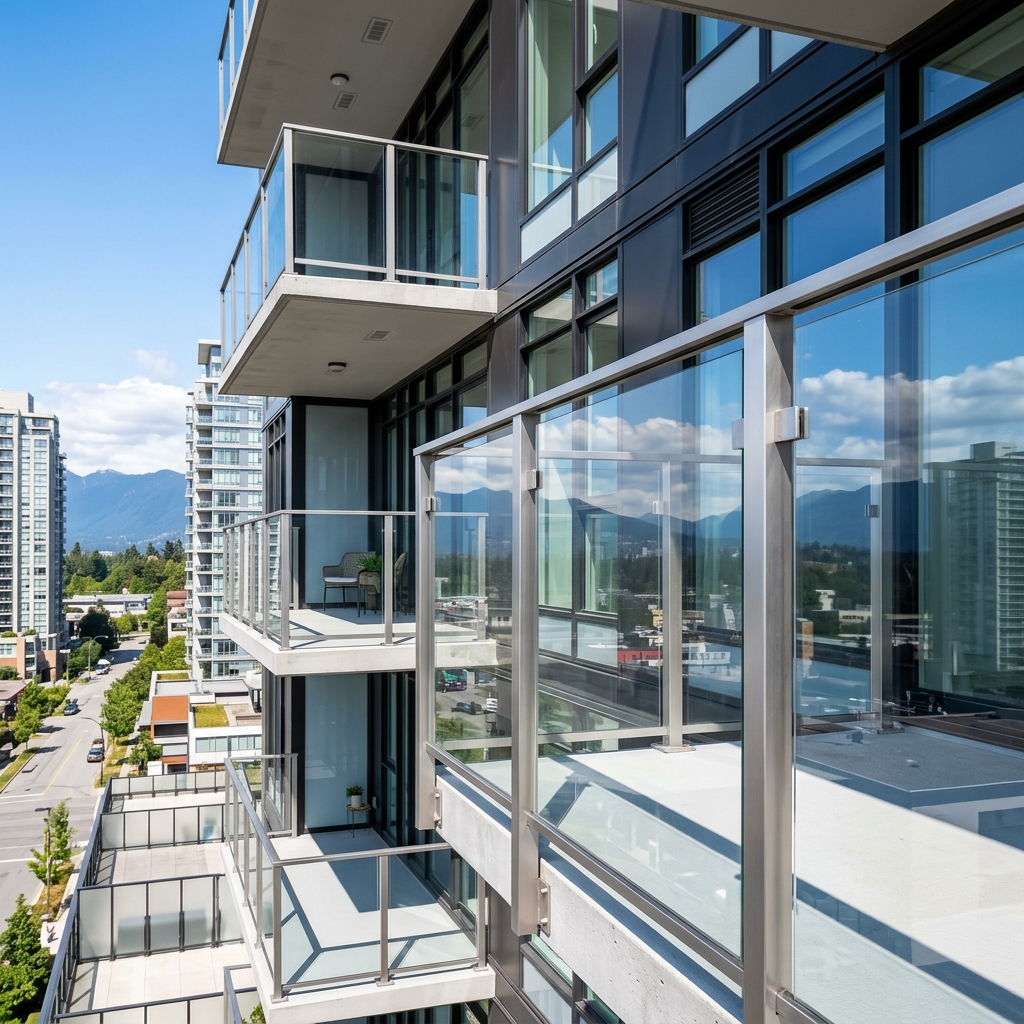
Residential over commercial; the commercial podium, ground-floor amenities, lobby and stair guards under the residential floors.
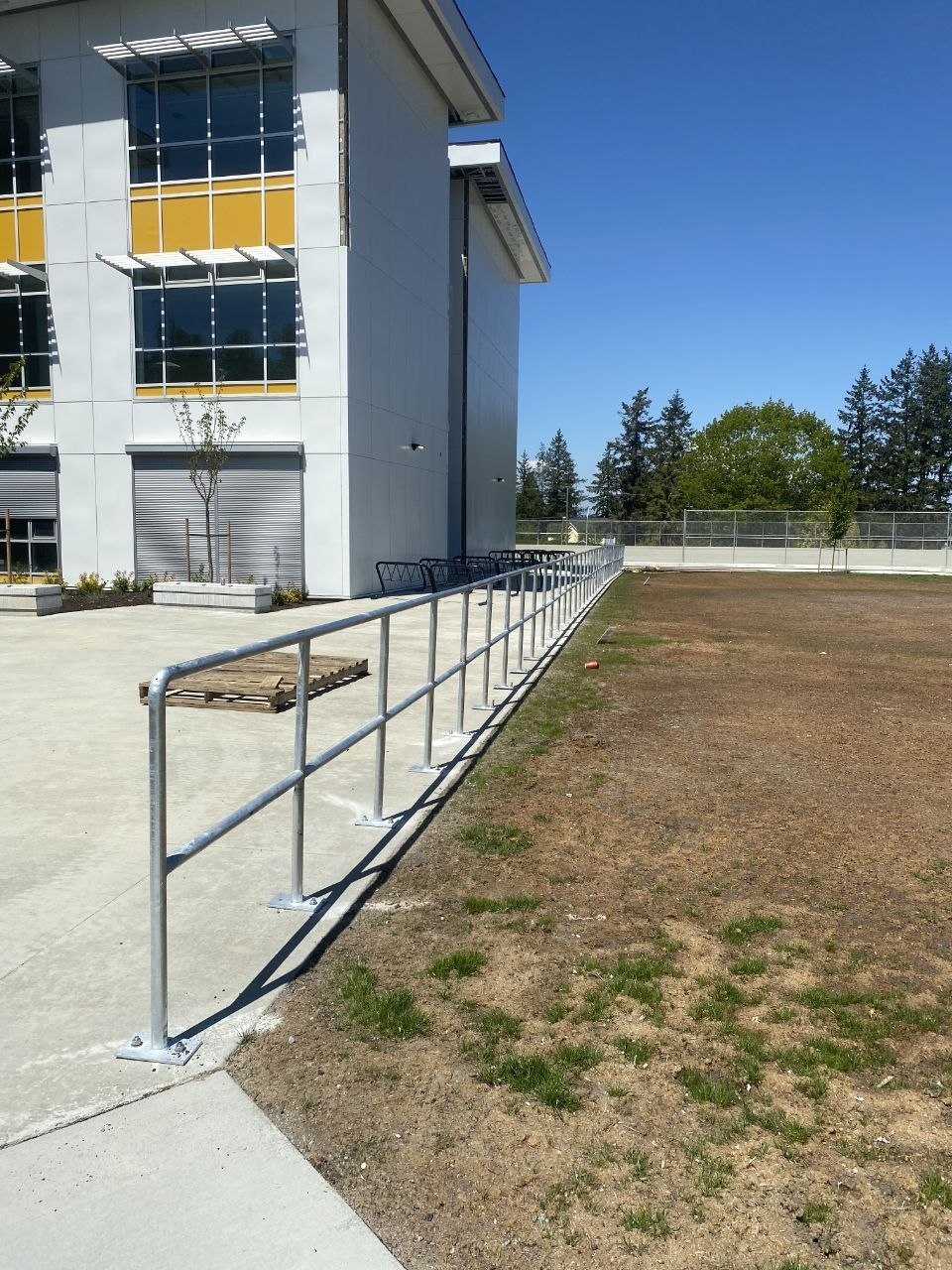
Guards at equipment platforms, freight-edge protection, mezzanine perimeter, loading-dock edges.
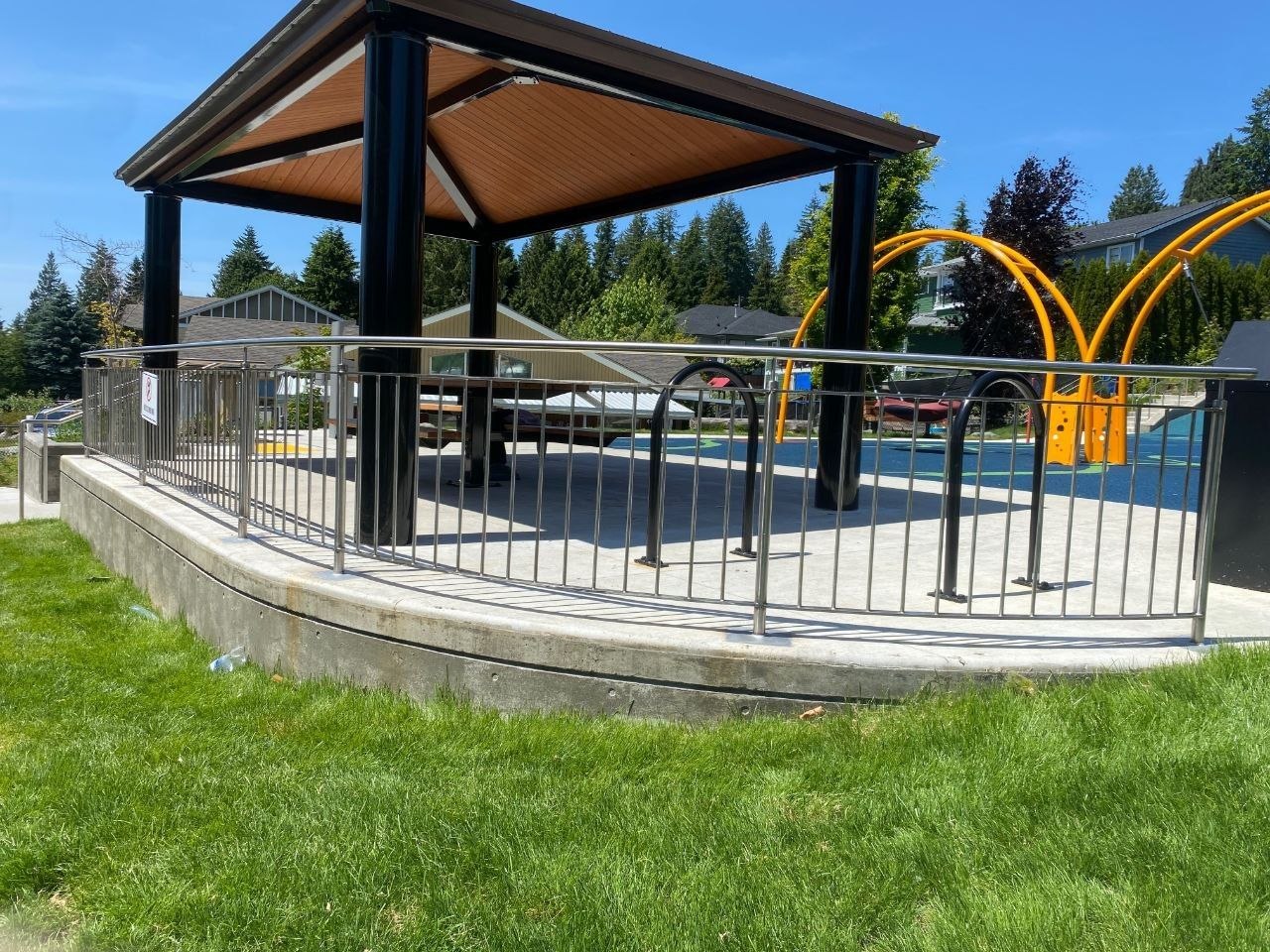
Community centers, healthcare lobbies, education common areas.
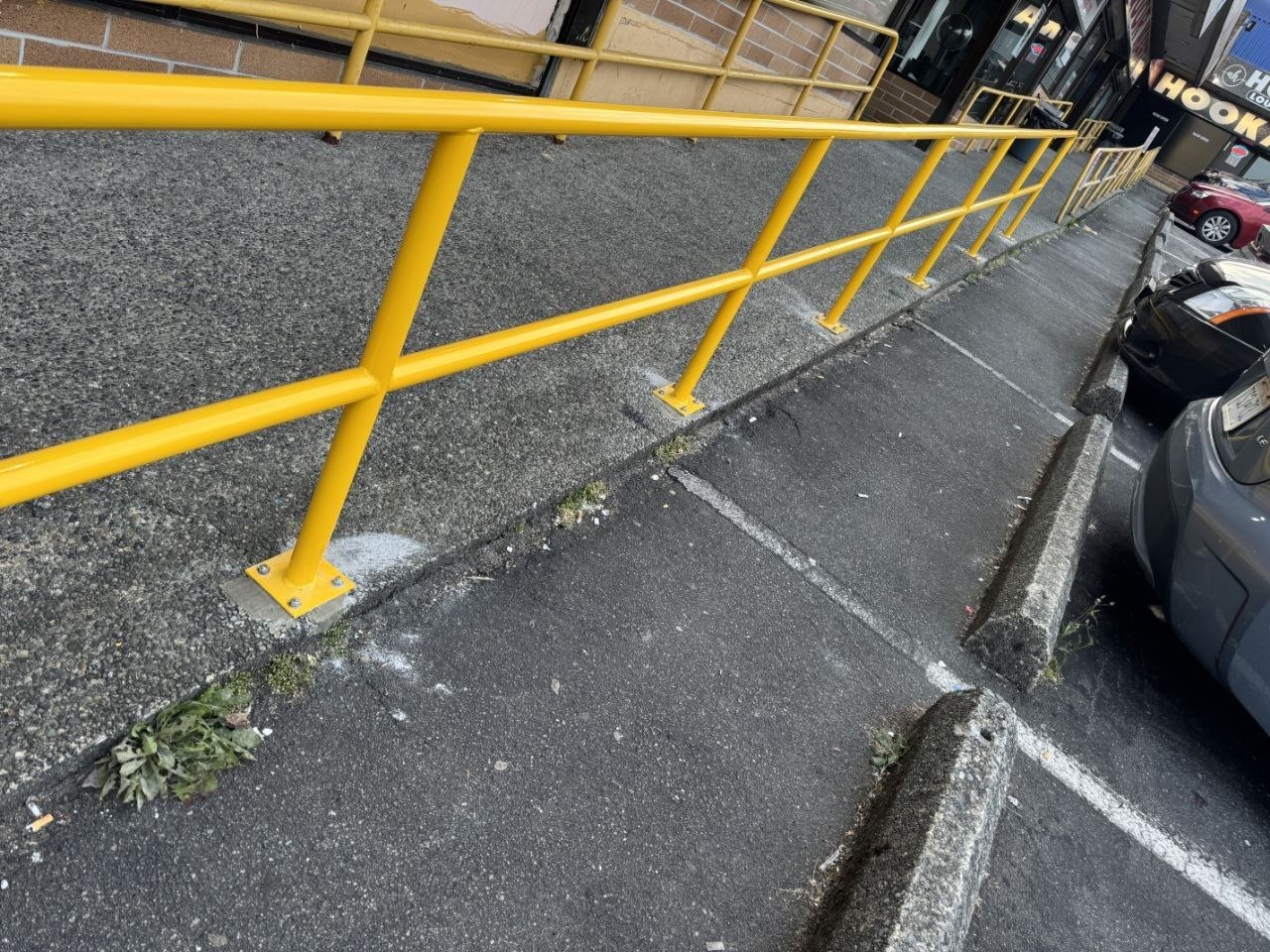
Ramp guards, entry plazas, parkade-edge protection.
Project phases
IFC drawings exist. Base-building scope. Predictable but tight schedule.
Occupied or about-to-be-occupied building. Finished floors and walls in place. Existing conditions only partly documented.
Existing railings being replaced. Old anchors and concrete tell their own story. Code upgrades may be triggered.
Punch-list items, deficiency response, post-occupancy adjustments.
Railing types we fabricate
Guards, handrails, glass guard systems, picket guards, cable railing where the spec allows, custom welded steel and aluminum, stainless details, architectural metal features.
For cultural, wellness, or institutional wet spaces, material and finish selection matter. See our guide to pool and ritual-bath handrails built for wet environments.
Related system pages: Custom Railings Vancouver · Commercial glass railings · Picket Railing · Cable Railing · Stair Railing · Handrails · Metalwork.
This is the part most contractor websites skip. The railing scope doesn't live in one phase of the job. It moves through six.
Drawings and spec section land. The takeoff happens here — guard linear footage, handrail linear footage, post counts, glass panel sizes, terminations, transitions. A clean takeoff at bid prevents change orders later. We quote against the IFC set if you have it, against the permit drawings if you don't, and we mark our assumptions either way.
Contract signed. We get the spec book, the latest drawing set, addenda, and any RFI responses that affect railing. Field verification often happens here — especially on TI work, where the as-built doesn't match the floor plan.
Shop drawings, product data, sample finishes, engineering coordination where required, mill certificates if the spec calls for them, and welding documentation where relevant. The submittal is what gets the railing approved to fabricate. We size it to the spec — not larger than necessary, not lighter than required.
Steel cutting, welding coordination, and finishing are planned through our Coquitlam shop workflow. An experienced fabrication team manages the railing details, durable finish options such as powder coating, and the project records that need to stay on file.
Coordinated with your superintendent, scheduled around the finishing trades, sequenced so we don't get sandwiched between concrete polish and flooring. Daily clean-up. Safety documentation matches your site requirements.
Deficiency walk attended. Punch items addressed. Warranty letter, O&M manual if the spec requires one, as-built drawings if the spec requires them, and engineering closeout coordination where required. The file closes when the project closes — not three months later.
Every commercial railing job follows this arc. The bid stage and the closeout stage usually feel like different conversations. They shouldn't be — the exclusions you mark at bid are the exclusions you defend at closeout.
Three distinctions trip up most railing subs at the spec stage.
Guard vs. handrail
Not interchangeable. A guard is the safety barrier at a fall edge — code-driven height, opening limits, load requirements. A handrail is the graspable support along stairs and ramps — diameter, profile, height, return all spec-driven. Many drawings call for "railing" when they need both. The bid that misses one gets caught at submittal.
Decorative metal vs. functional railing
A feature wall or sculpture beside the stair isn't the same scope as the stair guard, even when the architect drew them on the same elevation. We separate the two in our takeoffs so the GC isn't billed twice or surprised once.
Spec sections to read carefully
The general metals section. Guards and handrails often land here.
When present, this is controlling. Pipe and tube railings, ornamental railings, glass guards.
If glass guards reference this, the glass spec and the railing spec need to be reconciled.
Submittal procedure, closeout procedure, warranty length, O&M format. Easy to miss. Often controlling.
Code references
The spec usually points to BC Building Code, the local by-law (VBBL inside Vancouver city limits), and sometimes ASTM or CSA standards for load testing. We coordinate against the AHJ that actually has authority on your project. We don't commit to a final code interpretation without the confirmed condition. Specific contract, permit, and code-interpretation questions belong with your project's legal counsel, engineer of record, and AHJ.
Deeper code reference: BC Building Code railing requirements guide.
Drawings show intent. Site shows reality. The gap between the two is where commercial railing scope gets revised.
Where existing conditions usually matter
TI work in an occupied building. We can't open the floor. Anchor strategy has to work with what's there.
Existing anchor pattern, base plate footprint, and concrete condition decide whether old locations can be reused.
Drawing says that. Condition shows spalling, an embed that may or may not be there, and edge distance that may or may not work.
A guard attached to existing steel is only as good as the existing steel's coating, plate thickness, and weld access.
Glass guard transitions to walls, columns, or mullions that aren't drawn appear at field measurement.
The catch happens at field measurement. Not at bid. Not at submittal. The bid is honest about what was assumed. The field is honest about what was found. The gap between them gets documented as an RFI or change directive — not absorbed quietly into a project everyone forgets about until punch list.
The railing sits between four other trades. Get the sequence wrong and at least one of them eats the delay.
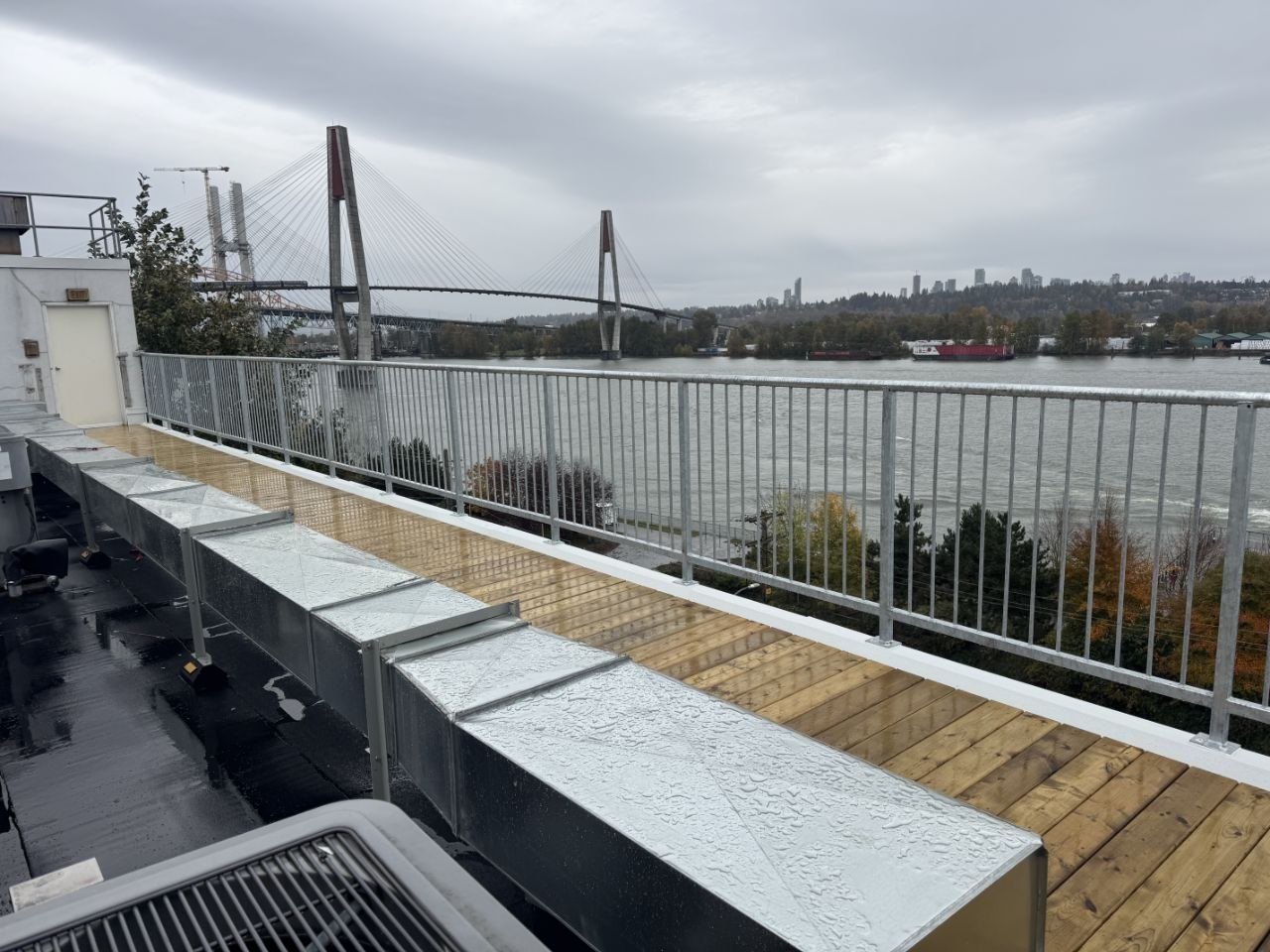
Commercial install · Rooftop guard with active equipment
The kind of site where sequencing matters — HVAC, decking, guard, and inspection all in one window.
What blocks the railing from starting
What the railing blocks if it's late
Common sequencing decisions on commercial work
The railing should not be the trade everyone is waiting on at the end. When it is, it's usually because the sequencing wasn't planned — not because the railing is hard. The right sub fits into the schedule the superintendent has built. The wrong sub forces the superintendent to build a new one around them.
The cheapest railing quote on the bid table is rarely the cheapest railing job at closeout.
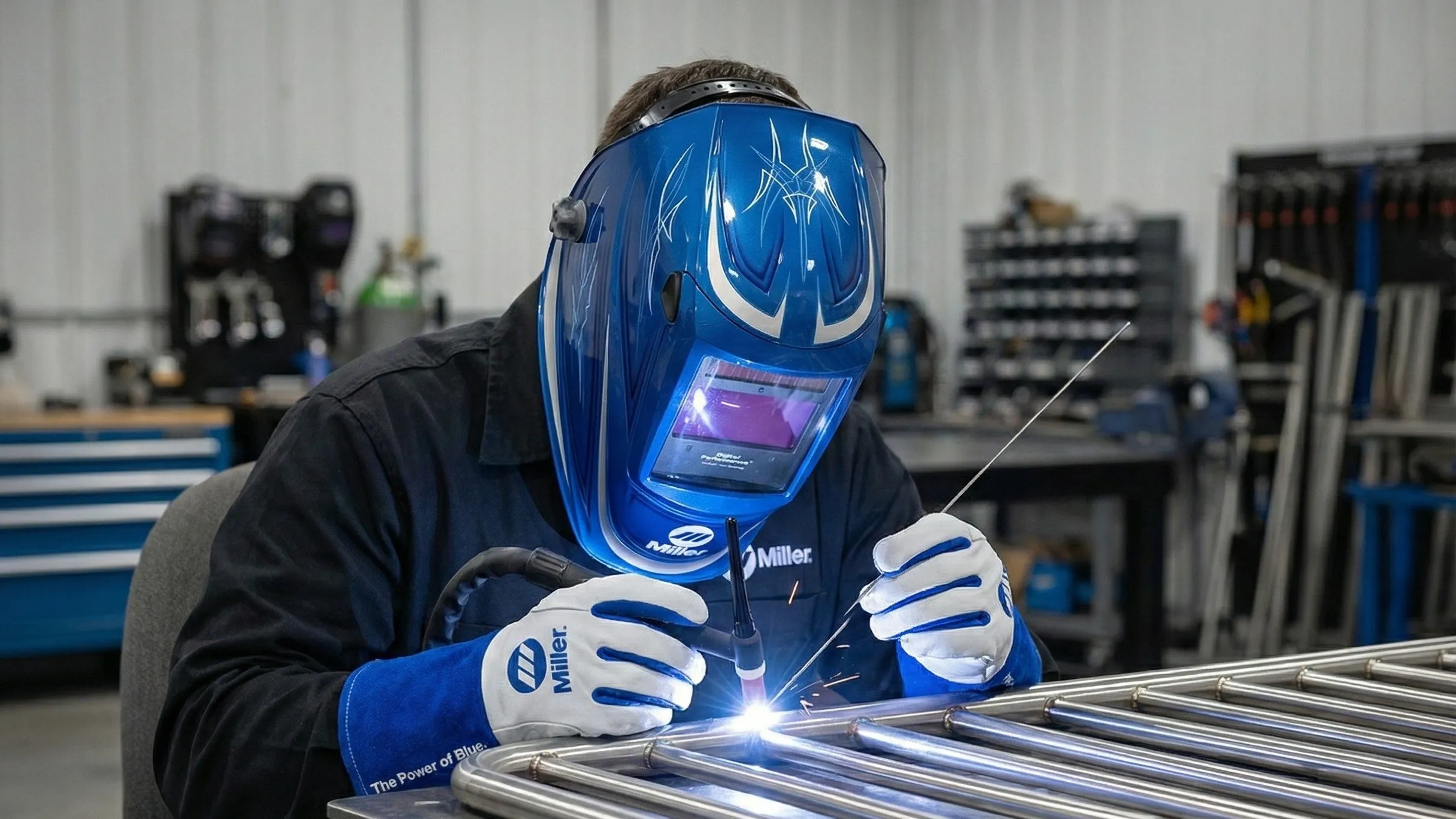
Coquitlam shop · coordinated fabrication
An experienced fabrication team coordinates the railing package around the approved spec, site conditions, and installation schedule.
Takeoff against the IFC set, assumptions marked, scope clear, exclusions listed. If a change comes up during the project, the original bid is the baseline — not a starting point for an argument.
Shop drawings sized to the spec. Product data current. Engineering coordination handled upfront when required. Sample finishes against the actual spec book, not generic chips.
Steel cutting, welding coordination, and durable finish planning are managed through the Coquitlam shop workflow. The fabrication package stays tied to the approved spec, with mill certificates and welding documentation kept on file when required.
We sequence around the finishing trades. We don't show up before substrates are ready. We don't leave deficiencies at install that should've been handled the same day.
Deficiency walk attended. Warranty documentation provided. O&M manual where the spec requires one. Engineering closeout coordination handled where required. The project closeout file gets what it needs the first time.
Warranty claims and lifetime after-sales service go through the same contact path. 12-month comprehensive warranty from installation and handover, plus lifetime after-sales service. The number on the warranty document is the same number you've been calling all project.
A bid that wins on price but loses on closeout costs the GC twice — once on the original change orders and again on the punch-list items that never quite get resolved. We'd rather be the second call on a project than the first call on the problem.
Seven steps. The GC, architect, and superintendent each know which step they're in at any moment. The bid you accept is the scope we fabricate and the scope we close out on.
01
Drawings, spec section (full spec book if you have it), addenda, bid due date. Email, text, or contact form. RFQ receipt acknowledged within one business day.
02
Takeoff complete. Assumptions documented. Exclusions listed. Pricing valid 30 days. If a site walk is needed before we can bid responsibly, we say so.
03
Contract terms confirmed. Field measurement if scope or condition warrants. RFI on anything the drawings don't resolve.
04
Shop drawings, product data, sample finishes, engineering coordination where required, mill certificates and welding documentation where the spec calls for them. Issued for approval before fabrication starts.
05
Coquitlam shop workflow. Experienced fabrication team. Durable finish options such as powder coating.
06
Daily site clean-up. Coordinated with the finishing trades. Safety documentation matched to your site requirements.
07
Deficiency walk. Punch items addressed. Warranty letter, O&M manual, as-builts, and engineering closeout coordination where required — delivered with the project closeout package. The comprehensive 12-month warranty starts on the installation and handover date. LOUEI Metal Arts provides lifetime after-sales service. It covers breakage, weld repairs, cracks, paint or finish issues, screw and fastener issues, looseness, slack, noise, clouding or dulling, tearing, and detachment. Periodic maintenance is not required to keep the warranty valid. LOUEI Metal Arts covers the travel and inspection costs for warranty service. The warranty applies only to the person named on the invoice and is not transferable to a subsequent owner. Intentional damage is handled through lifetime after-sales service rather than the warranty.
A complete bid package gets a clean takeoff in 5–7 business days. A partial package gets a follow-up email asking for what's missing. Here's what each project stage needs from your end.
Bid stage
Award stage
Renovation or TI
Repair / deficiency
The cleaner the package, the faster the bid back. Incomplete is fine — we'll ask for what's missing. Vague is harder.
Both. We prefer the full spec book — Division 01 (general requirements) and Division 05 (metals) usually contain the controlling language. Plan-and-elevation only is fine for budget direction. Final bids should always reference the spec.
5–7 business days from receipt of a complete bid package. Rush bids (3 business days) accommodated when notice is given.
When the spec or AHJ requires them, yes — coordinated as part of the submittal package.
Yes. Our welders are CWB-certified. Welding procedures and mill certificates kept on file and provided when the spec requires submittal.
Yes. Certificates can be provided to the GC for the contract file.
The comprehensive 12-month warranty starts on the installation and handover date. LOUEI Metal Arts provides lifetime after-sales service. It covers breakage, weld repairs, cracks, paint or finish issues, screw and fastener issues, looseness, slack, noise, clouding or dulling, tearing, and detachment. Periodic maintenance is not required to keep the warranty valid. LOUEI Metal Arts covers the travel and inspection costs for warranty service. The warranty applies only to the person named on the invoice and is not transferable to a subsequent owner. Intentional damage is handled through lifetime after-sales service rather than the warranty.
Yes. TI work usually involves after-hours scheduling, occupied-floor access protocols, and dust and noise containment. We coordinate with the building manager and GC superintendent before mobilization.
In writing. Verbal change directives get documented and confirmed in writing before work proceeds. The original bid stays the baseline.
Yes — that's most of what we do. Send the detail drawing or the relevant spec section. We'll come back with shop drawings sized to it.
Send the bid package — drawings, spec section, bid due date. We'll confirm receipt within one business day and bid back in 5–7.
Drawings, spec section, bid due date. We'll confirm receipt within one business day and bid back in 5–7.
Trust signals
12-Month Comprehensive Warranty · Lifetime After-Sales Service
Serving Vancouver, North Vancouver, West Vancouver, Burnaby, Coquitlam, Port Moody, Port Coquitlam, New Westminster, Surrey, Langley, Richmond, Delta, and Metro Vancouver commercial projects. See all service areas.
Primary-source code reference · checked September 24, 2026
These links go to governments, regulators and the original professional or certification bodies—not other railing businesses. Code text, older local bulletins and advisory guidance are labelled separately. This is an editorial source check, not a professional sign-off, product certification or approval of your project.
BC province versus the City of Vancouver
Use BCBC 2024 with its published amendments outside the City of Vancouver, and VBBL 2025 inside the city. Vancouver is not the same jurisdiction as North Vancouver or West Vancouver. Permit dates and transition rules matter. A newer national model code does not automatically replace the locally adopted edition.
Ordinary Part 9 guards; exceptions must be read with the clause
Articles 9.8.8.1, 9.8.8.3 and 9.8.8.5 cover when a guard is required, its height and openings. The usual trigger is a drop over 600 mm within 1.2 m of the walking surface. Default height is 1,070 mm; qualifying residential guards can use 900 mm, including certain exterior guards at no more than 1,800 mm above finished ground. The ordinary required-guard opening rule prevents a 100 mm sphere passing. Exactly 4 inches is 101.6 mm: metric limits control.
Read the applicable clause and its exceptions, referenced standards and amendments together. The municipal consolidated PDFs are convenience copies; enacted text controls. Proprietary standards are linked through their issuing authorities—we do not claim access to, or reproduce, paywalled standards. Explore the complete topic-by-topic official-source register.