
British Columbia Services
Custom Railings in Whistler, BC
What Happens to Your Railing at −25°C?
A Luxury Chalet Does Not Accept Catalogue Hardware
Site Elevation
Measure on site
Ground Snow Load
Site-specific
Whistler is a resort municipality where the architectural briefs that define the town — post-and-beam timber frames, floor-to-ceiling glass walls, cantilevered decks over terrain grades that drop forty feet in twenty metres — demand custom fabrication from a shop that understands both mountain engineering and finish quality. Any proposed system must be checked for the actual site and loads.
The climate makes the engineering non-negotiable.
Snow exposure, roof-shed risks, drainage and maintenance operations must be assessed for the actual location. Neither custom fabrication nor a prefabricated product is evidence of structural compliance by itself.
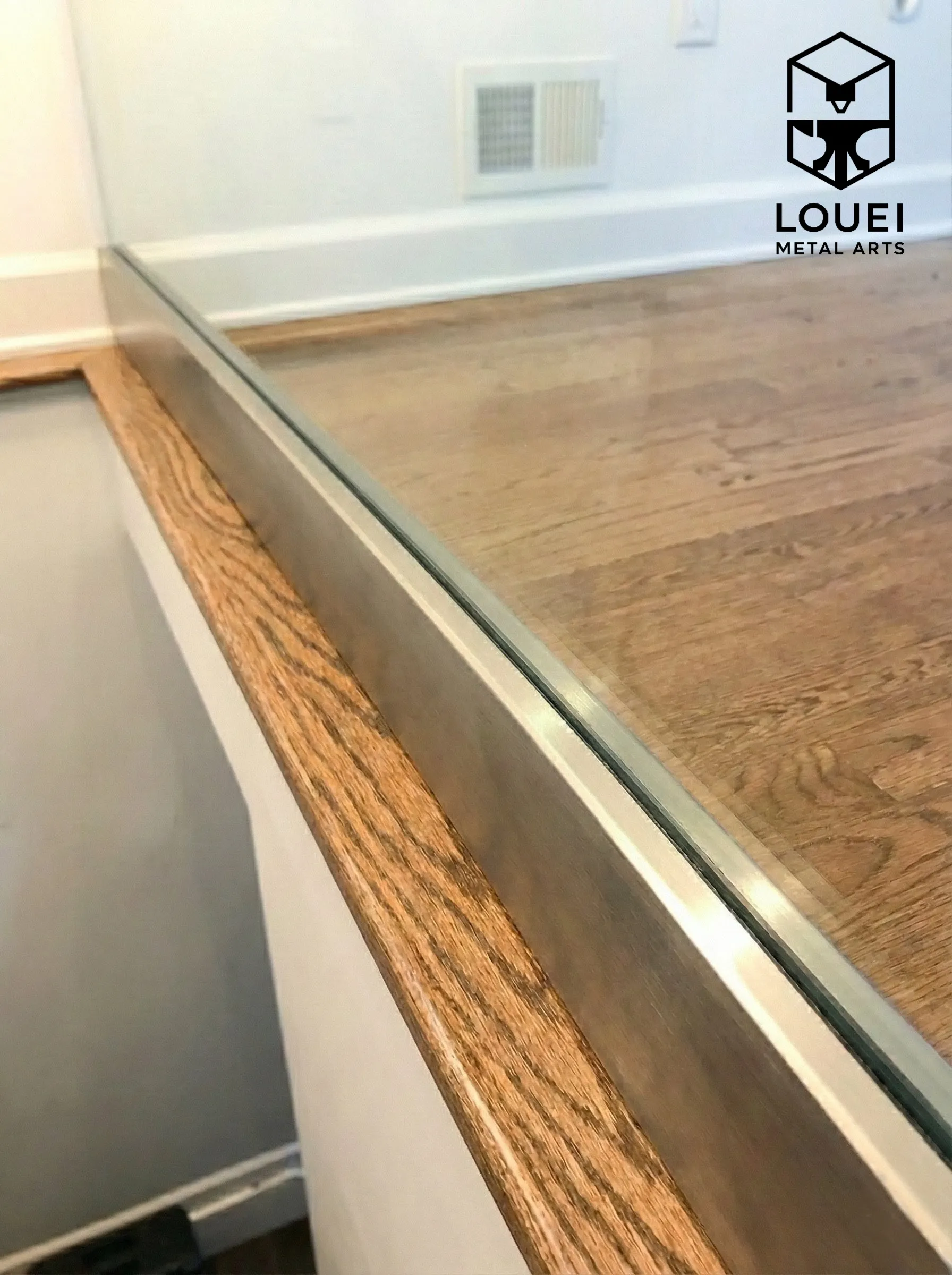
Alpine engineering combined with architectural finish quality.
Custom Steel and Glass Fabricator:LOUEI Metal Arts is a custom steel and glass railing fabricator based in Coquitlam with installation teams operating throughout the Sea-to-Sky corridor. CWB-standard welding. 316 marine-grade stainless steel hardware. P.Eng.-sealed structural drawings. AAMA 2605 powder coating. Architectural metalwork from the same shop that builds your railing system. Below: how each product serves Whistler’s specific climate, architecture, and project types. For Whistler building permit requirements and the RMOW's building bylaw updates, visit the Resort Municipality of Whistler Building Services page. For wildfire interface zone requirements, see BC Wildfire Resilience.
Glass Railings for Whistler’s View-First Mountain Architecture
For mountain-view architecture, tempered safety glass can preserve sightlines. Glass thickness, support, post-breakage behaviour, framing and anchorage must be selected as one engineered assembly for the site.
Steel and aluminium can both be structural design options. Material choice alone does not establish stiffness or capacity: section size, spans, connections, glass support and design loads determine performance.
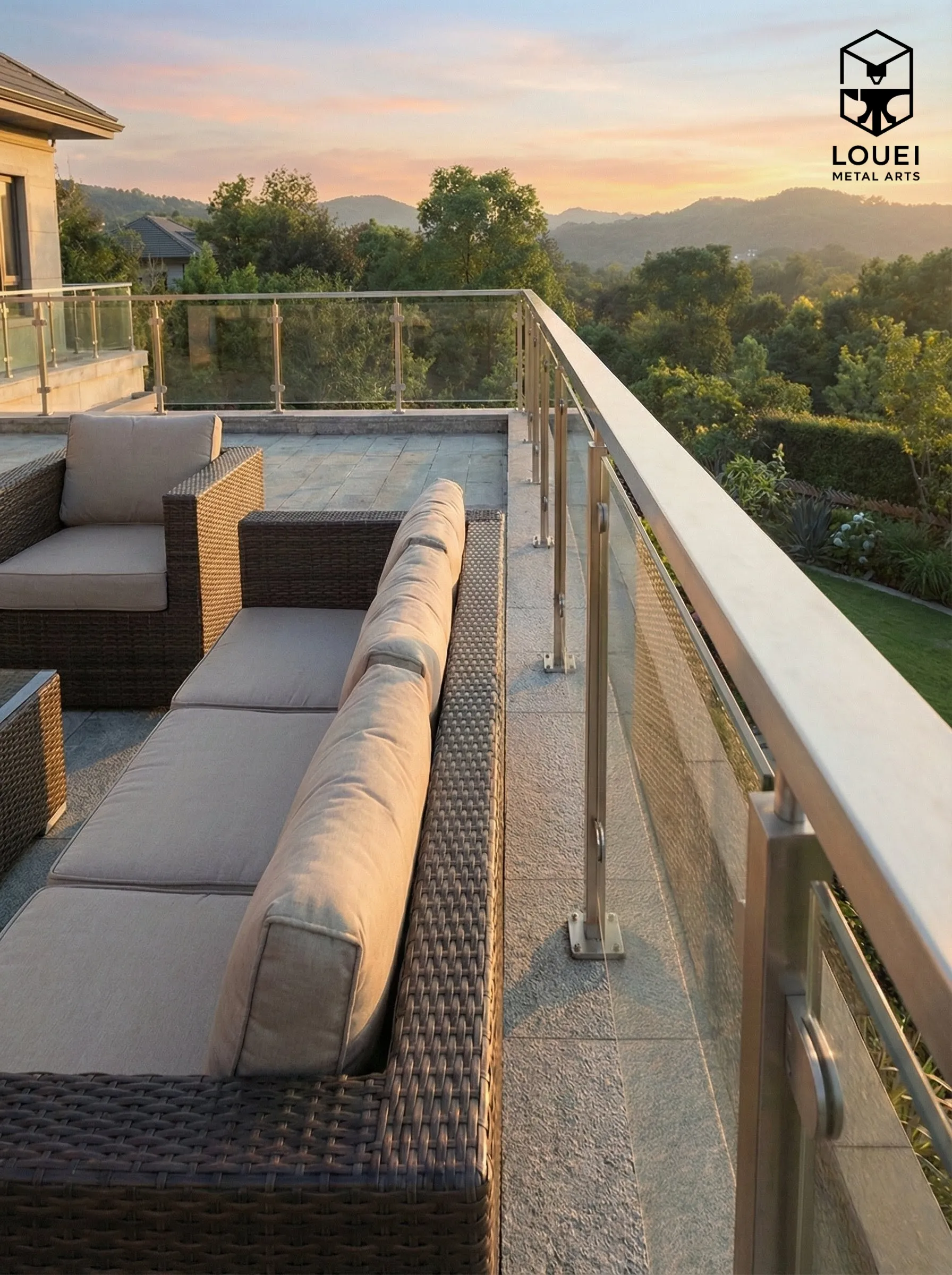
Two Glass Systems for Whistler's Split Market
Base-Shoe Frameless — The Kadenwood Chalet Standard
A base-shoe system can reduce visual interruption, but a cap-free appearance is not a code approval. Glass type, thickness, support, post-breakage performance and the supporting deck must follow the accepted design. Confirm top-rail and professional documentation requirements before selecting the visual detail.
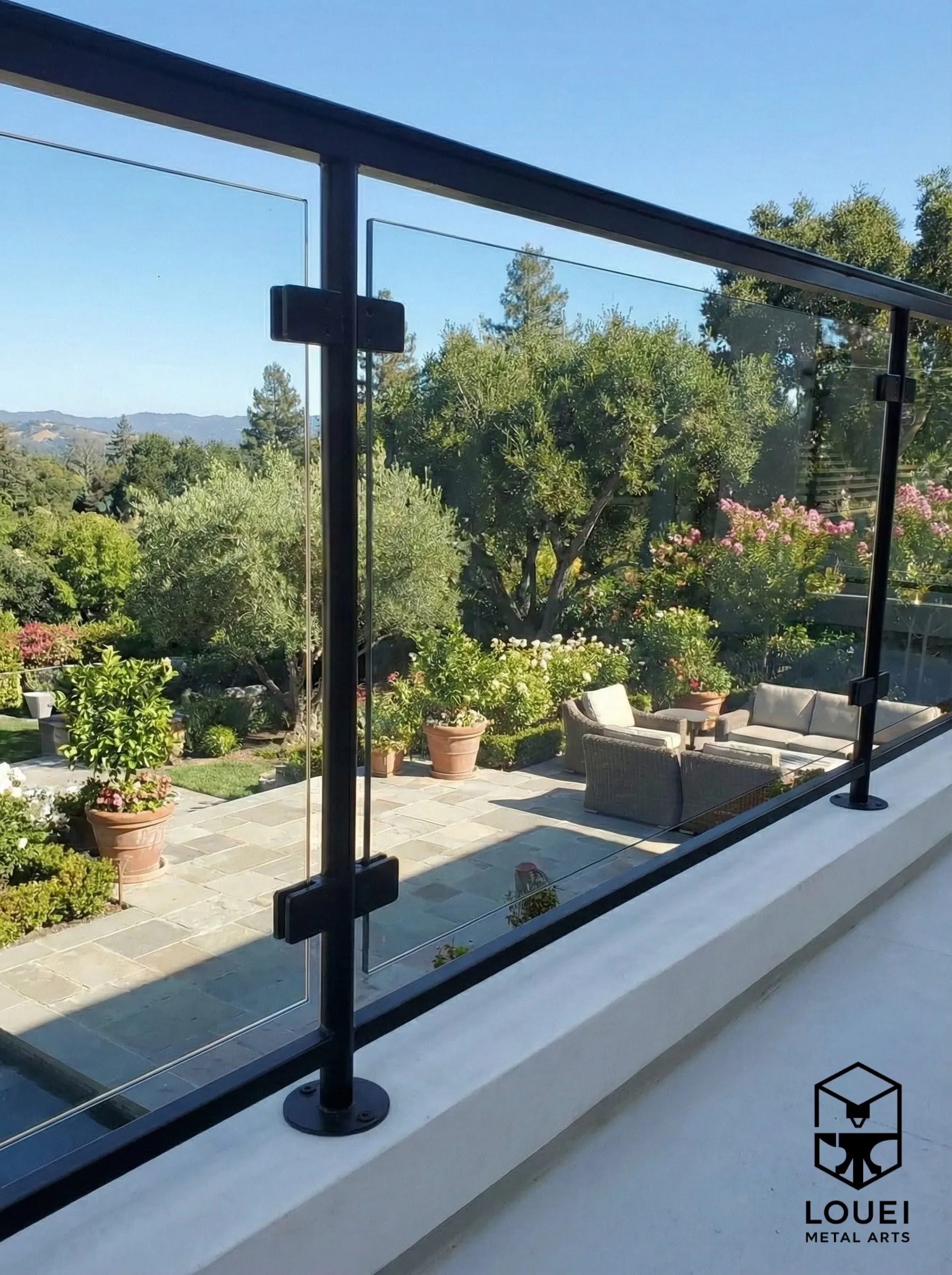
Post-and-Clamp — Workforce Housing & Resort Condos
For the Mount Fee Road 229-unit BC Builds project, Northlands mixed-use development, and Whistler Village condo renovations where code-compliant glass at multi-unit pricing drives the specification. Consistent quality across 50–200 unit runs with CWB-standard fabrication, any-RAL-colour finish, and documentation packages structured for RMOW building inspectors reviewing permit applications across multiple units simultaneously. The budget-disciplined system that still delivers glass transparency for mountain views.
We also fabricate Spigot and Standoff glass systems for contemporary interiors and resort applications. See our complete glass railing page for all four options.
Site-Specific Snow Load Design
RMOW section 8 publishes elevation-based ground snow and rain values. These are design inputs, not a pressure that every railing must resist. The applicable structural calculation is site-specific.
| Site condition | RMOW guidance |
|---|---|
| 600–1,000 m elevation | Use RMOW elevation-based ground snow and rain inputs. |
| Above 1,000 m | Additional climate information is required. |
| Guard assembly | Apply structural loads and connections for the actual assembly. |
| Professional design | Confirm Part 4 engineering and any written RMOW exception. |
Confirm design loads, applicable load combinations, support conditions and required professional documentation. Material thickness or a catalogue label cannot substitute for verification of the complete assembly.
Site elevation → climate inputs → structural calculation → assembly and connection design. Ground snow load is not a universal guard load. Read RMOW section 8.
Non-Combustible Systems
for Wildfire Interfaces
Whistler’s OCP contains wildfire development-permit guidelines with mapped areas, differing site conditions and exemptions. Check the property’s designation and permit conditions; general FireSmart guidance is not itself a blanket ban on every material.
Material selection is part of whole-property risk reduction. Metal and glass do not make the deck or building fireproof. Read the RMOW wildfire development-permit guidelines and assess the complete assembly.
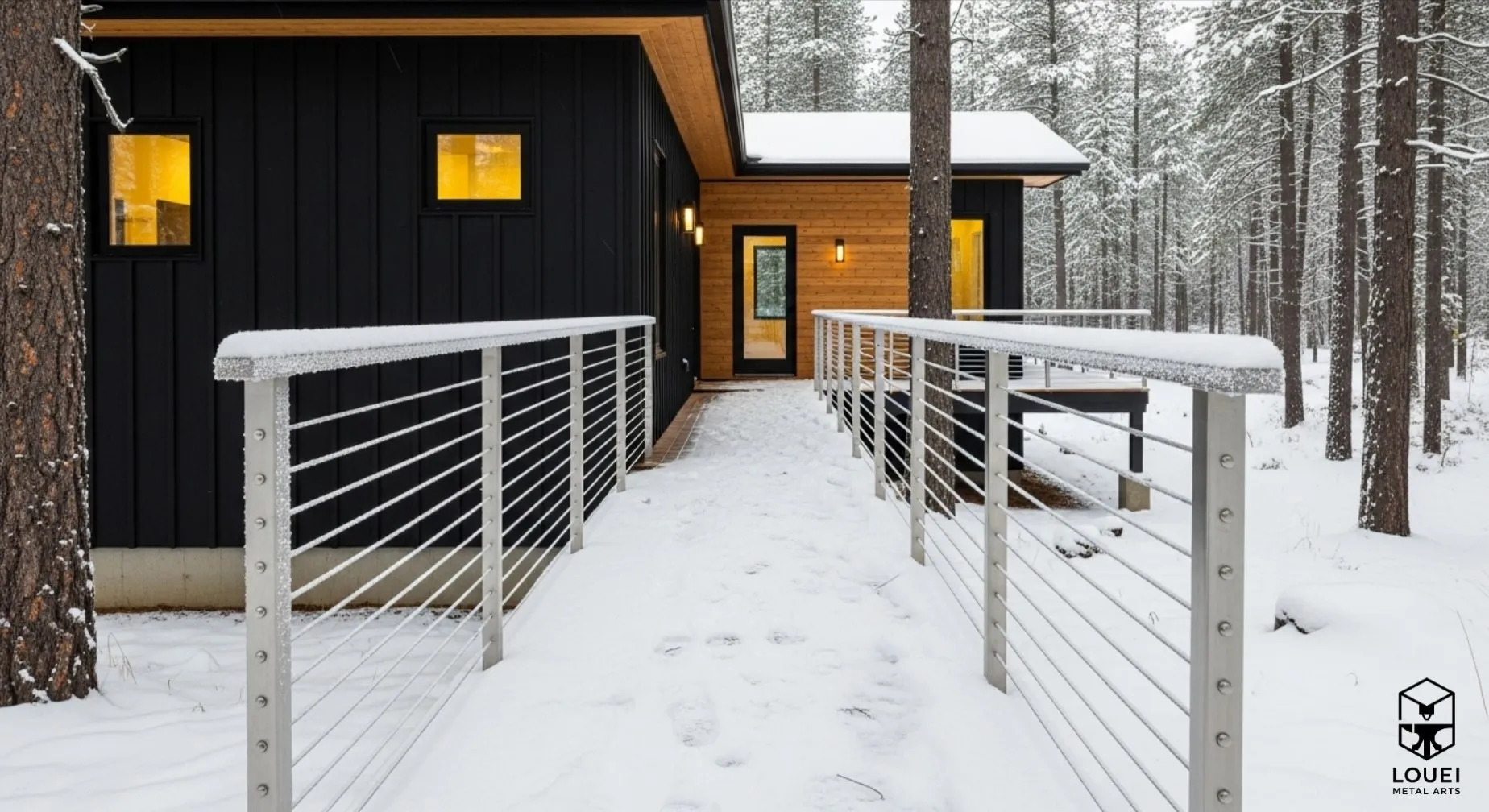
Cable Railings for Whistler’s Contemporary Mountain Homes
Not every Whistler property follows the timber-and-stone alpine tradition. Contemporary mountain homes in Stonebridge, newer sections of Whistler Cay, and progressive builds throughout the Bayshores area use a stripped-back aesthetic where cable railings match the design language.
Our ClearView Stainless 316 system is the lighter-profile option for covered balconies, interior lofts, and sheltered deck faces where snow load engineering and wind protection aren’t the driving concern. On these applications, cable saves budget for the structural glass investment on exposed faces — a strategic allocation that many Whistler architects recommend. The Part 9 anti-climb trigger does not apply at or below a 4.2 m drop; other code requirements remain, but on exposed Whistler decks where wind protection and snow barrier function matter, glass provides the better functional choice.
See our ClearView cable railing optionsHandrails for Whistler’s Snow-Season Stair Safety
In Whistler, exterior stairs are ice-covered for four to five months of the year. Guests arrive in ski boots. Property managers clear ice at dawn. Grade changes of 10–20 metres between parking and entry are routine on mountain-slope lots. Handrails are not a decorative add-on — they are the infrastructure that prevents injury on every winter approach to the building. Part 9 requires graspable handrails generally 865–1,070 mm high. The exception for up to three exterior risers applies only in qualifying dwelling/house conditions; other routes and continuity requirements must be assessed separately. For Whistler, that minimum is a starting point, not a ceiling.
Our stainless steel and powder-coated handrails are specified for alpine conditions. Metal handrails can become cold or icy; choose suitable finishes and a winter maintenance plan. They maintain structural integrity through freeze-thaw cycling. And they custom-fit to Whistler’s typically non-standard stair geometries — curved approaches, split-level entries, and multi-landing exterior stairways that kit handrails cannot address.
View our alpine-grade handrail designs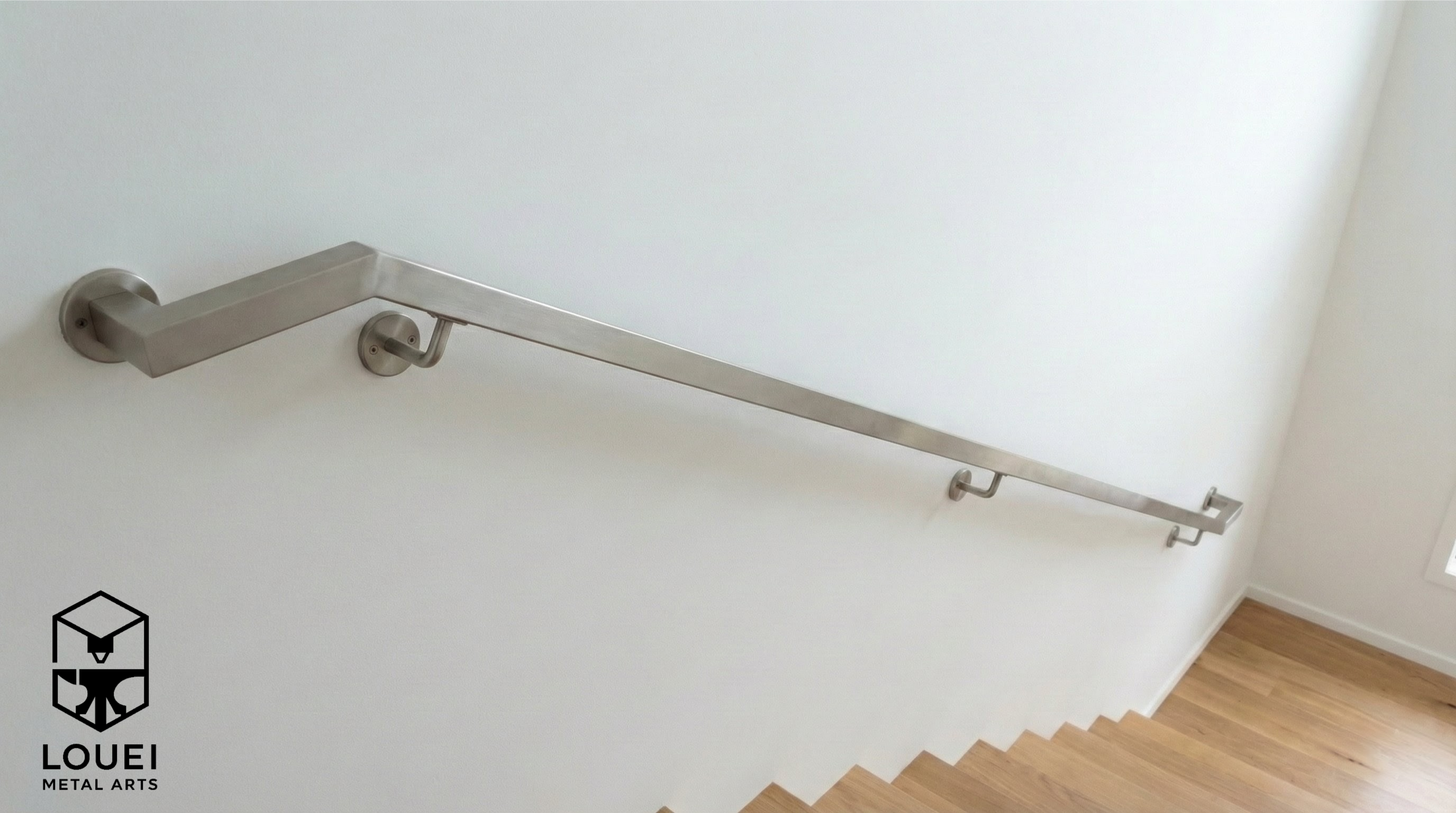
Custom Architectural Metalwork for Whistler’s Luxury Builds
Whistler’s luxury custom homes regularly require metalwork beyond railings: sculptural steel staircases with floating treads over double-height spaces, cantilevered entry canopies that shed snow loads, fire-pit surrounds engineered for mountain wind exposure, decorative timber-and-steel connection brackets that architectural firms like Battersby Howat specify for their signature Kadenwood builds, and custom steel privacy screens.
Builders like Balmoral Construction, Blue Water Concepts, and Vision Pacific need a single fabrication partner who delivers matched finishes and coordinated engineering across all metal elements — not five separate subcontractors with five different powder-coat batches. LOUEI Metal Arts fabricates all architectural metalwork in-house.
Browse our custom architectural metalwork →Picket Railings for Whistler's Workforce Housing
For the 229 new workforce housing units at Mount Fee Road (BC Builds) and the emerging Northlands mixed-use development on its 5.2-hectare site, powder-coated steel picket railings deliver code-compliant, durable guards at multi-unit pricing.
CWB-standard welding, any-RAL-colour finish, and consistent quality across 50–200 unit runs.
View our powder-coated picket railing options →A Typical Whistler Railing Installation
Representative scenario based on typical Whistler project parameters. Not a completed case study.
Property
New-build chalet in Kadenwood, 5,800 sq ft, steep old-growth lot with a three-level deck system facing Whistler and Blackcomb mountains. Post-and-beam timber frame with floor-to-ceiling glass walls. Architect: Rommel Design (Sea-to-Sky specialist). Builder: Whistler Builder.
Scope
85 linear feet of base-shoe frameless glass railing on upper and main decks. 35 linear feet of ClearView cable railing on lower covered patio. 32 linear feet of stainless steel handrail on two exterior staircases (12 risers each, curved approach). Custom steel entry canopy (10’ × 5’, snow-load rated). Decorative steel fireplace surround for great room.
Engineering & Process
Site-specific structural drawings covering applicable snow, wind and guard loads, with Letters of Assurance where required by the project. Timeline: 8–12 weeks including fabrication and Sea-to-Sky transport.

Example Architectural Vision
Core Challenges
- ✓ Snow exposure and structural loads determine the required posts, anchors and supporting structure.
- ✓ Check the mapped wildfire designation and project-specific development-permit conditions.
- ✓ Steep lot requires custom-angle post fabrication at 3 different deck levels.
- ✓ Select an exterior finish for the exposure and product specification; do not assume AAMA 2605 is a municipal requirement.
- ✓ Tourist accommodation zoning means durability is a revenue-protection measure.
Railing Code and Snow-Load Requirements in Whistler
BC Building Code 2024 applies: Whistler sits under BCBC 2024 (not Vancouver’s separate bylaw). The RMOW is actively updating its building and plumbing bylaw using the MIABC model core and considering a Certified Professional program for Part 3 buildings. Most Whistler building permits are Part 9 (single-family homes and duplexes) — the residential work LOUEI Metal Arts' systems are built for.
Site-Specific Structural Design & RMOW Requirements
RMOW section 8 requires site-specific structural design and publishes elevation-dependent ground snow and rain inputs. A ground snow value must not be applied as a universal guard pressure. Confirm the project’s engineer, load calculations and documentation with the RMOW Building Permits page for current requirements.
Wildfire Interface Zoning & Elevated Hot Tub Guards
Wildfire requirements depend on the mapped OCP area and permit scope. Read the municipal guidelines. For elevated hot tubs, assess the deck guard and any pool enclosure separately. There is no general BCBC rule making every elevated-hot-tub guard 1,500 mm high. Local pool bylaws, health-authority requirements and the complete structural design must be checked.
Whistler Subdivisions We Serve
Whistler's railing market splits between ultra-luxury custom chalets and resort/workforce multi-family — with distinct product specifications, engineering requirements, and budget parameters for each. Here is how we address every subdivision.
Mountain Resort Zoned (Kadenwood, White Gold & Upper Village)
The ultra-luxury enclave accessible by private gondola and the premium ski-in/ski-out properties on Whistler Mountain's south side face unique pressures. Multi-million-dollar chalets with post-and-beam timber frames, cantilevered decks, and 40-foot grade drops. Every railing element must match architectural specifications from firms like Battersby Howat and Openspace Architecture. Base-shoe frameless glass with custom-welded steel framing designed for the actual site conditions is one option, along with non-combustible materials as forest-integrated lots sit in the highest wildfire interface exposure. Railing installations coordinate with builder schedules during tight weather windows — snow-free months from May to October define the installation calendar.
Valley Contemporary (Stonebridge, Whistler Cay & Creekside)
Resort-village adjacent properties and creek-side lots along the River of Golden Dreams use a stripped-back aesthetic. Clean-line spigot glass and ClearView cable systems match the modern architectural vocabulary. Properties combine mountain views with water proximity — glass wind barriers extend the outdoor season while cable railings maintain the laid-back profile on sheltered deck faces. These subdivisions have the highest density of renovation projects — 20–30 year-old chalets upgrading original railings to current code and current design standards.
Commercial & Multi-Family (Village, Function Junction & Pemberton)
Resort condominiums, live-work spaces, and expanding residential hubs need durable code-compliant guards at multi-unit pricing. Post-and-clamp glass and powder-coated steel picket systems provide consistent quality across 50–200 unit runs with RMOW-ready documentation packages. Tourism accommodation zoning means durability is directly linked to rental revenue — railing failure during peak season has immediate financial consequences. We service Pemberton as part of our Sea-to-Sky project scheduling — same crew, same fabrication standard.
Frequently Asked Questions
Railings in Whistler
Can standard railing systems handle Whistler's snow loads?
+
A standard or custom assembly must be checked against the actual site and design loads. RMOW section 8 publishes elevation-based ground snow and rain values for sites from 600–1,000 m; higher sites need additional climate information. Ground snow load is not a universal railing pressure. The designer must assess the guard, supporting structure, wind and relevant snow exposure. Do not assume every railing requires 9.5 kPa or that every prefabricated system is unsuitable.
Why does wildfire risk affect railing material choice?
+
FireSmart guidance addresses wildfire risk reduction for the entire property. Metal railing can reduce combustible material, but it does not make the deck fireproof or establish a fire-resistance rating. Check the property’s development-permit conditions, surrounding construction and specified assembly. No insurance result follows automatically from choosing steel or glass.
How does LOUEI coordinate with Whistler builders on tight scheduling?
+
We work with custom home builders, renovation contractors, and architectural practices throughout the Sea-to-Sky corridor. Our process integrates with builder timelines: site measurement during framing, P.Eng. drawings submitted concurrent with other engineering packages, fabrication scheduled to arrive during the finishing phase, and installation coordinated with other exterior trades.
Are cable railings suitable for Whistler?
+
For ordinary Part 9 guards, horizontal cable is not prohibited by the climbability clause at or below 4.2 m. Compliance still depends on the full design, applicable code part, loads, openings and connections. Our ClearView Stainless 316 system handles freeze-thaw cycling and moisture exposure. Cable works well for covered balconies, interior loft guards, and sheltered deck faces where snow accumulation and wind protection are not the primary concerns. On exposed Whistler decks, glass provides the better functional choice.
What about BC Builds workforce housing or multi-family projects?
+
The new homes at Mount Fee Road and similar developments need durable, code-compliant railing systems at multi-unit pricing. LOUEI Metal Arts' post-and-clamp glass and powder-coated picket systems serve this market: consistent quality across 100+ unit runs, CWB-standard welding, any-RAL-colour finishing, and documentation packages structured for RMOW inspectors.
Primary-source code reference · checked September 24, 2026
Code references for this page
These links go to governments, regulators and the original professional or certification bodies—not other railing businesses. Code text, older local bulletins and advisory guidance are labelled separately. This is an editorial source check, not a professional sign-off, product certification or approval of your project.
Which code applies?
BC province versus the City of Vancouver
Use BCBC 2024 with its published amendments outside the City of Vancouver, and VBBL 2025 inside the city. Vancouver is not the same jurisdiction as North Vancouver or West Vancouver. Permit dates and transition rules matter. A newer national model code does not automatically replace the locally adopted edition.
- Province of BC — BC Building Code 2024Government code register
- Province of BC — BCBC amendments, revisions 1–6Government amendment register
- City of Vancouver — current Building By-law and transition informationMunicipal code register
- NRC — National Building Code of Canada 2025National model code; local adoption must be checked
Guard height and openings
Ordinary Part 9 guards; exceptions must be read with the clause
Articles 9.8.8.1, 9.8.8.3 and 9.8.8.5 cover when a guard is required, its height and openings. The usual trigger is a drop over 600 mm within 1.2 m of the walking surface. Default height is 1,070 mm; qualifying residential guards can use 900 mm, including certain exterior guards at no more than 1,800 mm above finished ground. The ordinary required-guard opening rule prevents a 100 mm sphere passing. Exactly 4 inches is 101.6 mm: metric limits control.
- Province of BC — BCBC 2024, base text (read with amendments)Reference: 9.8.8.1–9.8.8.5 · PDF page 979Building code
- City of Vancouver — VBBL 2025, Volume 2 v3.00Reference: 9.8.8.1–9.8.8.5 · PDF page 30Municipal consolidated code, May 5, 2026
Safety glazing, support and post-breakage behaviour
Glass type does not follow from drop height alone
Article 9.8.8.7 identifies permitted safety glazing and referenced standards. Vancouver adds 9.8.8.8: a glass guard needs a top rail capable of transferring guard loads after a panel failure. Structural glass design is addressed by 4.3.6.1. A 1.8 m or 4.2 m drop does not by itself prescribe laminated glass, a universal thickness, or approval of a frameless system. Do not assume a cap-free system is acceptable merely because it has an engineer’s drawing.
- City of Vancouver — VBBL 2025, Volume 2 v3.00Reference: 9.8.8.7–9.8.8.8 · PDF page 32Municipal consolidated code, May 5, 2026
- Province of BC — BCBC 2024, base text (read with amendments)Reference: 9.8.8.7; 4.3.6.1; Table 1.3.1.2Building code
- Engineers and Geoscientists BC — Designing Guards for Building Projects v2.0 (2018)Professional practice guidance, not a new code edition
Loads, anchors and structural materials
The whole assembly and its supporting structure
Use the applicable row of Table 9.8.8.2 or Article 4.1.5.14, not one load for every railing. The Part 9 residential top-load row is 0.5 kN/m OR 1.0 kN concentrated, whichever is critical, with 1.5 kN/m vertical and separate infill loading. Handrail loads under 9.8.7.7 differ. Article 9.8.8.2.(2) refers to adjacent vertical elements; it is not a universal horizontal-cable tension test. Cable diameter, post spacing and pretension need system-specific design. Structural steel, aluminium and glass have separate design references in Part 4.
- City of Vancouver — VBBL 2025, Volume 2 v3.00Reference: 9.8.8.2 and Table 9.8.8.2; 9.8.7.7 · PDF page 31Municipal consolidated code, May 5, 2026
- Province of BC — BCBC 2024, base text (read with amendments)Reference: 4.1.5.14; 4.3.4; 4.3.5; 4.3.6; Table 1.3.1.2 · PDF page 524Building code
- Engineers and Geoscientists BC — Designing Guards for Building Projects v2.0 (2018)Professional practice guidance, not a new code edition
Wildfire resilience is not a fire-resistance rating
Materials, deck assembly and local development conditions
Government FireSmart guidance addresses risk reduction for the whole property. Choosing metal for a railing does not certify a fire-resistance rating for a deck or make a home fireproof. Combustible finishes, stored items and the adjoining building matter. Check local wildfire-development requirements and the specified assembly before describing a system as required or rated.
- Province of BC — FireSmartGovernment risk-reduction guidance, not a fire-rating certificate
- RMOW — Official Community Plan, wildfire protection development-permit guidelinesMunicipal development-permit guidance; location and exemptions matter
- Province of BC — BCBC 2024, base text (read with amendments)Reference: Part 3 and Part 9 fire-safety provisionsBuilding code
Whistler snow loads are site-specific
RMOW section 8; ground snow load is not a universal guard load
RMOW publishes elevation-based ground snow and rain values for sites from 600–1,000 m and directs higher sites to additional climate information. Structural design uses Part 4 and the specified load calculation; 9.5 kPa must not be advertised as the required load for every railing in Whistler. Account separately for wind, drifting and roof-shed exposure where applicable.
- RMOW — building requirements, section 8: site-specific snow loadsReference: Section 8, Snow loadsMunicipal structural-design guidance
- Province of BC — BCBC 2024, base text (read with amendments)Reference: 4.1.6; 4.1.7; 4.1.5.14Building code
Read the applicable clause and its exceptions, referenced standards and amendments together. The municipal consolidated PDFs are convenience copies; enacted text controls. Proprietary standards are linked through their issuing authorities—we do not claim access to, or reproduce, paywalled standards. Explore the complete topic-by-topic official-source register.