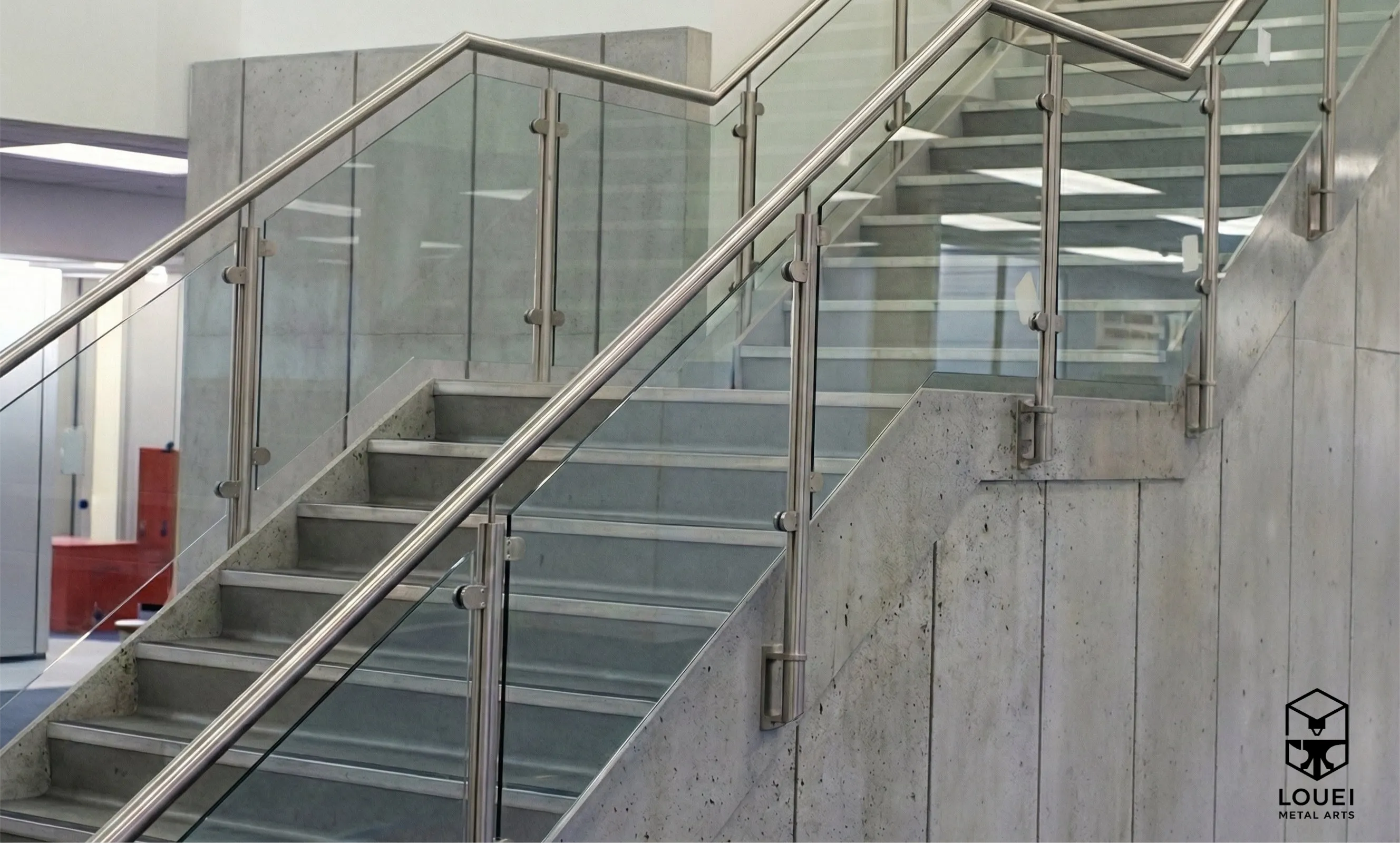
Custom Railings · 316 Marine-Grade
Stainless Steel Railings for Metro Vancouver
Cable systems, glass railing hardware, handrails, and fully welded guards — custom-fabricated in Coquitlam and installed across Metro Vancouver by the crew that welds them.
LOUEI Metal Arts fabricates and installs custom stainless steel railings — cable systems, glass railing hardware, handrails, and fully welded guards — from our Coquitlam shop for homes, strata buildings, and commercial projects across Metro Vancouver.
Exterior standard
316 marine-grade stainless — stepped up to Duplex 2205 for direct-spray waterfront
Finishes
Brushed #4 satin · mirror polish · PVD gold tones
Welding
TIG-welded by CWB-certified welders
Stainless is the material we reach for wherever salt air, pool chemistry, or bare-metal aesthetics rule out powder-coated mild steel: waterfront decks in West Vancouver, cable guards on the Sunshine Coast, strata balconies in Victoria, and interior stairs where the metal itself is the finish. It is the same specification behind our custom railing work in Vancouver, where coastal exposure and seismic detailing meet on the same balcony edge.
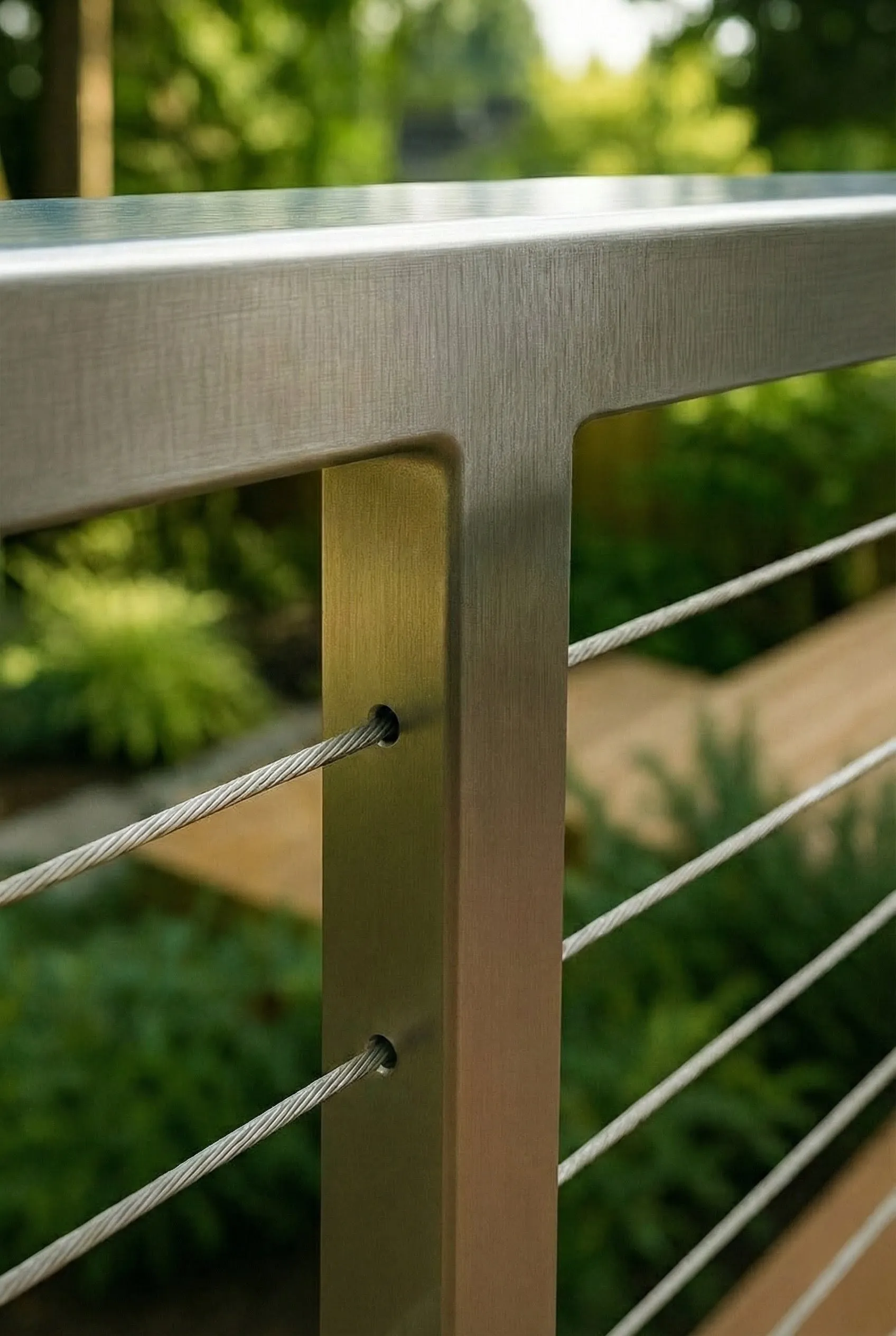
From the Metal Lab
Brushed #4 posts, tensioned 316 cable, and a top rail polished at the welds — the hardware this page is about.
Exterior Standard
Grade 316
Molybdenum Content
2–4%
Full Marine Resistance
PREN 32+
316 vs 304: Why the Alloy Decides How Your Railing Ages
Stainless steel resists corrosion because chromium in the alloy forms a thin, self-healing passive layer on the surface. Chloride ions — salt air off the Strait of Georgia — attack that layer at microscopic weak points and initiate pitting beneath it.
Grade 304 lacks the molybdenum that blocks this attack and shows tan-brown tea staining within 2–3 winters of coastal exposure, spreading from weld points and cut edges. Grade 316 carries 2–4% molybdenum and holds its surface in the wet, chloride-rich environments where 304 fails, which is why 304 is not recommended for exterior coastal use.
| Alloy | PREN (pitting resistance) | Chloride resistance |
|---|---|---|
| Grade 304 | 18–20 | Inadequate for coastal BC |
| Grade 316 | 24–26 | Adequate for most coastal residential — our exterior standard |
| Duplex 2205 | 34–35 | Exceeds the PREN 32 threshold — direct-spray waterfront |
Grade 316 is adequate for the vast majority of residential coastal applications but can still develop surface tea staining in extreme exposure — which is why direct-spray sites get Duplex 2205 and why properties within 500 metres of tidal water should rinse exposed stainless monthly.
The full chemistry is in our guides to how salt air, rain, and freeze-thaw damage railings and choosing a railing material for coastal BC.
Every Railing System We Build, Available in Stainless
Stainless is not a separate product line — it is a material specification that runs through every system we fabricate. The same Coquitlam crew that welds it installs it.
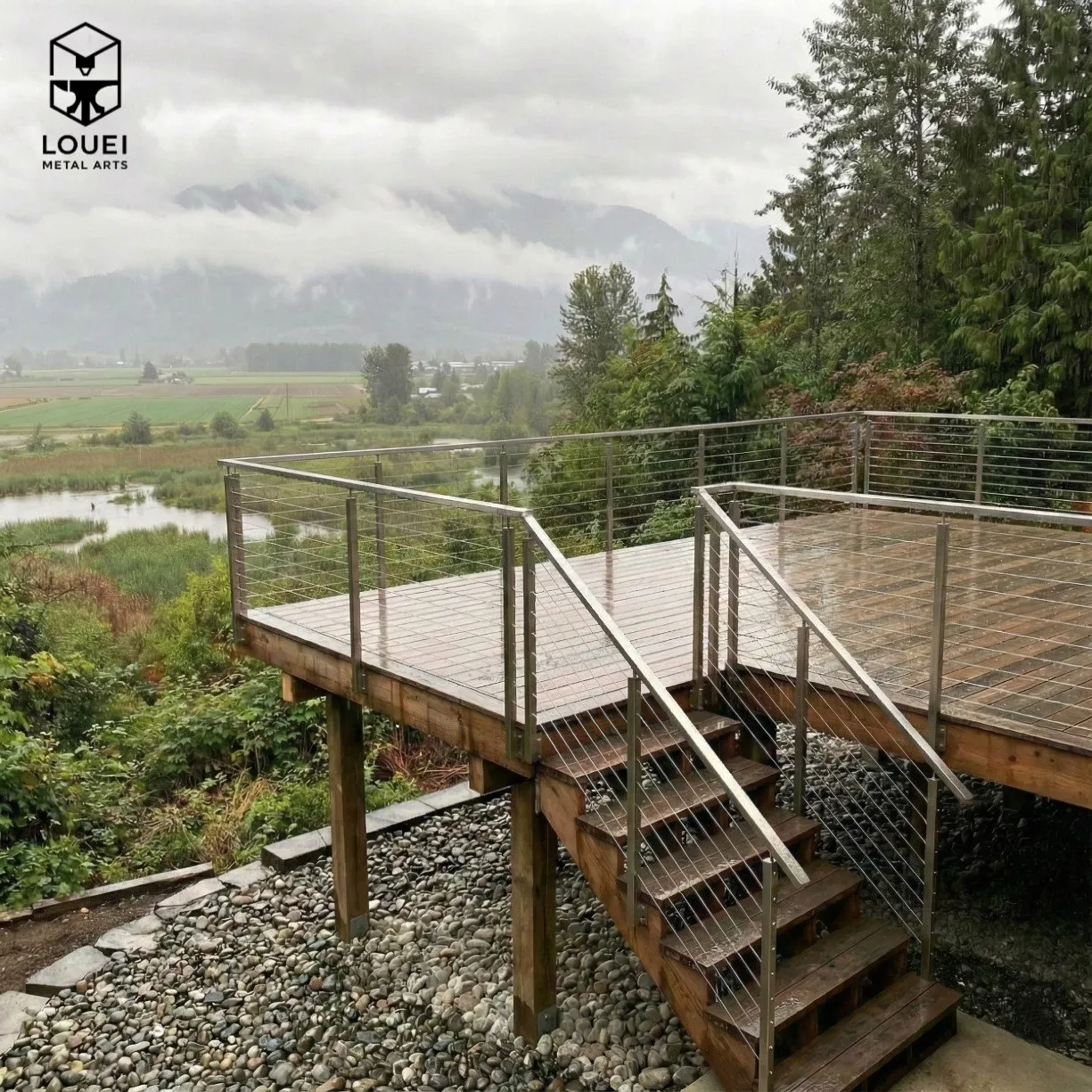
Cable
Stainless Cable Railings
Our ClearView™ Stainless system pairs 50 × 50 mm 316 stainless posts (2.5 mm wall) with 7×19 316 stainless cables at Ø 4 mm and a rectangular brushed top rail. Integrated turnbuckle tensioning keeps every run tight.
Best for
Waterfront decks where long-term corrosion resistance is non-negotiable.
Explore cable railings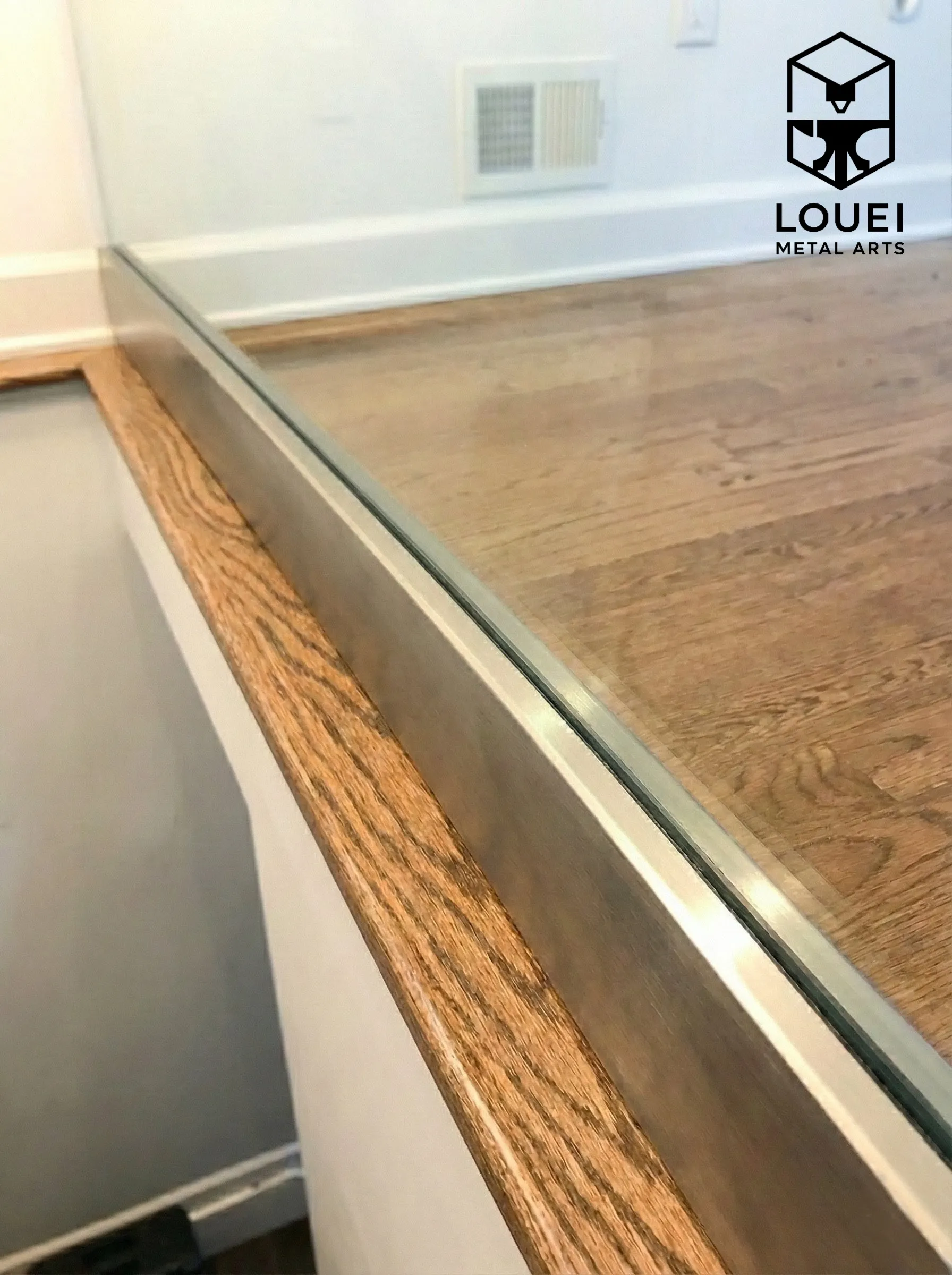
Glass hardware
Stainless Glass Hardware
Standoffs, spigots, clamps, base-shoe channels, and posts in brushed 316 — the fittings that hold frameless and semi-frameless glass on exposed balconies and rooftop decks without staining the panels they carry.
Best for
Glass guards facing salt air on balconies, rooftops, and pool decks.
Explore glass railings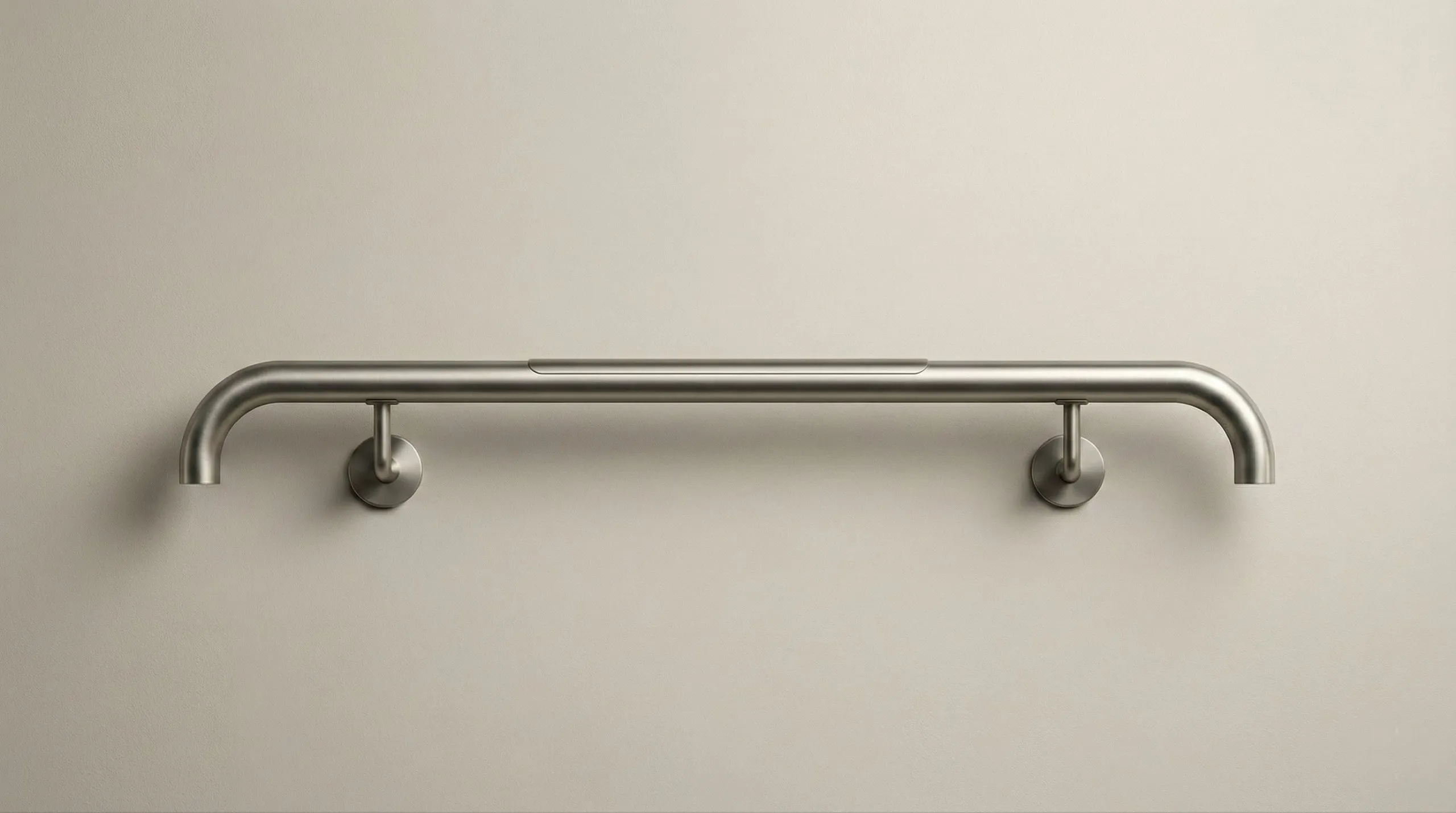
Handrails
Stainless Handrails
Wall-mounted and post-mounted handrails in marine-grade stainless with a brushed finish where the polish marks stay beautifully visible. Continuous, graspable, TIG-welded runs without visible joints.
Best for
Exterior concrete steps, pool decks, and interior stairs.
Explore handrails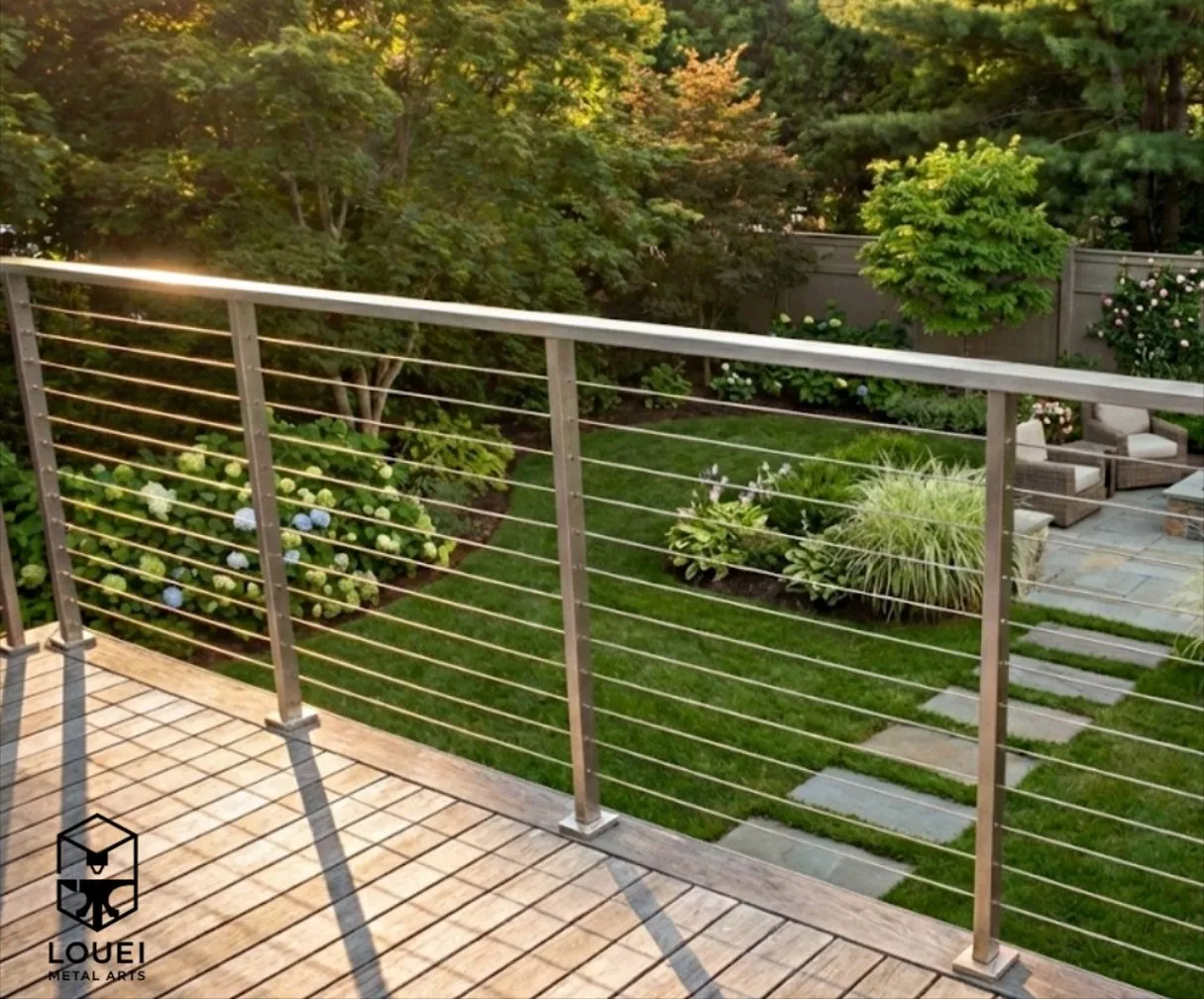
Welded guards
Fully Welded Stainless Guards
Complete guardrails — posts, top rail, and infill — welded and polished as one stainless assembly for projects where the metal itself is the finish. Fabricated in the shop, ground and polished at the welds, and installed by the crew that built them.
Best for
Projects where the bare metal is the architectural statement.
Compare all systemsBrushed #4, Mirror Polish, and PVD Gold
Brushed #4 satin is the standard architectural finish — a directional grain that reflects just enough light to complement concrete, cedar, and glass while hiding fingerprints. Mirror polish turns posts and top rails into a jewellery-grade surface for interior stairs and statement guards.
For gold tones, PVD coating bonds titanium nitride to the stainless surface: PVD Gold, PVD Champagne Gold, and PVD Rose Gold. Because PVD is applied to stainless steel only, stainless is the base material for every gold railing we build — see our guide to shades of gold railings and how pool handrail materials and finishes survive wet environments.
Minutes a Month, Not a Refinishing Cycle
The passive chromium-oxide layer on stainless self-heals when scratched — there is no coating to chip, peel, or repaint.
Inland and sheltered installations need little more than an occasional wash. Properties within 500 metres of tidal water should rinse exposed stainless monthly: the rinse removes accumulated chloride before it can initiate the surface discolouration that appears first at welds and cut edges. Caught early, tea staining is cosmetic and polishes out.
Built to the BC Building Code, Engineered When Required
Stainless changes the metallurgy, not the rules. Guard heights, opening limits, and handrail graspability all apply exactly as they do to any railing system, and we supply P.Eng.-sealed drawings where the project requires engineering.
| Deck / balcony guard height | 1,070 mm |
| Interior stairs within a dwelling | 900 mm |
| Maximum opening | rejects a 100 mm sphere |
| Handrail height / profile | 865–1,070 mm, continuously graspable profile |
Full numbers and exceptions: our BC Building Code railing height guide.
Stainless Steel Railing
Questions, Answered
How much do stainless steel railings cost in Vancouver?
+
Quotes are site-specific: pricing depends on the system (cable, glass hardware, handrail, or full welded guard), the alloy (316 versus Duplex 2205), the finish (brushed #4, mirror, or PVD), post spacing and mounting conditions, and whether P.Eng.-sealed drawings are required. LOUEI work includes a 12-month comprehensive warranty from installation and handover, plus lifetime after-sales service. Send photos and rough dimensions and we measure before we price.
Is 316 stainless steel worth it over 304 in coastal BC?
+
Yes, for any exterior application near salt water. Grade 304 lacks the molybdenum that blocks chloride-induced corrosion and shows tea staining within 2–3 winters in salt air. Grade 316 contains 2–4% molybdenum and resists corrosion in wet, chloride-rich environments, which is why 316 is our exterior standard and why 304 is not recommended for exterior coastal use.
Do stainless steel railings rust near the ocean?
+
Grade 316 stainless will not develop rust under normal Metro Vancouver conditions. Properties within 500 metres of tidal water should rinse exposed stainless monthly to prevent long-term surface discolouration. For direct-spray waterfront locations we step up to Duplex 2205, which exceeds the PREN 32 threshold for full marine chloride resistance.
What finishes are available on stainless steel railings?
+
Brushed #4 satin and mirror polish are the standard finishes. For gold tones, PVD coating bonds titanium nitride to the stainless surface — available as PVD Gold, PVD Champagne Gold, and PVD Rose Gold. PVD finishes are applied to stainless steel only, which makes stainless the base material for gold railings.
Which railing systems can be built in stainless steel?
+
Cable railings with 316 stainless posts and cables, glass railings with stainless standoffs, spigots, and clamps, wall-mounted and post-mounted handrails, and fully welded stainless guards with matching top rails. Pool and wet-area handrails are a common 316 application because chlorine and moisture punish lesser materials.
Do stainless steel railings meet the BC Building Code?
+
Stainless steel can be used when the complete assembly meets the applicable design requirements. Part 9 defaults to 1,070 mm guards with 900 mm exceptions for specified residential conditions; ordinary required-guard openings use a 100 mm sphere. Handrails generally use 865–1,070 mm, with separate graspability and accessibility checks. Loads, connections and professional documentation depend on the project.
Written by LOUEI Metal Arts — custom metal fabrication, Coquitlam, BC.
Get a Stainless Steel Railing Quote
Send photos of the deck, stair, or balcony and rough dimensions — we will recommend the system, alloy, and finish before anything is priced. Call Office: 604-388-6086 or Direct: 778-848-1149.
Primary-source code reference · checked September 24, 2026
Code references for this page
These links go to governments, regulators and the original professional or certification bodies—not other railing businesses. Code text, older local bulletins and advisory guidance are labelled separately. This is an editorial source check, not a professional sign-off, product certification or approval of your project.
Which code applies?
BC province versus the City of Vancouver
Use BCBC 2024 with its published amendments outside the City of Vancouver, and VBBL 2025 inside the city. Vancouver is not the same jurisdiction as North Vancouver or West Vancouver. Permit dates and transition rules matter. A newer national model code does not automatically replace the locally adopted edition.
- Province of BC — BC Building Code 2024Government code register
- Province of BC — BCBC amendments, revisions 1–6Government amendment register
- City of Vancouver — current Building By-law and transition informationMunicipal code register
- NRC — National Building Code of Canada 2025National model code; local adoption must be checked
Guard height and openings
Ordinary Part 9 guards; exceptions must be read with the clause
Articles 9.8.8.1, 9.8.8.3 and 9.8.8.5 cover when a guard is required, its height and openings. The usual trigger is a drop over 600 mm within 1.2 m of the walking surface. Default height is 1,070 mm; qualifying residential guards can use 900 mm, including certain exterior guards at no more than 1,800 mm above finished ground. The ordinary required-guard opening rule prevents a 100 mm sphere passing. Exactly 4 inches is 101.6 mm: metric limits control.
- Province of BC — BCBC 2024, base text (read with amendments)Reference: 9.8.8.1–9.8.8.5 · PDF page 979Building code
- City of Vancouver — VBBL 2025, Volume 2 v3.00Reference: 9.8.8.1–9.8.8.5 · PDF page 30Municipal consolidated code, May 5, 2026
Horizontal cable: the 4.2 m rule and its limits
Separate Part 9, Part 3, exit and pool conditions
For ordinary Part 9 guards, 9.8.8.6.(1) applies the anti-climb requirement above 4.2 m. At or below 4.2 m, horizontal cable is not prohibited by that clause merely because it is climbable; height, openings, loads and connections still apply. Part 3 clause 3.3.1.18.(4) also says more than one storey. Vancouver exit clause 3.4.6.6.(7) has no 4.2 m exception. Pool fencing is separate. 4.2 m is about 13 ft 9.35 in, not 14 ft.
- City of Vancouver — VBBL 2025, Volume 2 v3.00Reference: 9.8.8.6.(1) · PDF page 32Municipal consolidated code, May 5, 2026
- City of Vancouver — VBBL 2025, Volume 1 v4.00Reference: 3.3.1.18.(4); 3.3.1.14; 3.3.4.7; 3.4.6.6.(7) · PDF page 308Municipal consolidated code, May 5, 2026
- Province of BC — BCBC 2024, base text (read with amendments)Reference: 3.3.1.18.(4); 3.4.6.6.(7); 9.8.8.6.(1) · PDF page 983Building code
- City of Vancouver — 2025 code seminar, guard design (page 20)Municipal explanatory presentation, not legislation
- BC Code Interpretation Committee — 24-0010, objects near guards (2024)Advisory interpretation; local authority decides
Loads, anchors and structural materials
The whole assembly and its supporting structure
Use the applicable row of Table 9.8.8.2 or Article 4.1.5.14, not one load for every railing. The Part 9 residential top-load row is 0.5 kN/m OR 1.0 kN concentrated, whichever is critical, with 1.5 kN/m vertical and separate infill loading. Handrail loads under 9.8.7.7 differ. Article 9.8.8.2.(2) refers to adjacent vertical elements; it is not a universal horizontal-cable tension test. Cable diameter, post spacing and pretension need system-specific design. Structural steel, aluminium and glass have separate design references in Part 4.
- City of Vancouver — VBBL 2025, Volume 2 v3.00Reference: 9.8.8.2 and Table 9.8.8.2; 9.8.7.7 · PDF page 31Municipal consolidated code, May 5, 2026
- Province of BC — BCBC 2024, base text (read with amendments)Reference: 4.1.5.14; 4.3.4; 4.3.5; 4.3.6; Table 1.3.1.2 · PDF page 524Building code
- Engineers and Geoscientists BC — Designing Guards for Building Projects v2.0 (2018)Professional practice guidance, not a new code edition
Read the applicable clause and its exceptions, referenced standards and amendments together. The municipal consolidated PDFs are convenience copies; enacted text controls. Proprietary standards are linked through their issuing authorities—we do not claim access to, or reproduce, paywalled standards. Explore the complete topic-by-topic official-source register.