Every railing project in Metro Vancouver starts with a question that sounds simple but rarely is: what does the code actually require?
Whether you’re replacing an old wood deck railing, planning a modern glass railing for a balcony, or looking into cable systems, the rules come from two places:
BC Building Code (BCBC)
For most municipalities including Burnaby, Coquitlam, and Surrey.
Vancouver Building By-law (VBBL)
Strictly for projects inside the City of Vancouver.
These documents are written for engineers and inspectors. This guide translates the parts homeowners actually care about—heights, openings, loads, and the major September 2025 VBBL update—into plain language.
Disclaimer: This is not legal advice. Always confirm your specific situation with your local building department and (when needed) a licensed professional. For primary source information, consult the BC Building Code and the Vancouver Building By-law.
Railing Heights at a Glance
Location → required height → where the rule lives (BC & Vancouver, 2026)
| Location | Required height | Code reference |
|---|---|---|
| Deck / balcony guard (default) | 1,070 mm (42") | BCBC 2024 — 9.8 Guards |
| Deck serving one dwelling, < 1.8 m above grade | 900 mm (36") | BCBC 2024 — 9.8 Guards |
| Interior stairs & landings (within a dwelling) | 900 mm (36") | BCBC 2024 — 9.8 Guards |
| Stair handrail | 865–965 mm Continuous, graspable 30–43 mm profile, measured above the nosing. | BCBC 2024 — 9.8 Handrails |
| Guard required above | 600 mm (24") fall height | BCBC 2024 — 9.8 Guards |
| Max opening anywhere in a guard | 100 mm (4") sphere No opening may allow a 100 mm sphere to pass. | BCBC 2024 — 9.8 Guards |
| Stair triangle opening | 150 mm (6") | BCBC 2024 — 9.8 Guards |
| Climbability restriction | Only if fall height > 4.2 mNew Update | VBBL #14343 (Sept 2025) |
When Is a Guard
Actually Required?
In code language, the protective barrier along an edge is a guard (not a "railing"). A guard is required anywhere people can access a surface and there is a meaningful fall risk.
In Vancouver’s VBBL Part 9 language, a guard is required on each open side of accessible surfaces where the difference in elevation is more than 600 mm (24 inches) between the walking surface and the adjacent surface.
Practical Takeaway"A deck that 'looks low' to you might still trigger a guard requirement if the ground slopes away. That 600 mm threshold isn't 'roughly' optional—it’s a hard trigger for inspectors."
Guard Height:
900 mm vs 1,070 mm
This is the core confusion for "deck railing height BC."
The Default RuleMost guards must be at least 1,070 mm (42 inches) high.
The ExceptionYou are allowed to use a lower 900 mm (36 inch) guard only if:
- It is within a dwelling unit (interior).
- It serves only one dwelling unit AND the drop is less than 1.8m (6 ft).
Real-World Scenario
"In hillside properties like North Vancouver, one end of your deck might be 1.5m off the ground (allowing a 900mm rail), while the other end hovers 3m up. In this scenario, the entire contiguous guard usually defaults to 1,070 mm for safety and visual consistency."
For a system-by-system walkthrough of how these heights play out in glass, cable, and picket builds, see our deck railing in Vancouver guide. For upper-floor units where guard height almost always defaults to 1,070 mm, our balcony railing in Vancouver guide breaks down what strata councils and condo owners need to know. For projects inside city limits — where the VBBL, not the base BCBC, governs — start with our guide to custom railing design in Vancouver. Related: if your older building's guards were flagged in a strata depreciation report, see what a BC strata council does next.
Openings: The 100 mm
Sphere Rule
Code dictates that guards aren't just for leaning on; they must prevent children from falling through or getting stuck.
100 mm Sphere
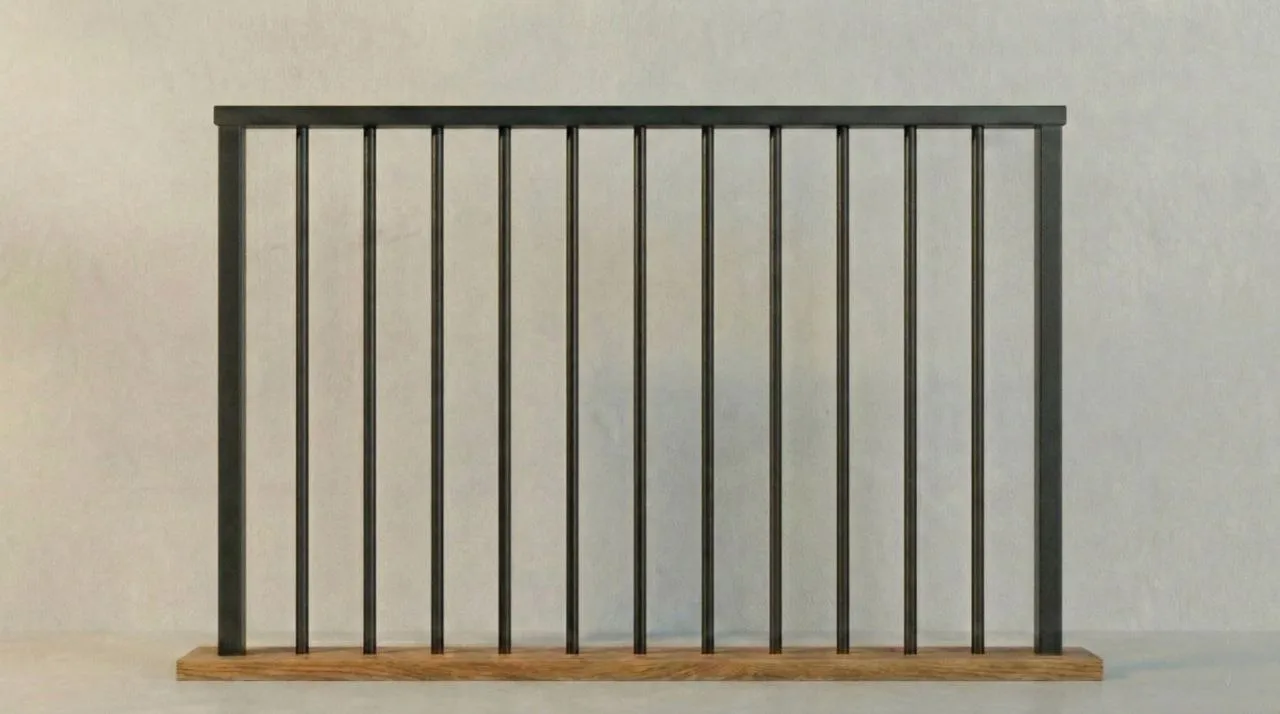
Openings must prevent the passage of a 100 mm diameter sphere. This dictates picket spacing and cable density.
Stair Triangle
The triangular opening formed by the riser, tread, and bottom rail allows a larger 150 mm sphere.
Bottom Sweep
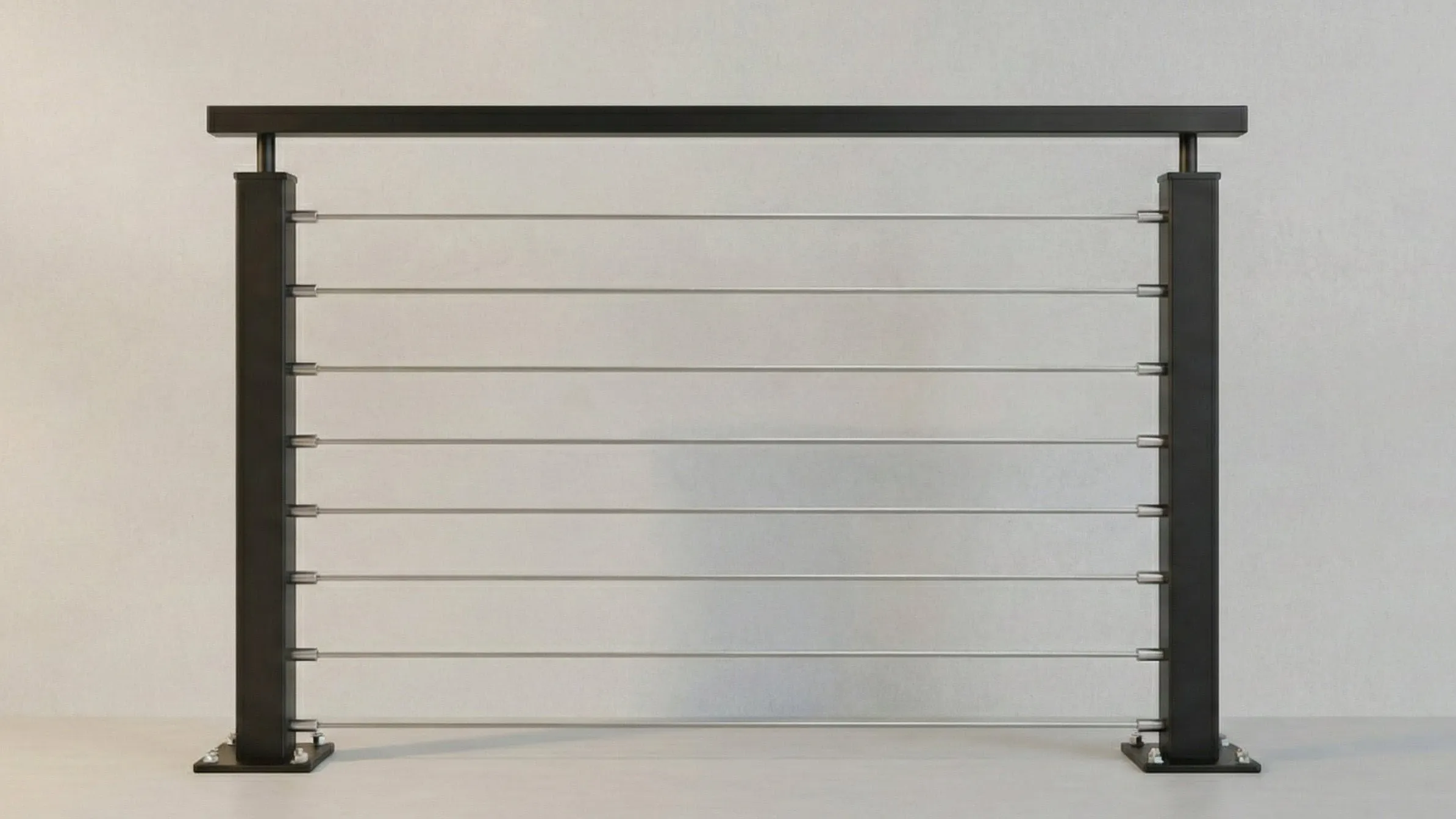
If your deck sags, the gap under the bottom rail can expand beyond 100 mm, causing a failure. For horizontal cable systems, the 100 mm opening rule is affected by cable deflection under load. See why cable railing sags and how tight it needs to stay.
The 2025 Update:
Horizontal Rails Legal?
If you’ve been told "cable railing is illegal in Vancouver," that information is now outdated.
The Change (Sept 15, 2025)
The strict "no climbability" rule (restricting toe-holds) now only applies to guards protecting a fall of more than 4.2 meters (approx. 13.7 ft).
Horizontal cable or bar railings are generally permitted.
Structural Loads:
Life-Safety Systems
Guards are not just decorative boundaries; they must resist real physical forces.
Horizontal Load
0.5 kN/m (approx. 34 lbs/ft) OR a concentrated load of 225 lbs.
Vertical Load
1.5 kN/m at the top.
Critical Warning
"Even strong steel components will fail inspection if the post bases are under-anchored. Lagging a post into plywood decking isn't enough; it must connect to the structural framing."
Furthermore, compromised materials rapidly lose structural integrity. Read our climate destruction guide to understand why inspectors proactively flag railings exhibiting premature rust or material fatigue in coastal BC.
Common Failures
To Avoid
A failed inspection is not a minor inconvenience—it can result in stop-work orders and insurance issues. Learn exactly what happens when your railing fails a building inspection and how to avoid it. Related: how a non-compliant railing affects your home insurance and liability in BC.
Wrong Height on Stairs
Height must be measured vertically from the tread nosing, not the flat floor.
Bottom Gap Too Big
Decks are rarely perfectly level; if the deck sags, the bottom gap opens up beyond 100 mm.
Cable Deflection
Cables might look tight, but if they spread apart under pressure (allowing sphere passage), it’s a fail.
Non-Graspable Handrails
Wide, flat 'cap rails' are often not graspable. You typically need a secondary offset rail for stairs.
For seniors and persons with disabilities, accessibility-compliant handrails meeting Article 9.8.7 graspability may qualify for government rebates — see our 2026 BC Senior Accessibility Rebates guide.
FAQ
Common questions about BC railing heights and codes.
What is the deck railing height in BC?
1,070 mm (42 in) for most residential decks. If the deck serves a single dwelling and its walking surface is less than 1.8 m (6 ft) above the ground, 900 mm (36 in) is permitted.
What height does a guardrail need to be in BC?
1,070 mm (42 in) for guards on decks and balconies. Inside a dwelling — for example on interior stairs and landings — 900 mm (36 in) is permitted.
What is the handrail height code in BC?
865–965 mm, measured vertically above the stair nosing. The handrail must be continuous along the flight and graspable, with a profile of 30–43 mm.
When is a guard required in BC?
Whenever a walking surface is more than 600 mm (24 in) above the adjacent surface. Below that 600 mm threshold the code does not require a guard, though many owners add one anyway.
Is 36 inches (900 mm) ever allowed on a deck?
Yes. 900 mm (36 in) is permitted when the deck serves a single dwelling and its walking surface is less than 1.8 m (6 ft) above the ground. Everywhere else — including strata and commercial decks — guards must be 1,070 mm (42 in).
Are cable railings legal?
Yes. Since Sept 2025, horizontal cable railings are permitted for guards protecting fall heights of 4.2 meters or less.
Do I need a top rail on glass?
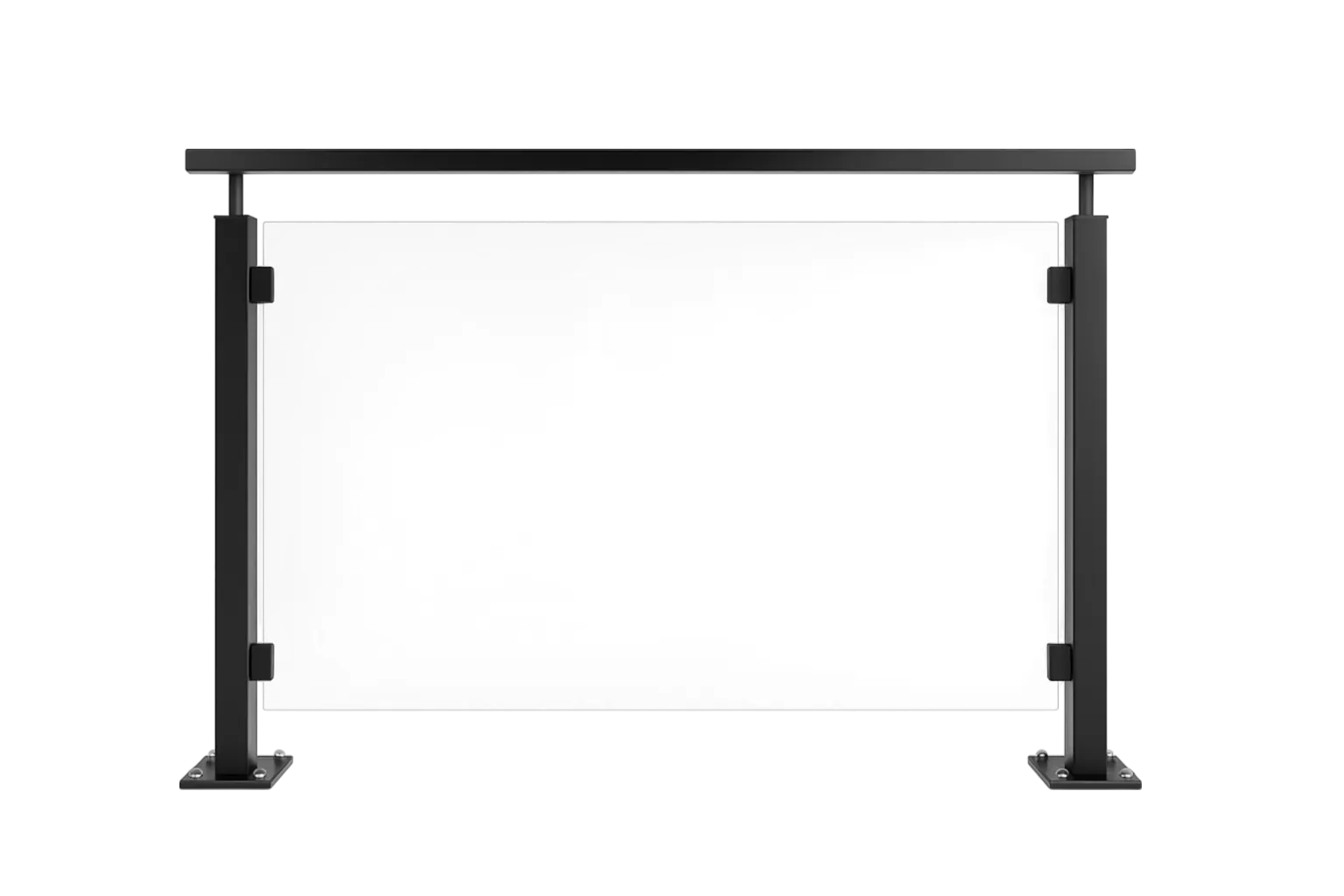
Generally, yes. If a glass panel fails, the guard must remain in place, necessitating a top rail. Cantilevered systems without top caps require specific engineering.

Written by LOUEI Metal Arts
This code interpretation is based on our daily experience pulling permits across Metro Vancouver. As certified architectural fabricators, we design, engineer, and install structural railing systems that pass rigorous code inspections in jurisdictions ranging from Vancouver to all over BC.
About LOUEI Metal Arts
LOUEI Metal Arts is a premier custom metal fabricator serving Vancouver, Burnaby, Coquitlam, and the Lower Mainland. We specialize in high-end, code-compliant architectural systems.