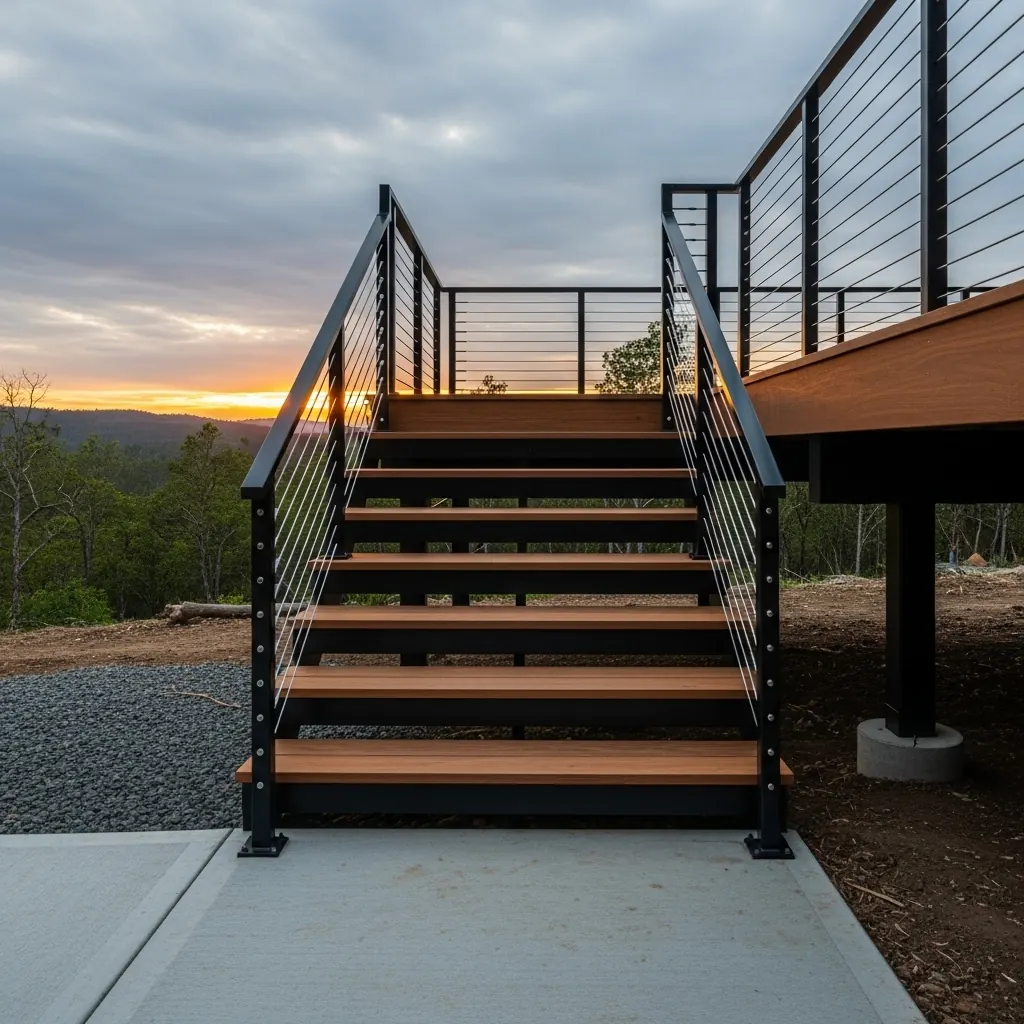
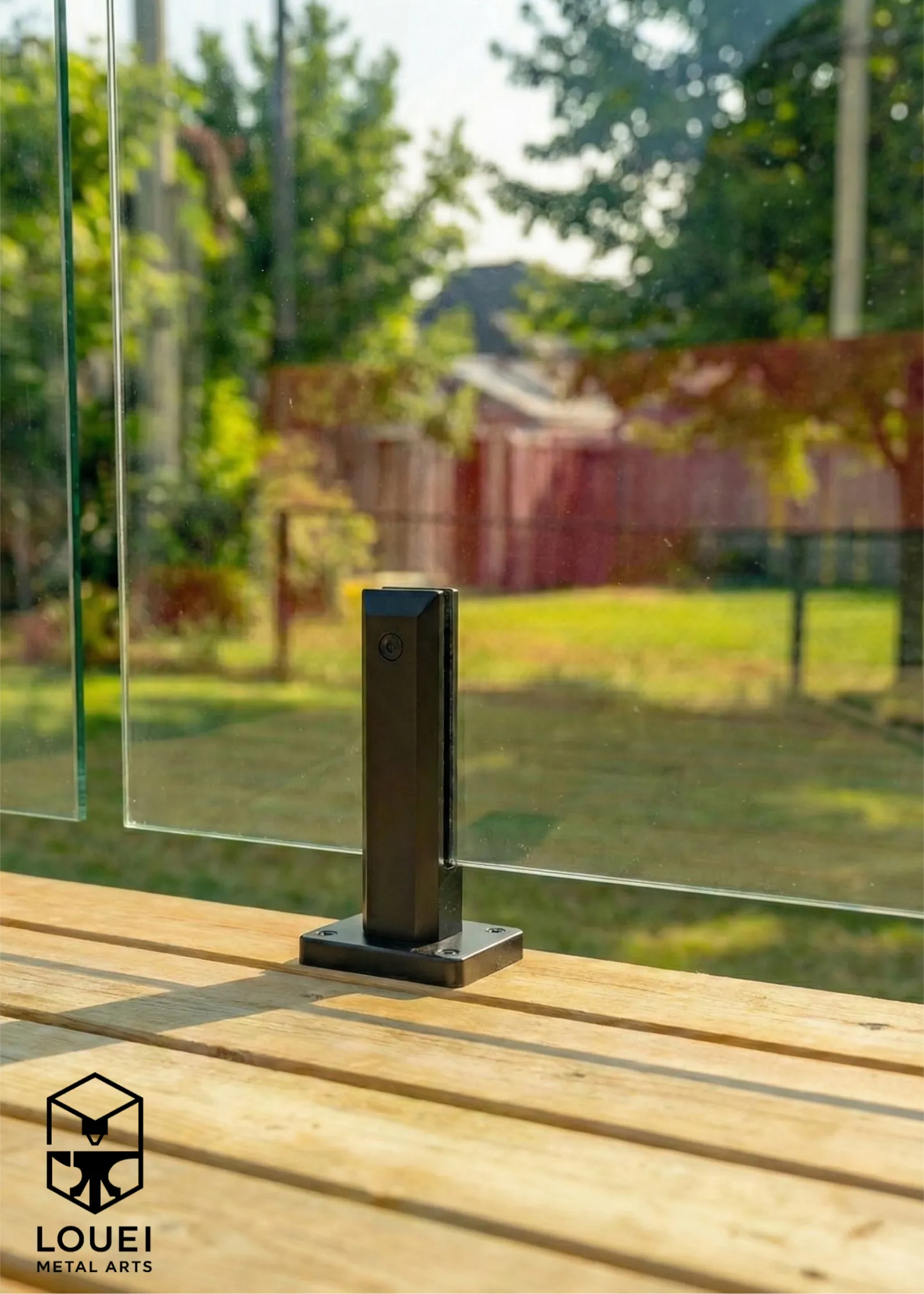
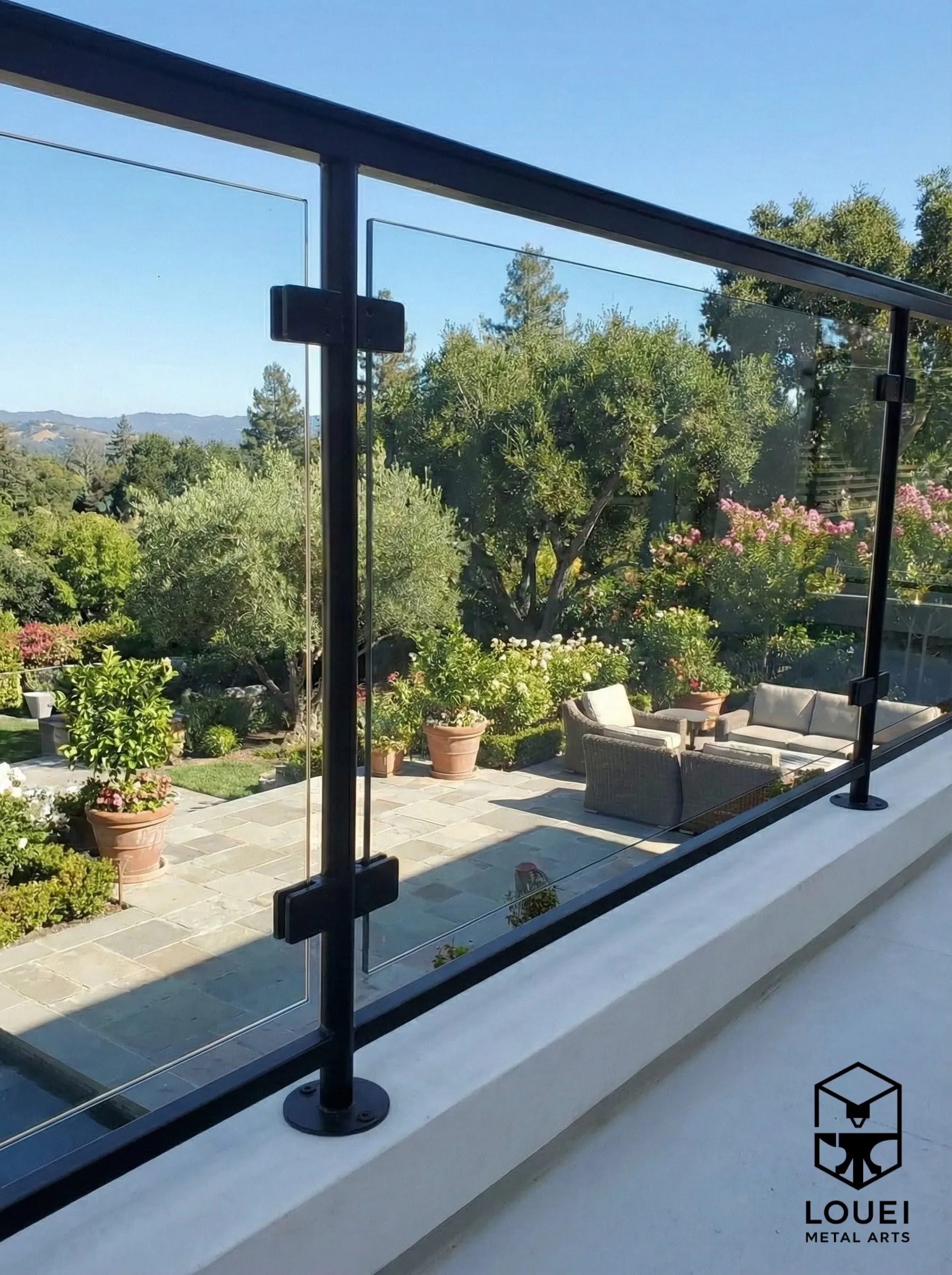
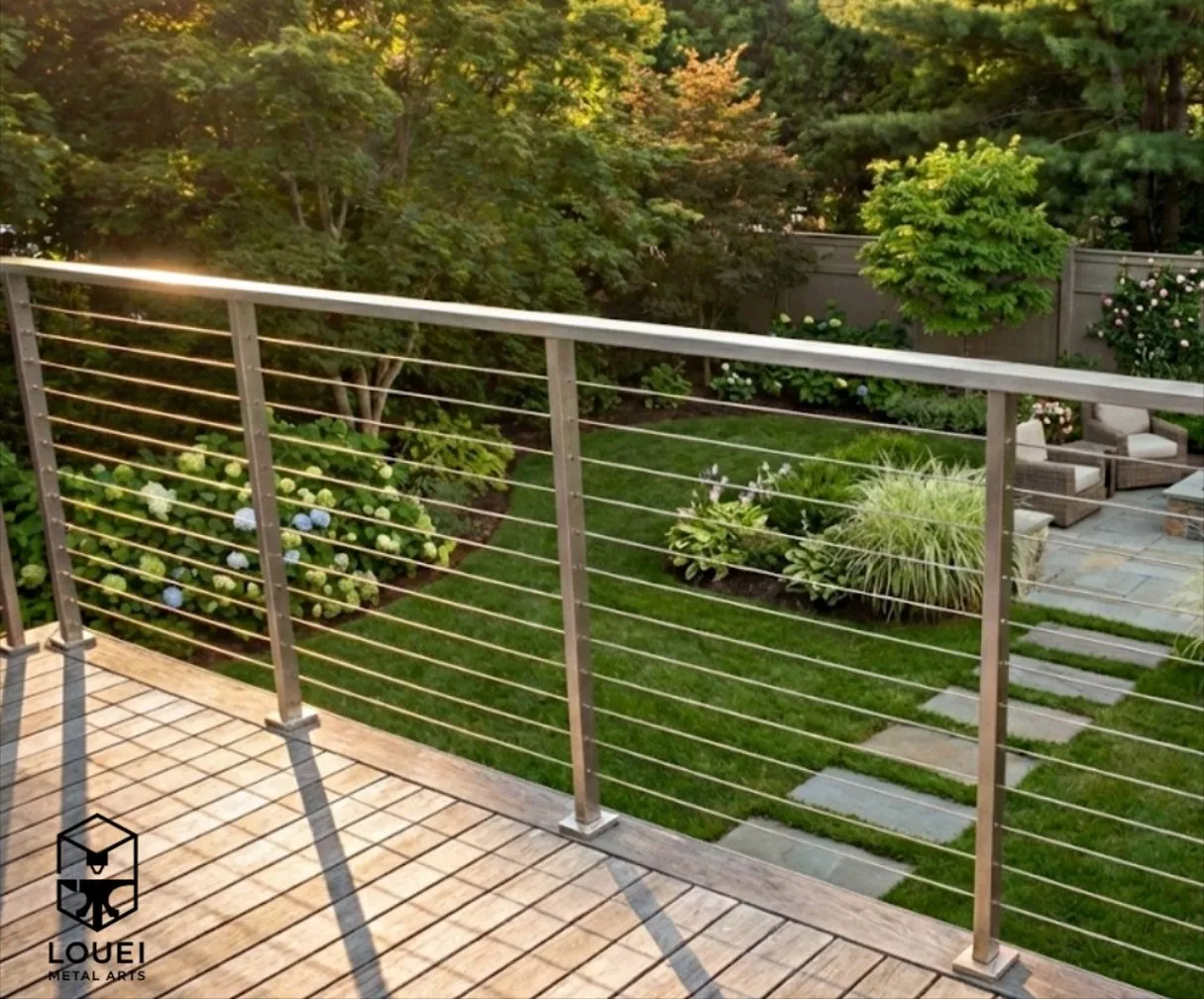
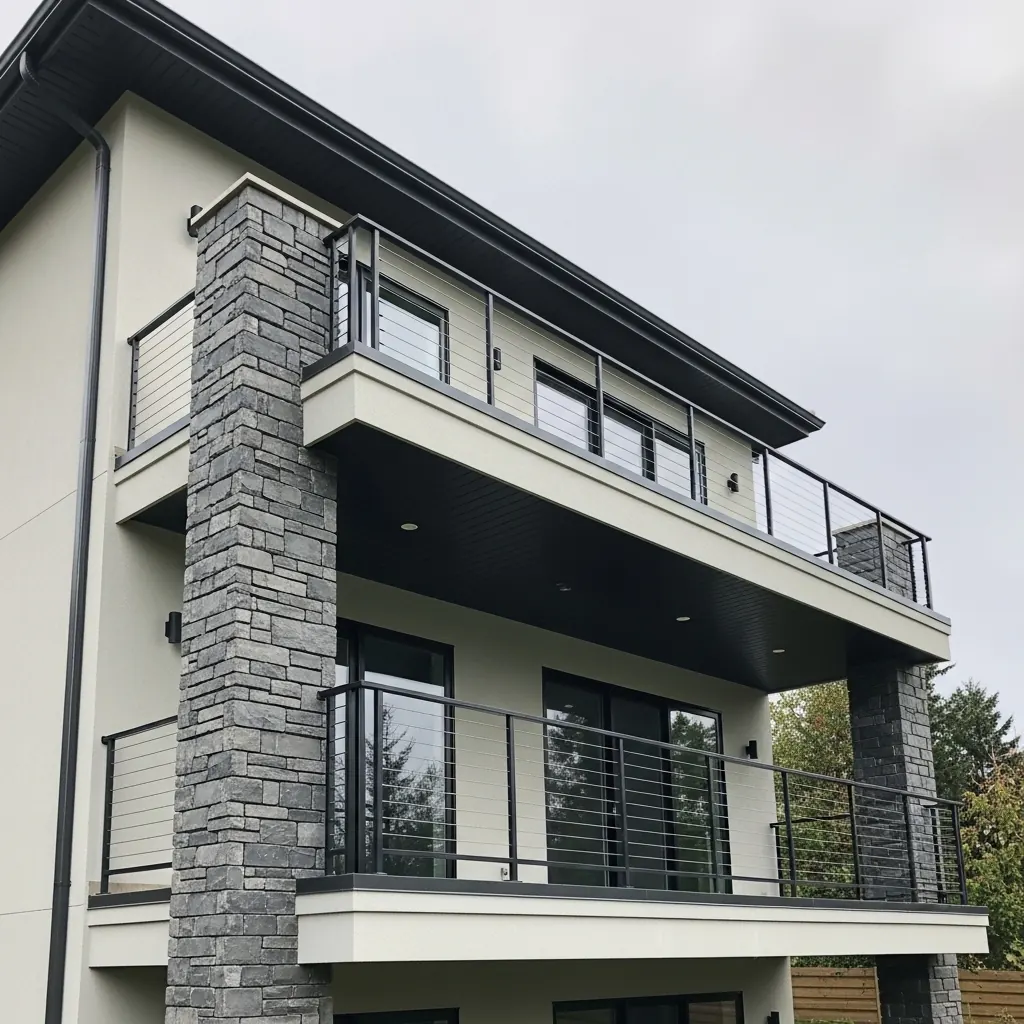
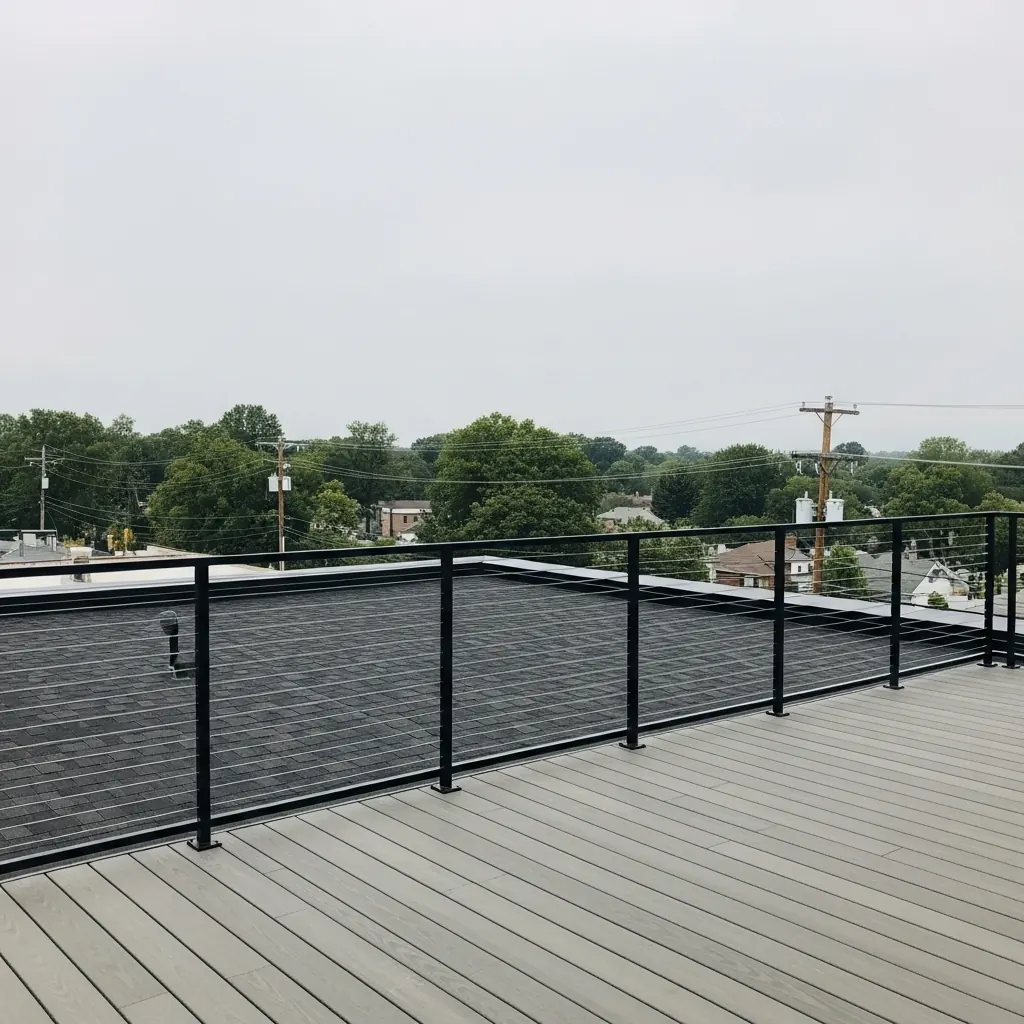
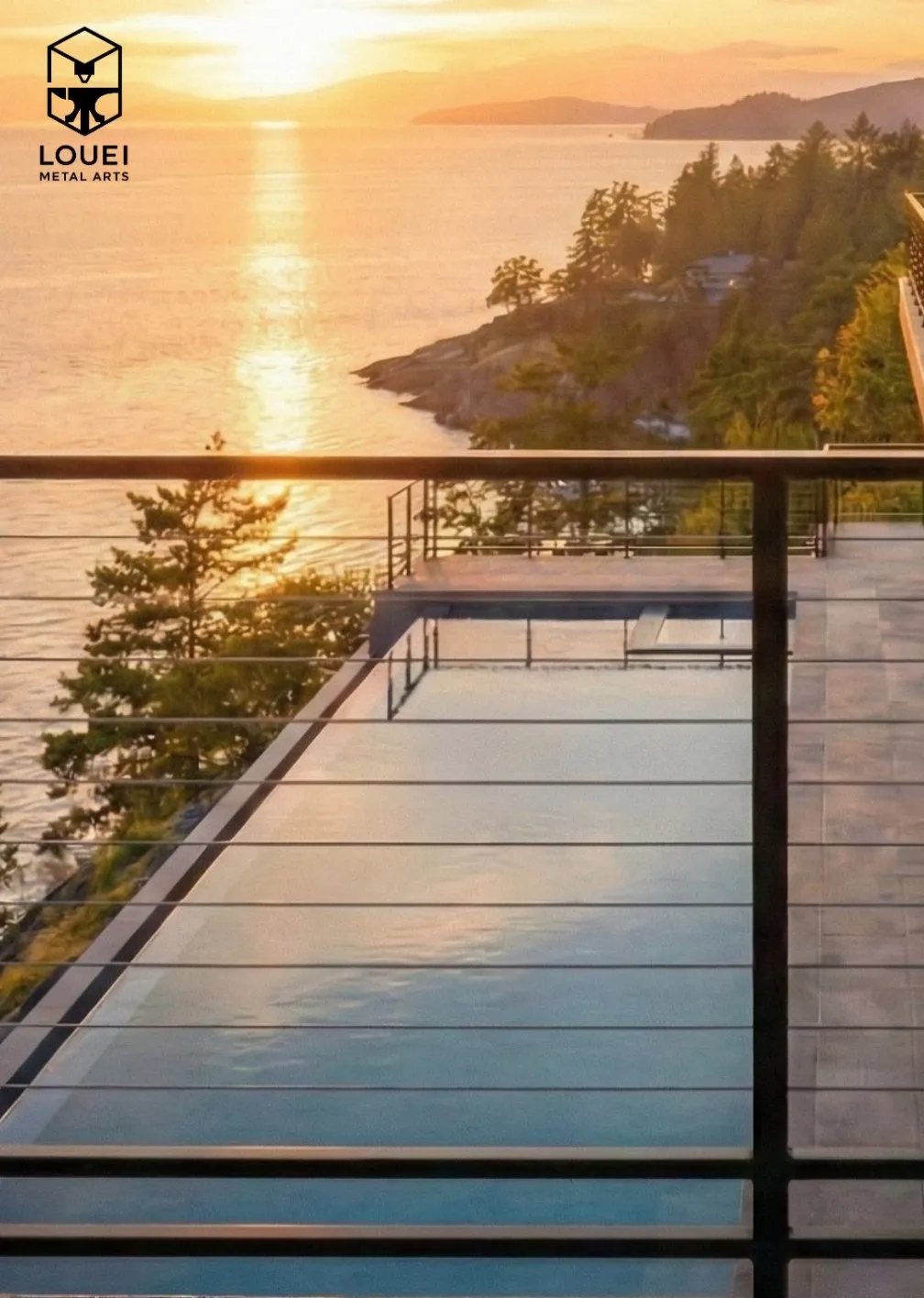
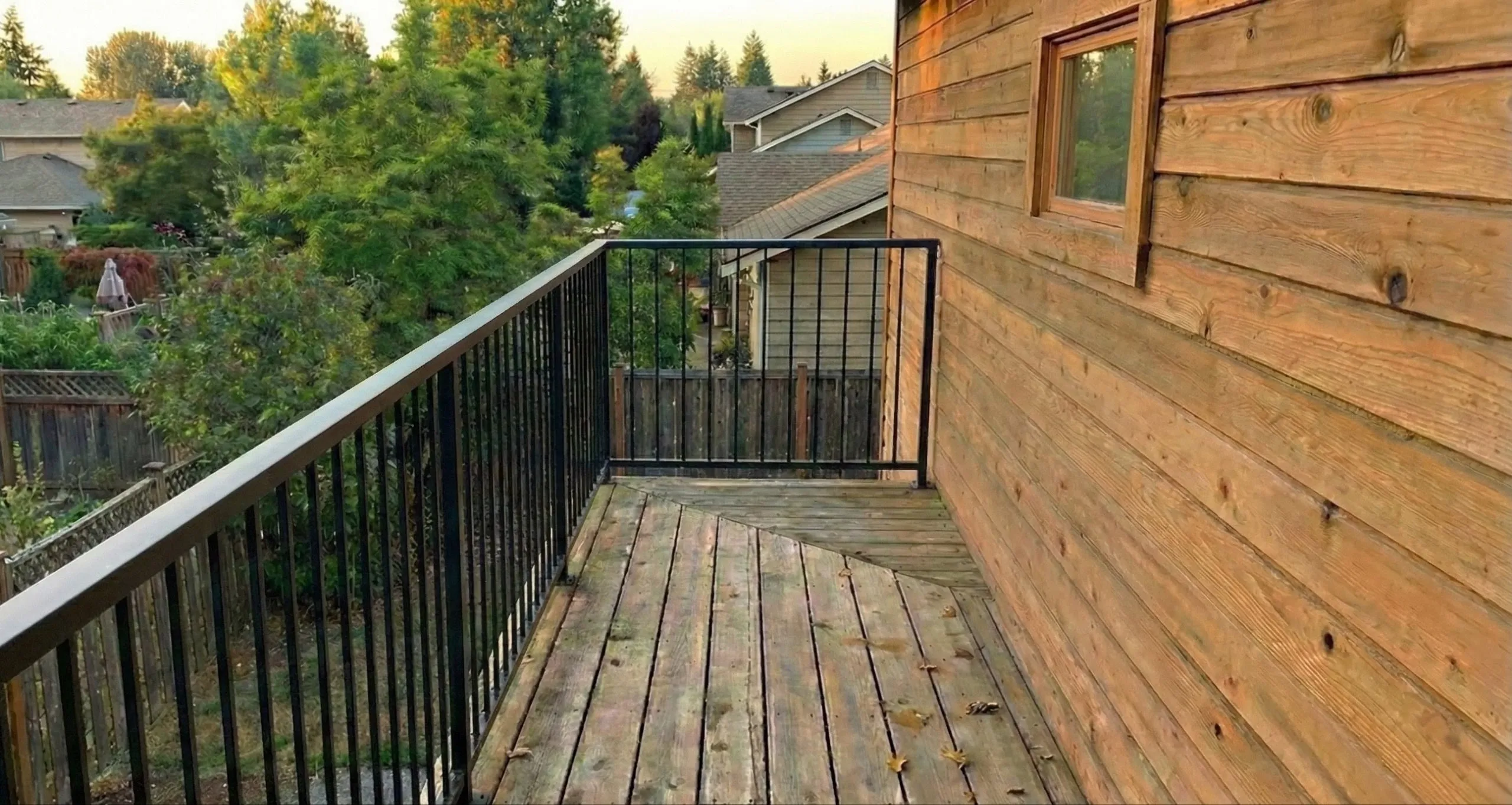
Custom deck railing for Vancouver homes and builders.
For homeowners and builders looking for a deck railing contractor in Vancouver, LOUEI coordinates custom deck railing from fabrication planning through installation. Glass, cable, picket, aluminum, or welded steel systems are planned around the deck's drop height, edge structure, neighbourhood exposure, material choice, replacement details, and confirmed site condition.
Every dimension on your deck railing is yours to choose. We are not a kit reseller, not a supply-house, not a brand re-shipper. Every post, rail, picket, glass panel, cable, and bracket is cut, welded, finished, and installed by the same LOUEI crew.
If you have a vision, we build to it. If you have a deck and no vision, we map your situation to the systems that fit.
You decide
System · glass, cable, picket, aluminum, welded steel, or hybrid
Material grade · 316 marine-grade stainless, Duplex 2205, powder-coated steel, aluminum, low-iron tempered or laminated glass
Finish · any RAL colour powder coat, brushed or polished stainless
Four things change for decks that do not change for balconies, interior stairs, or commercial guards. If your project is a balcony rather than a deck, our balcony-specific buyer guide covers the different load paths, drainage, and strata rules that apply.
01
Drop height changes the system.
Decks sit at every drop category. Each height triggers different BC Code requirements and different cable rules under VBBL #14343.
02
Edge structure varies wildly.
Wood rim joist, concrete slab, steel framing, composite, wrapped fascia. The same system installs differently — and fails differently — on each edge.
03
Vancouver weather hits decks hardest.
Rain volume, salt air, freeze-thaw, UV. Material grade and finish system matter more than on protected work.
04
Decks change after install.
Hot tubs, planters, strata neighbour replacements. The railing outlives the deck around it. Build for what the deck will become.
"Standard residential deck framing — 2x8 or 2x10 PT lumber."
We check age of framing, visible rot, lag bolt pull-out test, blocking between joists, membrane condition. PT 2x8 looks fine for 15–20 years, then fails. We have pulled lag bolts that came out of rotted framing with hand pressure — the railing felt solid until it was tested. Top-mount and fascia-mount both depend on this surface being sound.
Cleanest install
Concrete slab edge
"Concrete patio, roof deck, or poured slab with finished edge."
We check slab thickness at edge, edge condition, existing waterproofing, anchor edge-distance requirements. Concrete is the most predictable mounting surface. Base plates with mechanical or epoxy anchors carry railing loads reliably. The only watch is thin slab edges where anchor edge distance falls short of spec.
Specialty detail
Composite or capped deck
"Composite decking, capped wood-plastic, or rubber surface."
Composite carries no railing load by itself. The structural connection has to bypass the composite skin and reach the framing below. We use steel mounting brackets or through-bolt systems to do this without compromising the manufacturer warranty.
Predictable load
Steel deck or balcony plate
"Steel-framed deck, metal balcony, or pan-and-pour assembly."
The most predictable surface for railing load — but the most particular about finish. Any new weld bead has to be ground, primed, and coated to match. We document existing coating systems before recommending an approach.
BC Code answers your deck railing question differently depending on how high the drop is.
Quick code lookup
Find your deck's drop category.
Measure from the deck walking surface to the adjacent surface below. Use the measured range, not a rounded imperial equivalent, for an ordinary Part 9 screening result.
This tool does not determine code compliance or system approval. Pool enclosures, exit and egress guards, stair handrails, Part 3 buildings, structural loads, glazing, permits, and local amendments require separate project review.
Based on your selection
This is a starting point, not a compliance decision.
For ordinary Part 9 guards, cable is not prohibited solely for climbability at this height. Drop height is only one input. A 900 mm guard may be available in a qualifying single-unit residential condition; otherwise a different height can apply. Cable, glass type, structural review, permits, and enclosure requirements still depend on the jurisdiction, occupancy, location, and complete site condition.
Screening notes
Guard height · Project-specific · 900 mm may apply; otherwise 1,070 mm
Most ground-floor backyard decks
Climbability screenThe 4.2 m threshold addresses one guard provision only
Cable / infillNot decided by drop height alone
GlassConfirm safety-glazing and support requirements for the system
Loads and anchorageVerify the complete guard and its connections for the project
Special conditionsPool enclosure, exit/egress, stair handrail, and Part 3 conditions need separate review
Professional reviewMay be required; confirm before fabrication
Horizontal cable is an option under ordinary Part 9, subject to the complete design.
Under ordinary Part 9 Article 9.8.8.6.(1), the anti-climb trigger is above 4.2 m; cable is not prohibited solely for climbability at or below it. This is not blanket approval. Vancouver exit clause 3.4.6.6.(7) has no 4.2 m exception. Confirm guard height, openings under load, structural loads and anchorage, glazing, occupancy, permit path, and any pool-enclosure, exit/egress, stair, strata, or Part 3 conditions for the actual project.
Screening notes
Guard height · 1,070 mm default under Part 9
Second-storey and elevated decks · the largest Metro Vancouver category
Climbability screenAt or below 4.2 m does not by itself establish compliance
Cable / infillAssess openings, deflection, loads, anchorage, use, and local acceptance
GlassSelect only after safety-glazing and structural details are confirmed
Guard heightConfirm the applicable requirement for the occupancy and condition
Special conditionsPool enclosure, exit/egress, stair handrail, and Part 3 conditions are separate
Professional reviewConfirm with the local authority and qualified professional as required
A higher fall triggers a stricter climbability review.
For a level more than 4.2 m above the adjacent level, the applicable guard provisions include a non-climbability requirement. Do not select a system from this result alone: the authority having jurisdiction or a qualified professional must assess the guard design, occupancy, code part, exits, loads, anchorage, glazing, handrails, and permit requirements.
Screening notes
Guard height · 1,070 mm default under Part 9
Third-storey and high-rise decks · stricter rules apply
Climbability screenThe guard must be assessed against the applicable non-climbability provision
Cable / infillDo not assume suitability; obtain project-specific confirmation
GlassConfirm safety-glazing, support, redundancy, and structural details
Loads and anchorageProject-specific structural verification is required
Exit and occupancyPart 3, exit/egress, and occupancy rules may change the result
Professional reviewConfirm before design, quotation, or fabrication
Systems to assess
Non-climbable guard design — professional reviewGlass — professional reviewPicket — professional reviewCustom metal — professional review
Primary text: VBBL 9.8.8.3 and 9.8.8.6; Vancouver exit guards, 3.4.6.6.(7); BCBC 2024. Sources checked September 24, 2026. Responsible status: LOUEI editorial safety review complete; interpretation and project-specific approval remain with the authority having jurisdiction and, where required, a qualified registered professional.
01
Up to 1.8 m drop
Single-unit residential exception possible
Ordinary Part 9: a qualifying exterior residential guard can be 900 mm at no more than 1,800 mm above finished ground. Openings, the applicable load-table row and connections still apply. Cable is not prohibited solely for climbability at this height; exits and pools require separate assessment.
02
Above 1.8 m to 4.2 m drop
Most second-storey and elevated decks
Ordinary Part 9: 1,070 mm default guard height; apply the 100 mm opening rule and its exceptions. At or below 4.2 m, cable is not prohibited solely for climbability. Glass type is selected from safety-glazing and structural requirements, not from a 1.8 m drop alone.
03
Over 4.2 m drop
Anti-climbing rules still apply
Ordinary Part 9 requires non-climbable detailing in the 140–900 mm zone above a 4.2 m drop. Part 3 also includes a storey condition. Check guard height, openings, loads, glazing and connections; neither glass type nor approval is determined by height alone.
Detail · Sphere Rule
The 4-inch rule, explained.
The "4-inch rule" is officially the 100 mm sphere rule: no opening in a guard may allow a 100 mm sphere (~4 inches) to pass through, even under design load. This drives picket spacing (we design at 95 mm centre-to-centre), cable spacing (~76 mm centre-to-centre with engineered post stiffness to resist deflection), and glass-to-post gap detailing.
The rule applies regardless of drop height. We design every system to pass the sphere test under full BCBC load conditions — not just at rest. For the full code reference, read the BC Building Code railing guide.
First-Visit Pass
What fails inspection on Vancouver decks.
Most deck railing installations that fail municipal inspection fail for one of five reasons. We design around each on every project.
01
Cable deflection past 100 mm under load.
Cables look tight at install but separate under lateral pressure. Cause: undersized cables, soft posts, or post spacing too wide. Fix: re-tension and add intermediate posts, or rebuild with stiffer post profile.
02
Guard height under 1,070 mm on falls over 1.8 m.
A 900 mm railing installed on a deck whose actual drop exceeds 1.8 m. Cause: misreading the single-unit exception. Fix: extend or replace.
03
The assembly does not meet the applicable guard loads.
Decorative top rails that bend under a person leaning. Cause: thin tube wall, poor weld penetration, insufficient post anchoring. Fix: sister-reinforce or replace.
04
Stair handrail not graspable.
A wide flat cap rail does not qualify under BCBC. Stairs require 32–43 mm cross-section profile. Cause: confusing guard with handrail. Fix: add a secondary offset handrail.
Lag bolts into rotted PT framing. Looks fine until inspector pulls. Cause: skipping the probe test. Fix: repair or replace the rim joist before re-anchoring.
If your railing just failed inspection, send photos and the inspector's report. We identify the path forward in writing within a business day. And if it passed but you're unsure it's current, could an out-of-code railing affect your insurance?
VBBL 2025 took effect September 15, 2025. Ordinary Part 9 Article 9.8.8.6.(1) applies its climbability trigger above 4.2 m. At or below that level, cable can be considered subject to all other requirements. Part 3, Vancouver exit guards and pool enclosures have separate rules.
For deck owners specifically
· Ordinary Part 9 at or below 4.2 m — no climbability prohibition from that clause alone
· Part 3 — check the more-than-one-storey condition
· Vancouver exit guards — no 4.2 m exception in 3.4.6.6.(7)
· Pool enclosures — separate fence, opening, climbability and gate requirements
The current code must be read as a whole, including amendments, structural requirements and permits. Decks are only one part of the work — see the rest of our custom railing work across Vancouver, from stairs to full-property projects under the same by-law.
Most Metro Vancouver decks fit one of these. Each carries different priorities, code applications, and material specifications.
Most common
Ground-floor backyard deck
"Single-storey, attached to the back of a Coquitlam, Burnaby, or Port Moody home."
Common systems · Picket · Aluminum · Welded steel
Drop usually under 1.8 m. Daily-use durability matters more than transparency. Family priorities lead. What we need: photos, approximate linear feet, drop confirmation, finish preference.
Most variable
Second-storey elevated deck
"Above garage or main living level, common in North Shore and West Van homes."
Common systems · Glass · Cable · Mixed picket/glass
Above 1.8 m to 4.2 m, often view-priority. Ordinary Part 9 permits consideration of cable without a climbability prohibition at this height, subject to all other requirements. Glass specification is not determined by drop alone. Send photos from deck and ground level, measured drop and view direction.
Specialty install
Rooftop deck
"Top-of-building deck with HVAC, planters, entertaining space."
Common systems · Glass with wind-screening · Cable · Frameless guard with planter integration
Wind loads change the engineering. Anchoring requires waterproofing coordination. What we need: photos, building section drawing if available, wind direction, roof membrane type.
Material-driven
Pool surround deck
"Deck around in-ground pool, infinity edge, or spa surround."
Common systems · Glass · Cable with 316 SS · Frameless guard
Pool chemistry accelerates corrosion. 316 marine-grade stainless is the minimum. What we need: photos, pool type (chlorine vs salt), splash zone proximity.
For cantilever decks, multi-level terraces, or unusual geometries, send photos and we map the engineering path in writing.
Multi-Unit
Townhouse, strata, and multi-unit deck railings.
Multi-unit projects carry constraints single-family work does not. We handle council coordination, repeatable detailing, and access logistics — without sacrificing the customization that makes the system right for each unit.
A strata project is not catalogue work. Each unit on a multi-level building can face different exposure or drop heights. System and finish stay uniform across the building. Mounting, hardware spec, and material grade flex with each unit's situation.
· Strata council approval with spec sheets and engineering coordination where required
· Repeatability across units (post spacing, hardware, finish stay uniform)
· Phased installation over weeks or months
· Resident access coordination
· Documentation for property managers (insurance, WorkSafeBC, warranty)
Common applications
· Townhouse complex backyard retrofits
· Condo balcony deck replacement campaigns
· Strata-shared rooftop guard upgrades
· Heritage compliance
· Combined waterproofing-plus-railing projects
Local Conditions
Vancouver decks fail differently in different neighbourhoods.
Salt air, rain volume, freeze-thaw, and UV vary across Metro Vancouver. Material grade changes with the neighbourhood. Our coastal BC material guide goes deeper.
Conditions · Direct salt air · Water exposure · West-facing UV
316 marine-grade stainless minimum. Duplex 2205 for water-line. Powder-coated steel only with marine-spec coating. Standard 304 shows tea staining within 2–3 winters. Standard powder coat shows fastener-point rust by year 3.
Powder-coated steel with super-durable polyester. 316 SS for cable hardware. Drainage detail on glass base-shoe. Inland-spec finishes fail at fastener points where rain pools.
Conditions · Standard urban · Mixed sun and shade · Moderate rain
Powder-coated steel standard. 304 SS acceptable for non-cable hardware. The most forgiving zone — most failures here are anchor failures (rotted PT framing) rather than material failures.
Richmond / Steveston / waterfront south
Conditions · Salt air (coastal) · High humidity · Flat exposure
316 marine-grade stainless. Aluminum or full SS systems preferred over carbon steel. Drainage critical on glass. Humidity sits longer on surfaces, accelerating corrosion at any unsealed point.
Sometimes the deck is the problem, not the railing.
Deck contractor
When the deck itself is the problem.
Use when framing is rotted, decking needs replacement, membrane has failed, drainage is wrong, deck is being rebuilt from joists up. They reframe, re-deck, rebuild structure, install waterproofing. We coordinate timing — wait for the deck contractor or work alongside on phased projects. We do not bolt railings onto compromised structure. For renewal work, see how railing removal, storage and reinstallation should be coordinated with waterproofing.
Railing fabricator · LOUEI
When the deck is sound but the railing is the problem.
Use when deck is sound but railings are aged, non-compliant, or wrong system. When you want glass, cable, or custom welded steel. When drop or VBBL change requires updated guards. We measure, design, fabricate in Coquitlam, finish, install — same crew through all five steps. When we find deck problems, we tell you. We do not paper over it.
DIY vs Custom
When a kit makes sense — and when it does not.
If your deck is straight, level, ground-floor, and you want basic aluminum, a kit is the right call. We will tell you that.
· The drop, code classification or proposed system requires project-specific structural and glazing design
· The deck connects to stairs, gates, or landings
· The fascia needs custom detailing
· The deck sits in an exposed neighbourhood like West Van, Coal Harbour, or Richmond
· The municipality will inspect
· You want a finish that lasts past year three
We do not resell kits. Every post, bracket, picket, and handrail is cut, welded, finished, and installed by the LOUEI crew.
Avoid
Common deck railing mistakes Vancouver homeowners make.
01
Choosing the system before measuring the drop.
Homeowners pick glass or cable based on look, then find out the drop puts them in a different code category. Measure first. System follows the code.
02
Trusting "code compliant" without specifics.
Every fabricator says "code compliant." It is meaningless without specifics — which BCBC edition, which VBBL article, what guard height, what sphere test, what load. Ask for specifics in writing.
03
Underspeccing hardware for the neighbourhood.
A West Van waterfront deck installed with 304 stainless looks identical to 316 — for about two years. Then 304 starts tea staining. Hardware grade is invisible at install. Get it in writing.
04
Replacing the railing without thinking 20 years ahead.
A deck railing outlives most renovations. Hot tubs, planters, strata replacements all happen after the railing is set. Build for the future deck, not just today's.
Process
What happens after you send photos.
Five steps from photo to install.
01
Photos and rough numbers
We need: deck inside view, deck outside view, edge close-up, wide site shot, any existing railing. Approximate linear feet. Drop if known. What matters most.
Same day or next business day.
02
Written recommendation
Email with recommended system (or two options), open questions, project scope. No site visit yet.
1–2 business days.
03
Site measurement and written quote
Probe test on PT framing, structure behind fascia, mounting strategy. Written quote with material grade, hardware spec, finish system, and code references itemized.
1–2 weeks from recommendation.
04
Fabrication in Coquitlam
Welding coordinated to project requirements. Sandblast, zinc-rich primer, and durable polyester powder-coat options. Glass tempered or laminated to spec.
2–4 weeks.
05
Installation and walkthrough
Same crew installs. Walkthrough covers alignment, anchorage, guard height, opening dimensions, finish quality, code points. You sign off when it is right.
Location · West Vancouver · Drop · 2.4 m · Edge · Concrete slab
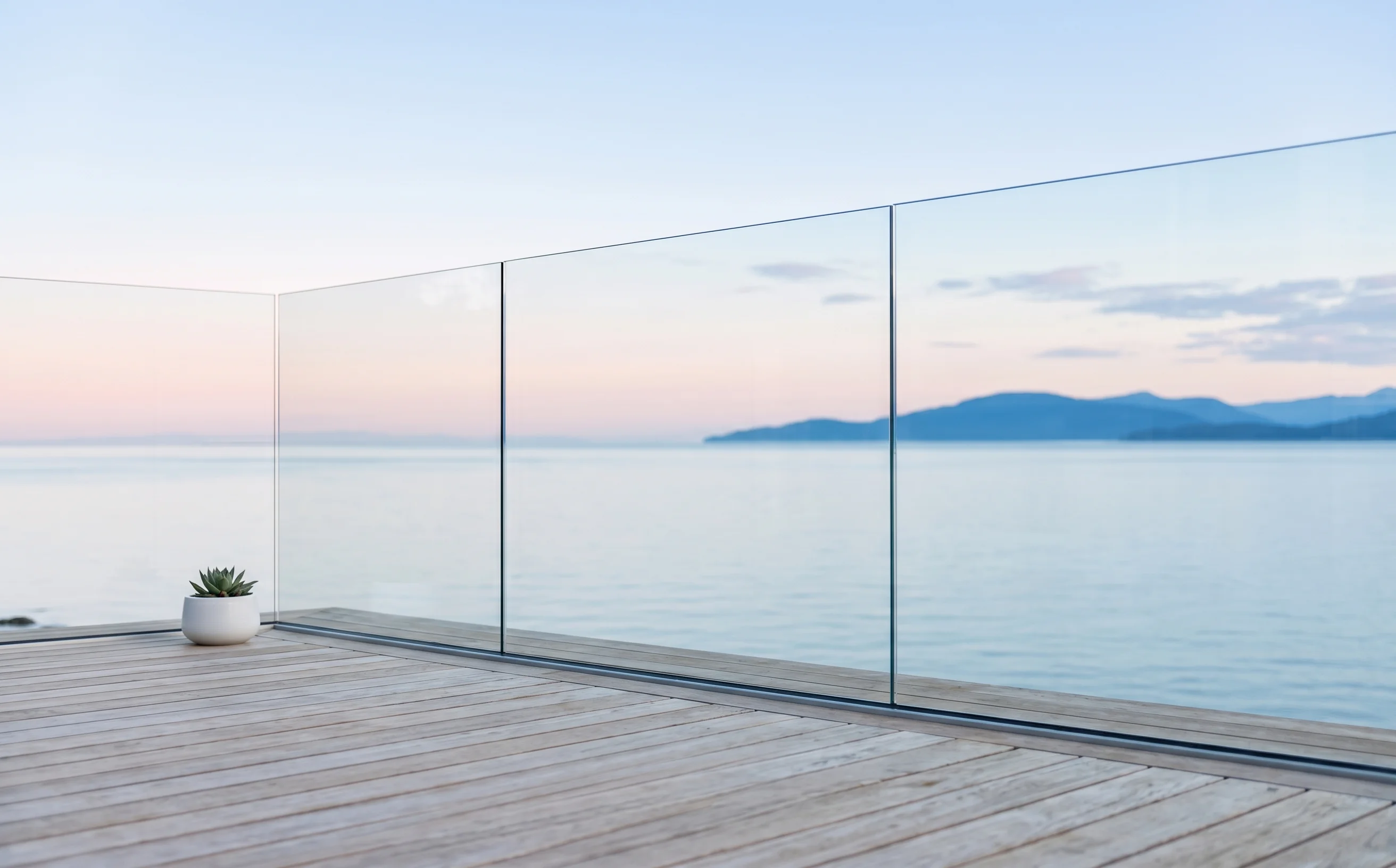
Frameless base-shoe glass, 12 mm low-iron tempered, 316 SS top cap. The view across Burrard Inlet was the asset. At full transparency, the railing reads as a line of light.
Exposed coastal deck
Location · West Vancouver waterfront · Drop · 1.6 m · Edge · PT 2x10 rim joist
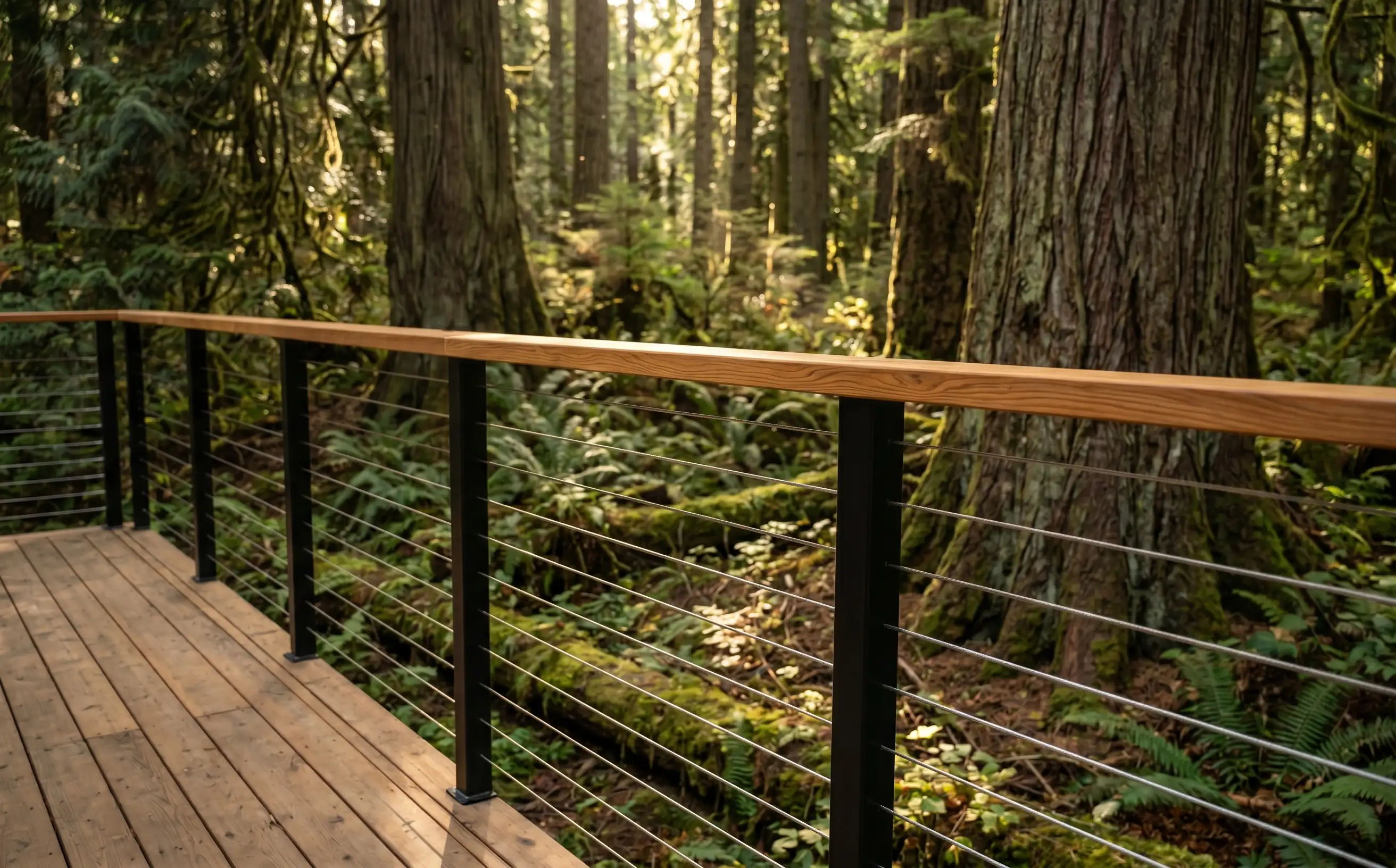
Full 316 stainless cable railing, through-bolted base plates with stainless backer plates. Direct salt-air exposure. Standard steel would have shown fastener-point rust within three seasons. 316 was the only path to a 20-year install.
Family backyard deck
Location · Coquitlam · Drop · 1.1 m · Edge · PT 2x8 rim joist with added blocking
Welded steel pickets at 95 mm spacing, satin black super-durable polyester powder coat. Durability over transparency. Finish survives planters being dragged across it.
Plain-language definitions. Accordion (collapsed by default).
What is a guard?
+
A guard is the BC Code term for the protective barrier on a deck, balcony, or stair landing — what most people call a 'railing.' Guards have height, opening, and load requirements under BCBC Section 9.8.
What is a handrail?
+
A graspable element along a stair. Different from a guard. BCBC requires handrails to have a 32–43 mm cross-section profile. Stairs may require both.
What is the 100 mm sphere rule?
+
The Canadian code rule that no opening in a guard may permit a 100 mm sphere (~4 inches) to pass through, even under design load. Drives cable spacing, picket spacing, glass-to-post detailing.
What is VBBL #14343?
+
Vancouver Building By-law 14343 took effect September 15, 2025. Its ordinary Part 9 anti-climb trigger is above 4.2 m; Part 3, exit and pool requirements differ. This is not universal approval of cable guards.
What is 316 marine-grade stainless?
+
Stainless steel containing 2–3% molybdenum, which resists chloride-induced corrosion. Standard for cable railing hardware in coastal exposure. The grade above 304.
What is Duplex 2205?
+
A high-strength, high-corrosion-resistance stainless alloy for severe coastal exposure — direct spray, water-line applications.
How is deck railing welding coordinated?
+
Welding details are coordinated around the approved material, connection, and finish requirements for the project.
What is the 1,070 mm guard height?
+
42 inches. The standard BC Code minimum guard height for exterior guards where the drop exceeds 1.8 m. Most common on Metro Vancouver decks.
What is the 900 mm guard height exception?
+
36 inches. The reduced minimum allowed for guards inside single dwelling units and for some single-unit exterior guards with drops under 1.8 m.
What is a probe test?
+
A field test where we drive a sharp instrument into PT rim joist to check for rot. Soft framing fails and needs repair before railing installation.
FAQ
Deck railing decisions, answered.
Deck-specific questions. For broader railing questions, see Custom Railings FAQ.
What drop height applies to my deck?
+
For ordinary Part 9: at no more than 1.8 m above finished ground, a qualifying exterior residential guard can be 900 mm. Above 1.8 m, that exception is unavailable and the default is 1,070 mm. The anti-climb trigger in 9.8.8.6.(1) is more than 4.2 m. All other guard requirements remain; exits, Part 3 and pool enclosures have separate rules. Measure from the walking surface, not the railing top.
My deck is in West Vancouver near the water. Does that change the material?
+
Yes. Coastal exposure within a few blocks of water requires 316 marine-grade stainless minimum for cable hardware. For direct-spray locations we step up to Duplex 2205. Standard 304 stainless shows tea staining within 2–3 winters in salt air — 304 lacks the molybdenum that blocks chloride-induced corrosion.
Can I install a deck railing kit myself?
+
Sometimes. If the deck is straight, level, ground-floor, and you want basic aluminum, a kit is the right call. If the deck involves glass, cable, custom welded steel, a drop over 1.8 m, stairs, fascia-mount conditions, or municipal inspection — a fabricator is the better path.
Does Vancouver allow horizontal cable on decks?
+
Yes, in qualifying conditions. Under VBBL 2025 Part 9, horizontal cable is not prohibited solely for climbability at or below 4.2 m. Height, openings, loads and connections still apply. Vancouver exit clause 3.4.6.6.(7) has no 4.2 m exception, and Part 3 and pool-enclosure conditions need separate assessment.
How long does a deck railing project take from photos to install?
+
About 6–10 weeks total. Day 1–2: written recommendation. Week 1–2: site measurement and written quote. Week 3–6: fabrication in Coquitlam. Week 6–10: installation, typically 1–3 days on site.
Do I need a permit to replace my deck railing in Vancouver?
+
Ask the City about the actual repair or replacement scope before starting. Do not assume like-for-like replacement is exempt. Changes to the guard system, anchorage, structure, use, heritage conditions or strata property can require separate approvals. A fabricator’s quotation is not a permit decision.
Send Photos
Decks start with photos. Send four.
You do not need to know the system yet. Four photos and approximate linear footage are enough for a written recommendation within 1–2 business days. Every recommendation is planned around applicable project requirements and the confirmed deck condition. Every railing is customized to your deck.
Primary-source code reference · checked September 24, 2026
Code references for this page
These links go to governments, regulators and the original professional or certification bodies—not other railing businesses. Code text, older local bulletins and advisory guidance are labelled separately. This is an editorial source check, not a professional sign-off, product certification or approval of your project.
Which code applies?
BC province versus the City of Vancouver
Use BCBC 2024 with its published amendments outside the City of Vancouver, and VBBL 2025 inside the city. Vancouver is not the same jurisdiction as North Vancouver or West Vancouver. Permit dates and transition rules matter. A newer national model code does not automatically replace the locally adopted edition.
Ordinary Part 9 guards; exceptions must be read with the clause
Articles 9.8.8.1, 9.8.8.3 and 9.8.8.5 cover when a guard is required, its height and openings. The usual trigger is a drop over 600 mm within 1.2 m of the walking surface. Default height is 1,070 mm; qualifying residential guards can use 900 mm, including certain exterior guards at no more than 1,800 mm above finished ground. The ordinary required-guard opening rule prevents a 100 mm sphere passing. Exactly 4 inches is 101.6 mm: metric limits control.
For ordinary Part 9 guards, 9.8.8.6.(1) applies the anti-climb requirement above 4.2 m. At or below 4.2 m, horizontal cable is not prohibited by that clause merely because it is climbable; height, openings, loads and connections still apply. Part 3 clause 3.3.1.18.(4) also says more than one storey. Vancouver exit clause 3.4.6.6.(7) has no 4.2 m exception. Pool fencing is separate. 4.2 m is about 13 ft 9.35 in, not 14 ft.
Use the applicable row of Table 9.8.8.2 or Article 4.1.5.14, not one load for every railing. The Part 9 residential top-load row is 0.5 kN/m OR 1.0 kN concentrated, whichever is critical, with 1.5 kN/m vertical and separate infill loading. Handrail loads under 9.8.7.7 differ. Article 9.8.8.2.(2) refers to adjacent vertical elements; it is not a universal horizontal-cable tension test. Cable diameter, post spacing and pretension need system-specific design. Structural steel, aluminium and glass have separate design references in Part 4.
Read the applicable clause and its exceptions, referenced standards and amendments together. The municipal consolidated PDFs are convenience copies; enacted text controls. Proprietary standards are linked through their issuing authorities—we do not claim access to, or reproduce, paywalled standards. Explore the complete topic-by-topic official-source register.