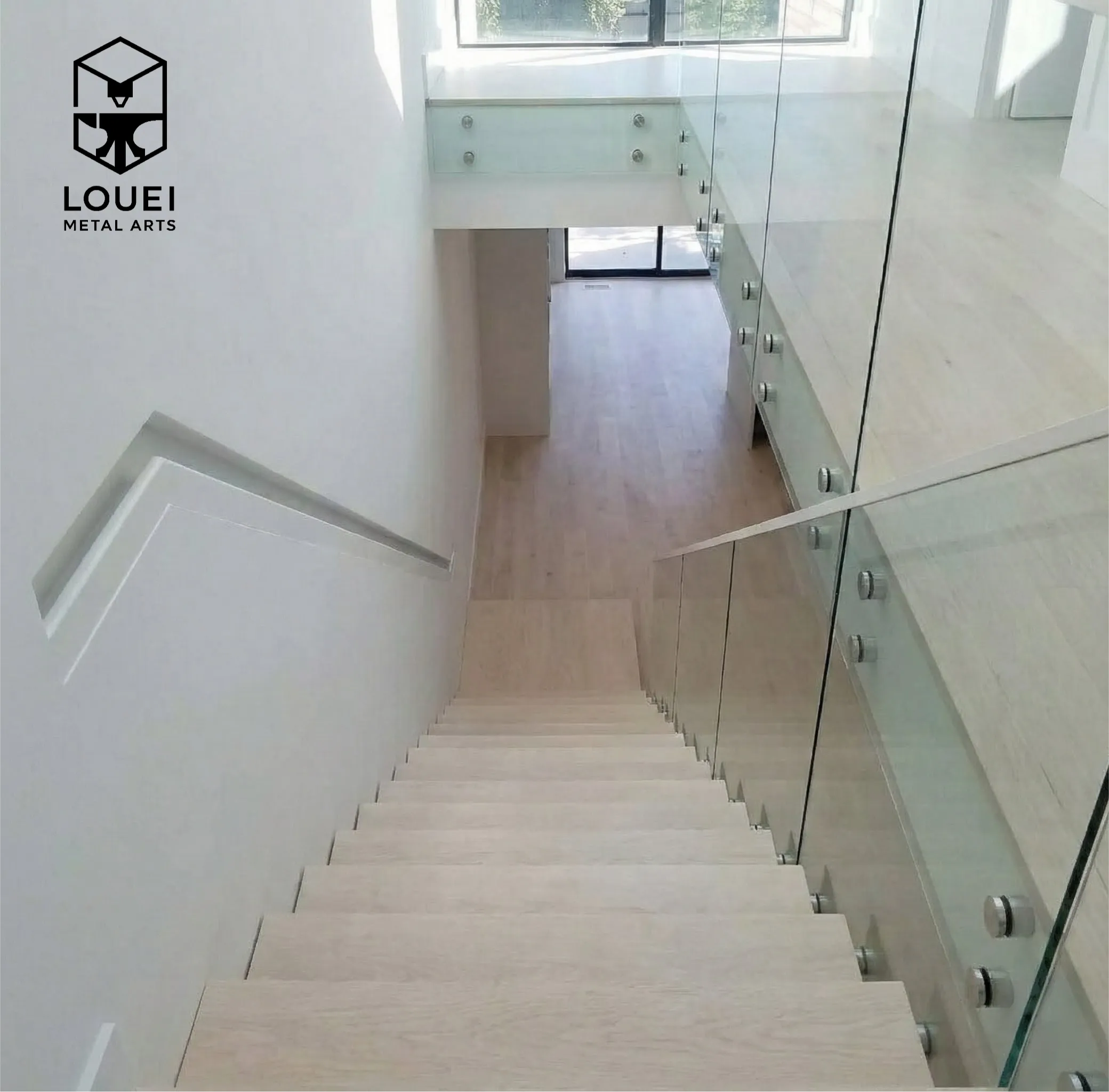
Disappear
Let the space lead.
The railing stays quiet so the room, light, view, flooring, or staircase carries the design. Fits frameless glass, open-to-below edges, floating or open-riser stairs, and homes where natural light matters most.
Interior · Sightlines · Custom Metal Fabrication
A new hardwood floor you don't want drilled badly. An old wood spindle railing that looks heavy. A loft edge that needs a guard but shouldn't feel like a fence.
Interior railing is not just a product choice. It changes how a stair opening, landing, loft, or open-to-below edge feels — and a careless install can damage what you just renovated. LOUEI Metal Arts fabricates interior railing systems around the space first, then narrows to glass, black metal, picket, stainless details, or custom welded work. We protect your finished home during install and back the work with written warranty terms.
The interior-specific layer underneath Custom Railings. For a luxury feature staircase, explore gold and metallic railing finishes.
For indoor wet areas like pools, spas, and ritual baths, see our guide to custom-finished handrails that survive wet interior environments.
The best interior railing depends on how the railing should read inside the space. Some should disappear. Some should frame the opening. Some should become a feature.
Fast direction
The right interior railing is not chosen from a catalogue first. It starts with the room, the opening, the sightlines, and how people move through the home.
Most interior railing mistakes start with a product-first decision. LOUEI starts earlier — with the space. An interior railing is a visible architectural guard that must work with light, structure, movement, and finishes — visible from the entry, living room, kitchen, stairwell, upper landing, and open-to-below space.
The most visible interior line. We check open side, wall side, landing connection, finished floor edge, existing footprint, and handrail need.
Where people pause, turn, and see the railing from several angles. We check edge condition, railing return, wall connection, top/bottom transition, and guard height review.
Open-to-below conditions. We check view from above and below, light flow, post layout, and whether transparency or rhythm matters more.
Floor material, wall backing, trim details, existing holes, baseboard conflicts, where posts can land — and how to protect every finished surface during install.
The strongest interior railing question. Before choosing glass, metal, or picket, decide how the railing should read inside the home.
Let the space lead.
The railing stays quiet so the room, light, view, flooring, or staircase carries the design. Fits frameless glass, open-to-below edges, floating or open-riser stairs, and homes where natural light matters most.
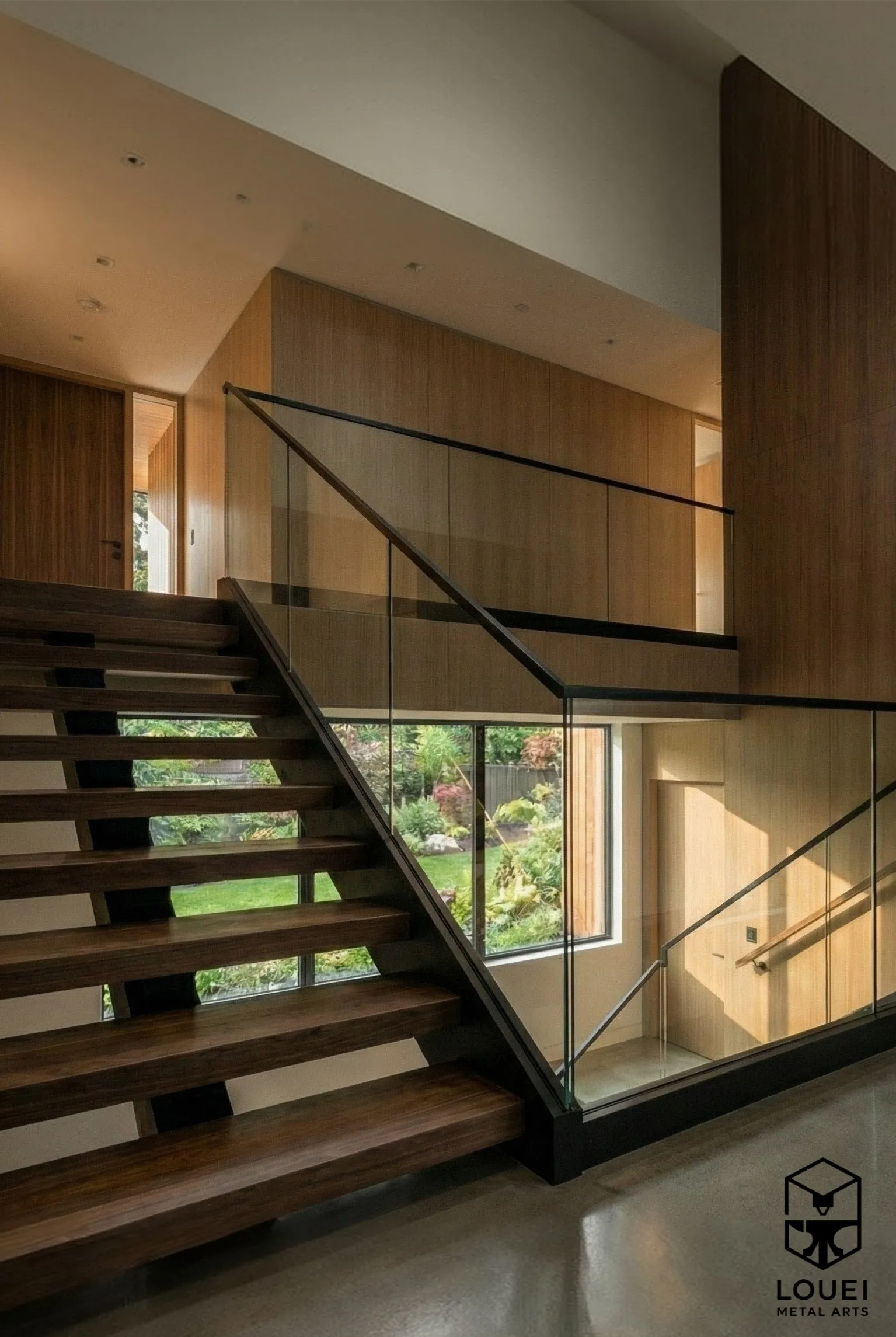
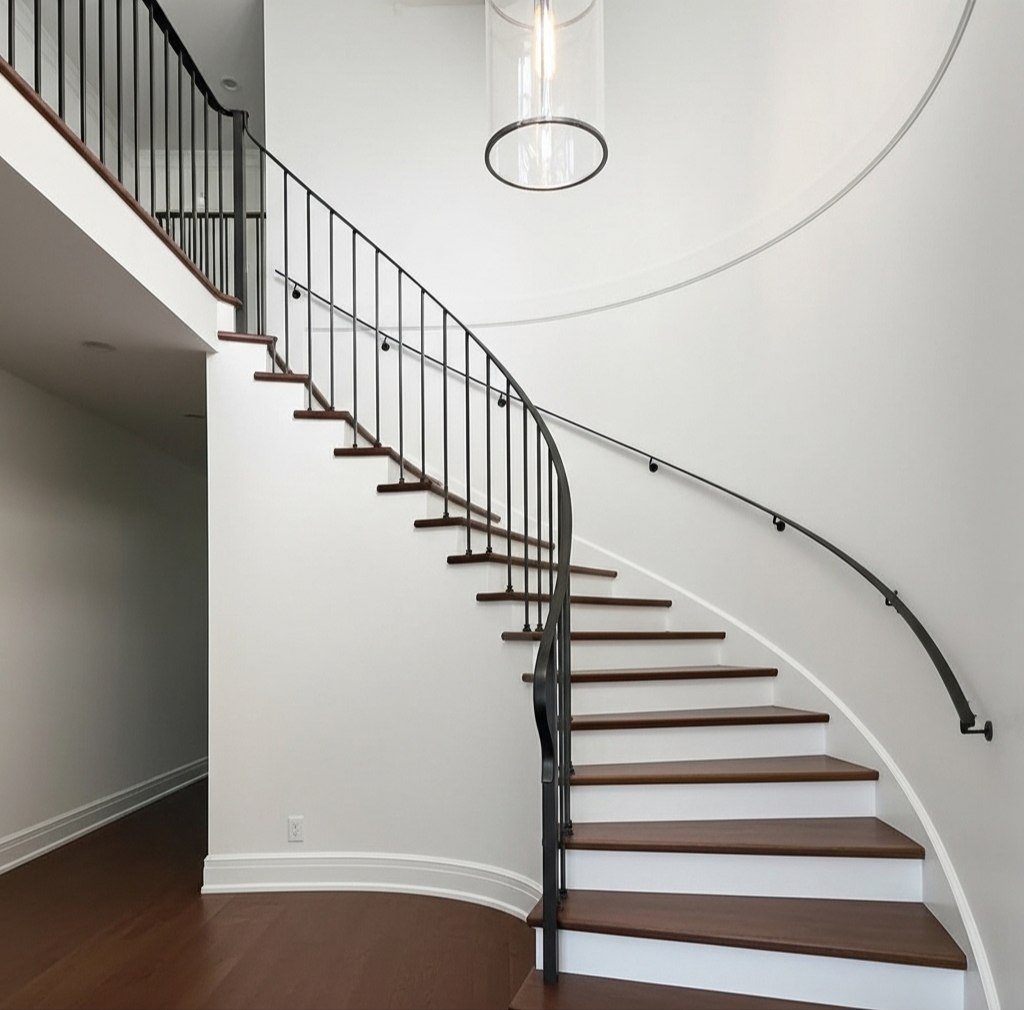
Define the opening.
The railing draws a clean architectural boundary without becoming decorative. Fits black metal interior railing, picket rhythm, simple posts, and clean top rails — best when contrast and structure matter.
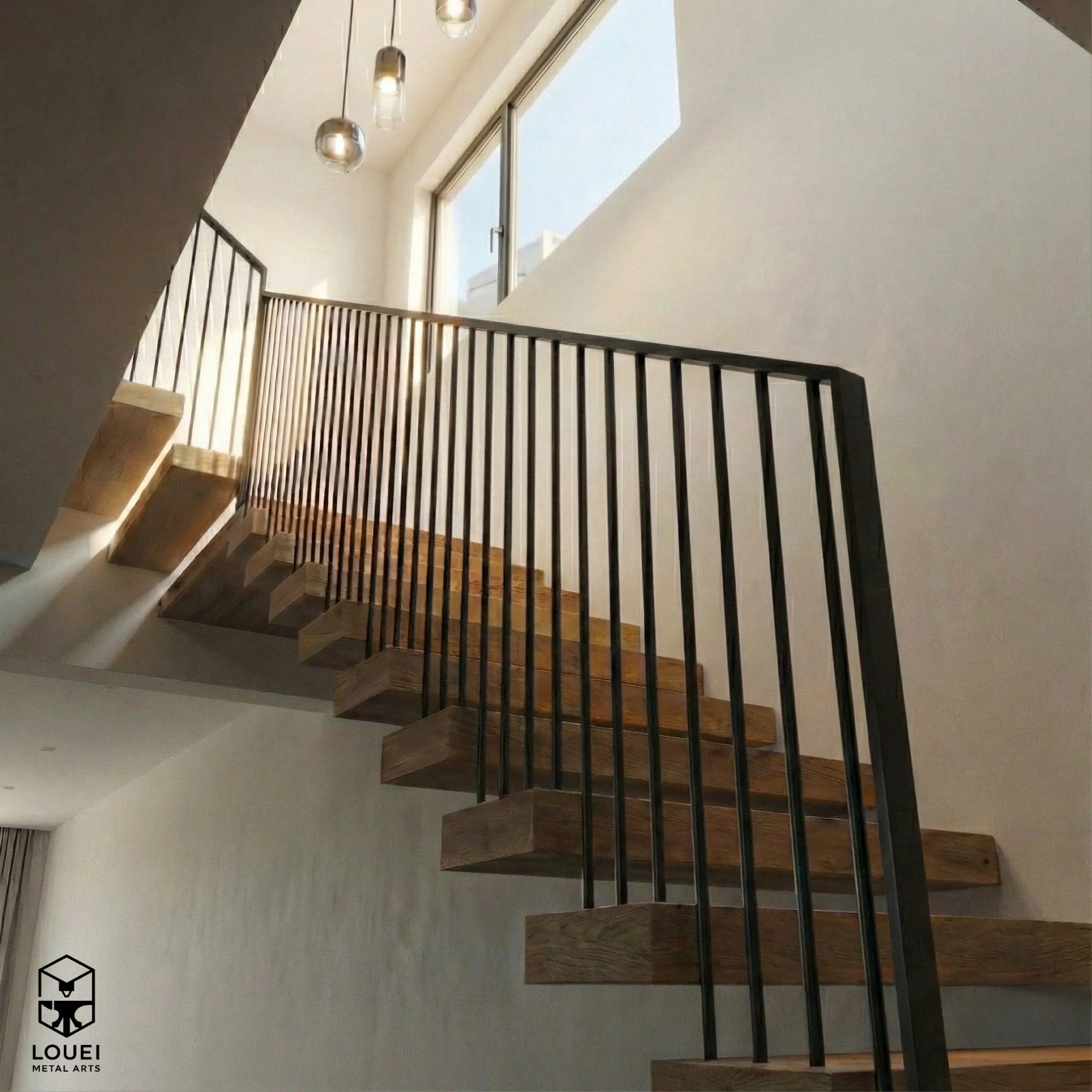
Make the railing part of the design.
The railing becomes part of the home's design language. Fits custom welded metal, sculptural patterns, mixed glass and metal systems, and statement staircases where the opening is meant to be seen.
"I want it to feel open" → start with Disappear. "I want clean and strong" → start with Frame. "I want something unique" → start with Feature.
Inside a home, the railing is rarely seen from only one angle. A railing that looks good from one view but heavy from another can make the interior feel smaller or less resolved.
Sightlines
What you see from the entry, the main living area, the upper landing. Glass reduces interruption. Black metal creates a frame. Custom welded work becomes a feature.
Light flow
Natural light path, window direction, shadows from pickets or posts, glass transparency. Glass preserves light. Metal creates contrast. Pickets add rhythm and visual density.
Visual weight
Post thickness, top rail size, picket spacing, glass support, color contrast. Lower visual weight reads larger; stronger metal makes the opening feel intentional.
Movement through the home
Walking path, stair traffic, where hands reach, whether a handrail is needed. Interior railing is moved around, touched, and lived with daily.
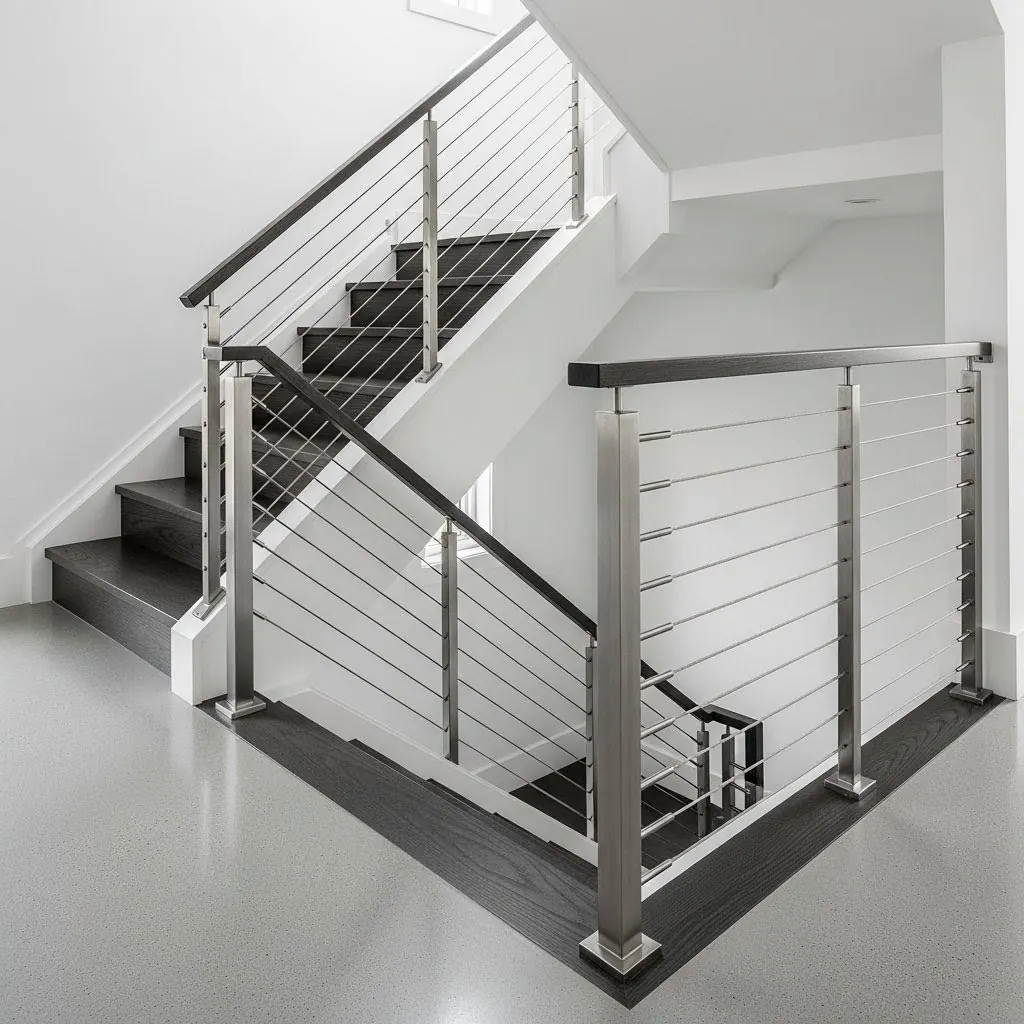
The same material can behave differently on a stair, landing, loft edge, mezzanine, or open-to-below guard.
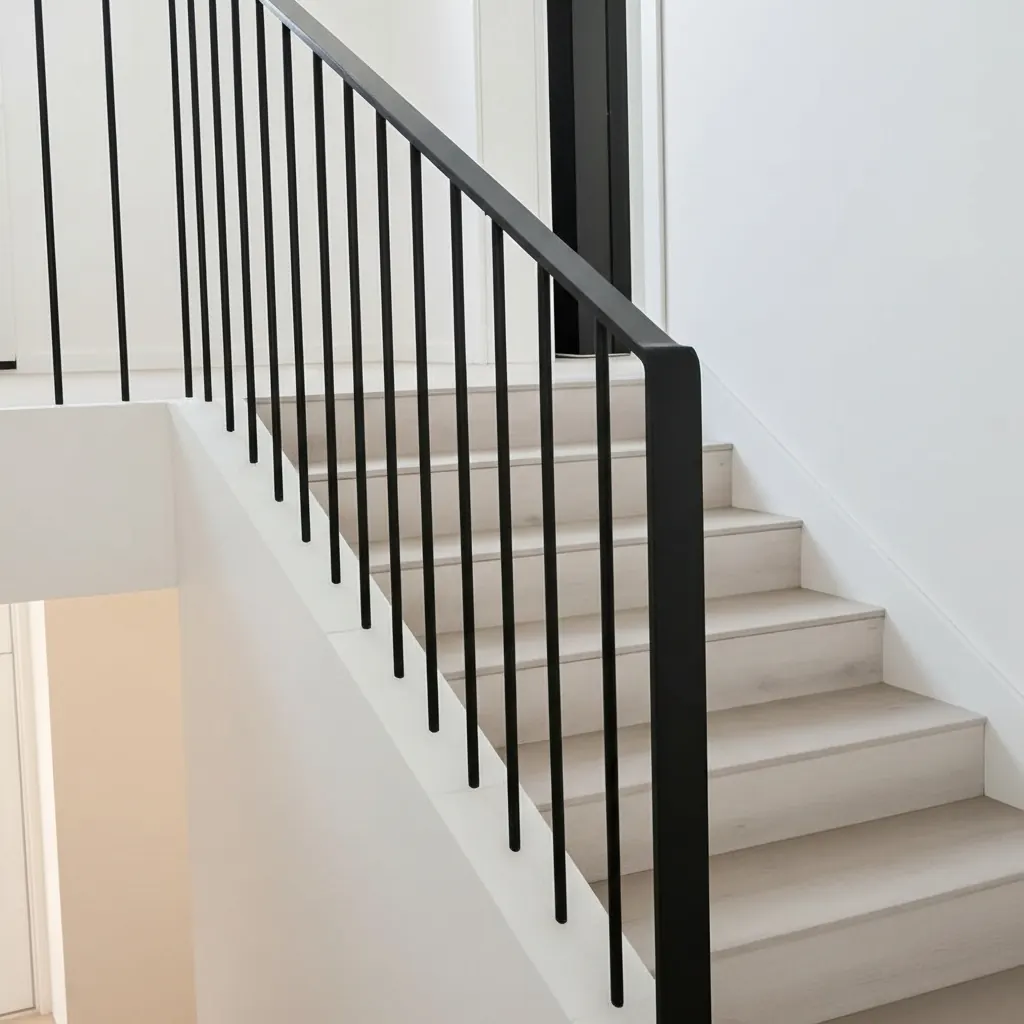
Movement · guard planning · handrail coordination
The stair drives the system. Pitch, landings, open side, wall side, and grip all shape the recommendation.
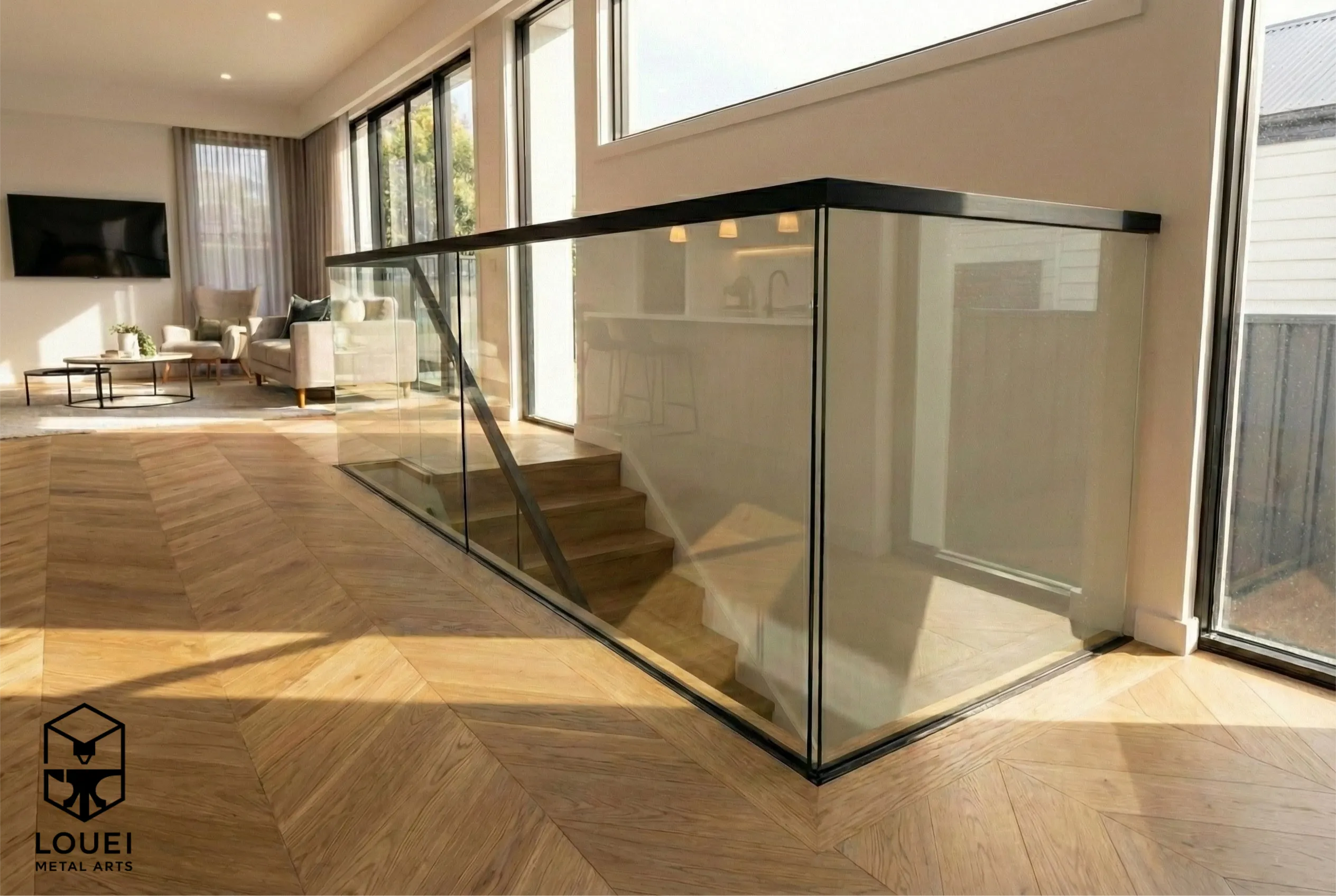
Turning point · guard continuity · railing return
Where people pause and the railing is seen from several angles. Edge, return, and wall connection matter as much as the long run.
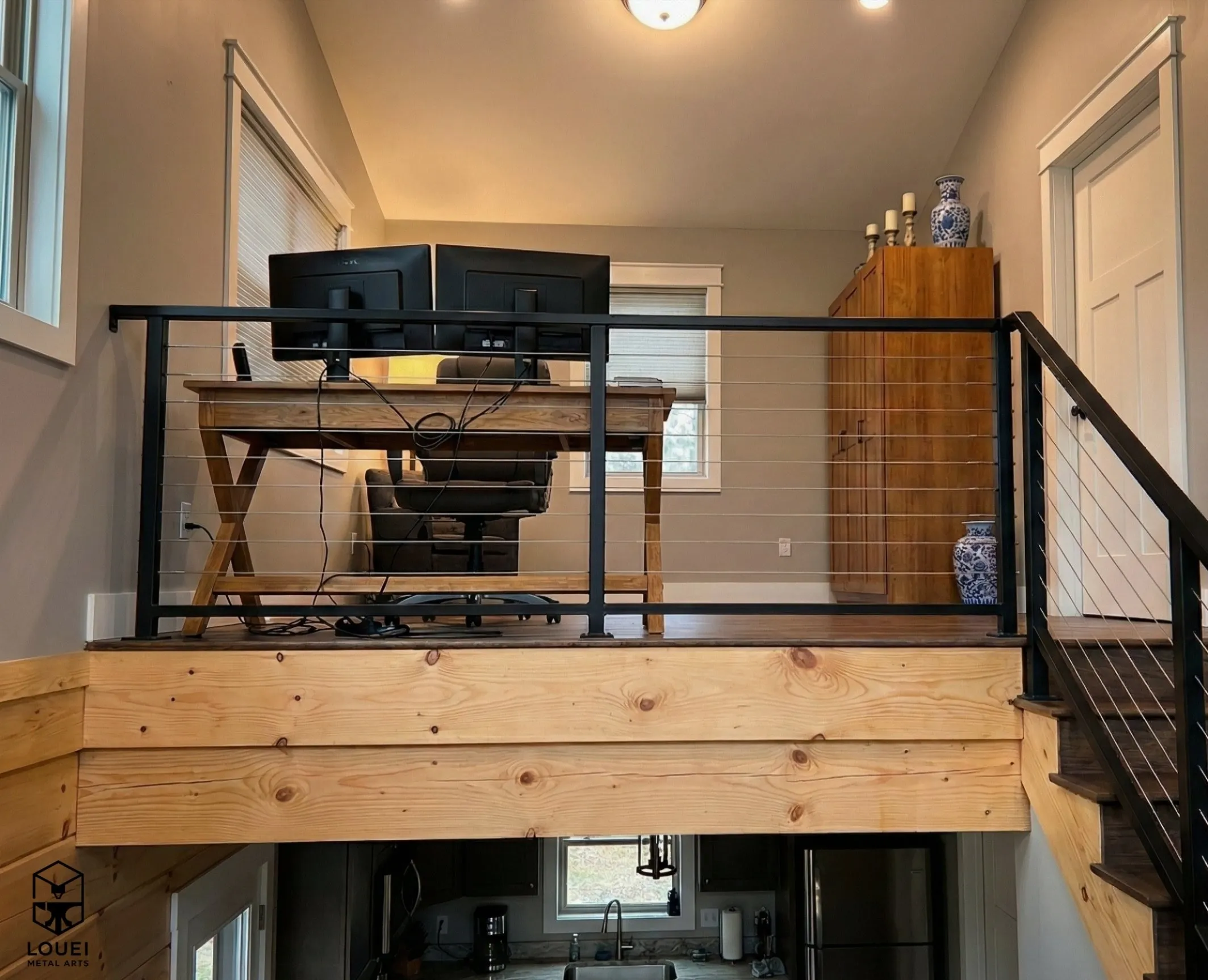
Visible from above and below · open-to-below view
A loft edge reads from every angle. Light flow, post layout, and whether transparency or rhythm matters more drive the direction.
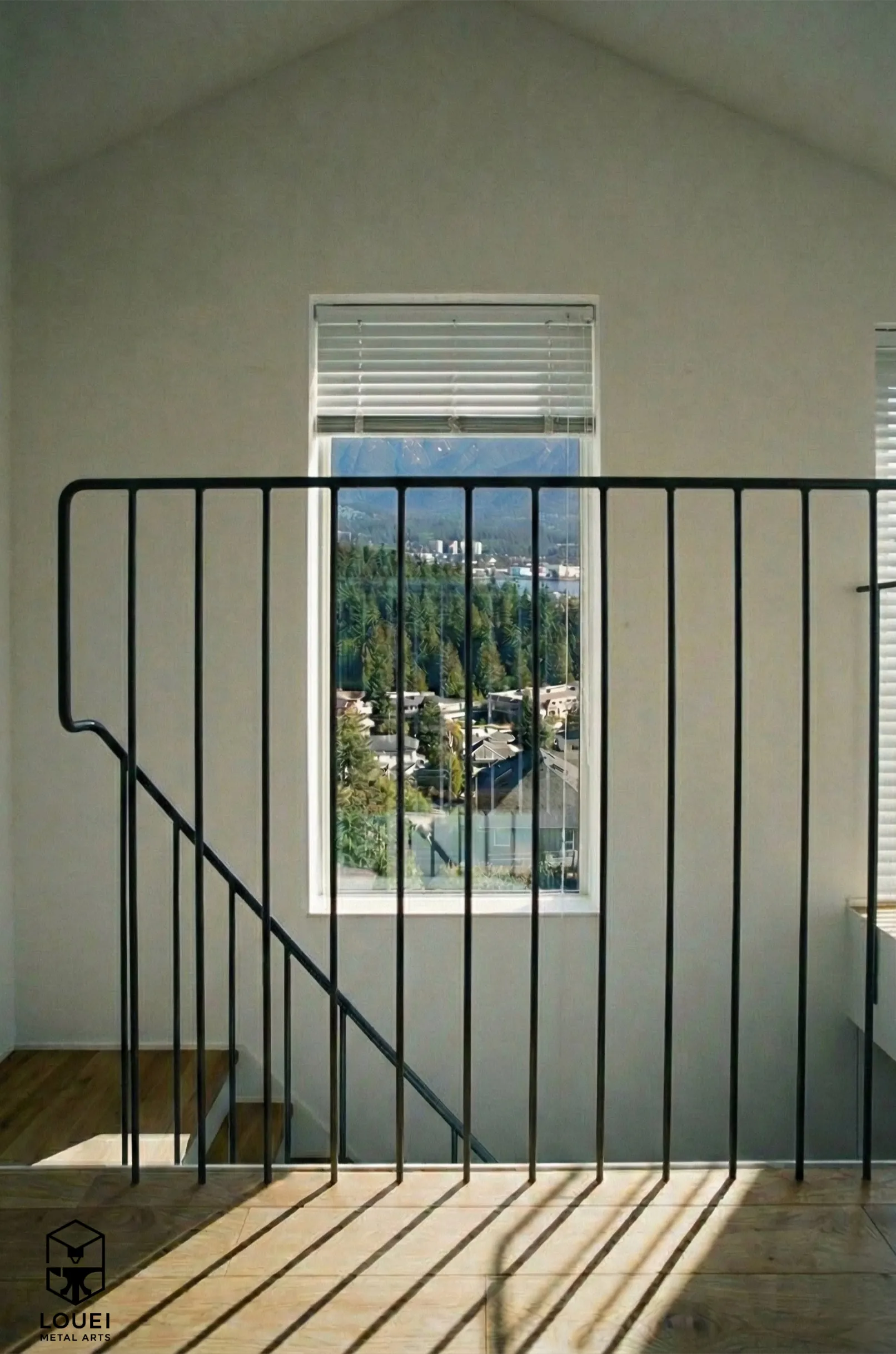
Architectural interior guards · long sightlines
Safety-critical and visually load-bearing. Fall edge, guard condition, and the visual weight the space can carry shape the system.
Interior railing
The broader guard or railing system inside the home — stair opening, landing, loft, mezzanine, or open-to-below edge.
Stair railing
Follows the stair geometry — pitch, landing transitions, open side, wall side, and whether the stair needs a guard, handrail, or both. See Stair Railing.
Handrail
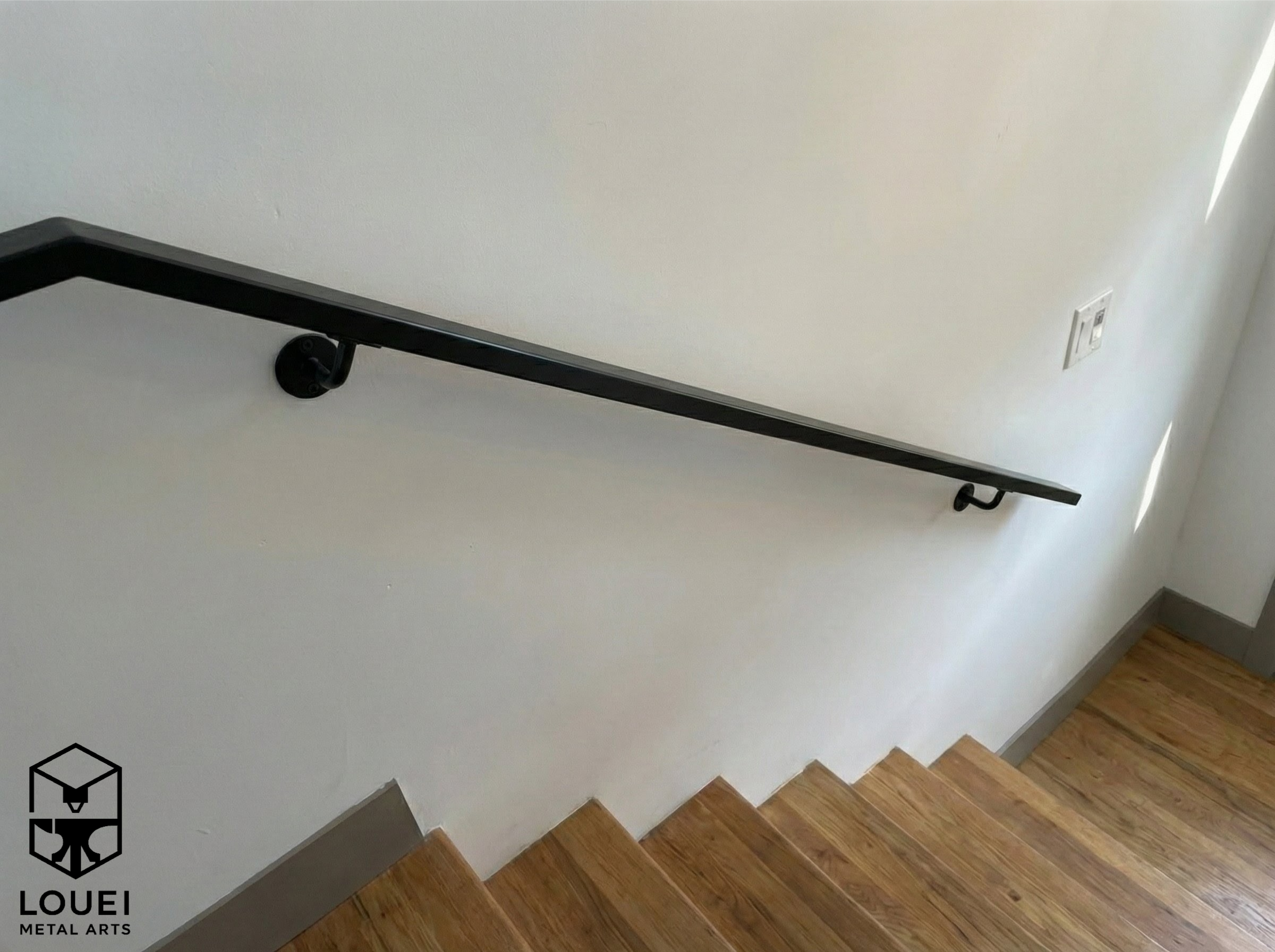
The graspable support used by the hand — wall-mounted, post-mounted, integrated into a guard, or separate. See Handrails.
The interior page uses these terms carefully because the wrong category leads to the wrong design.
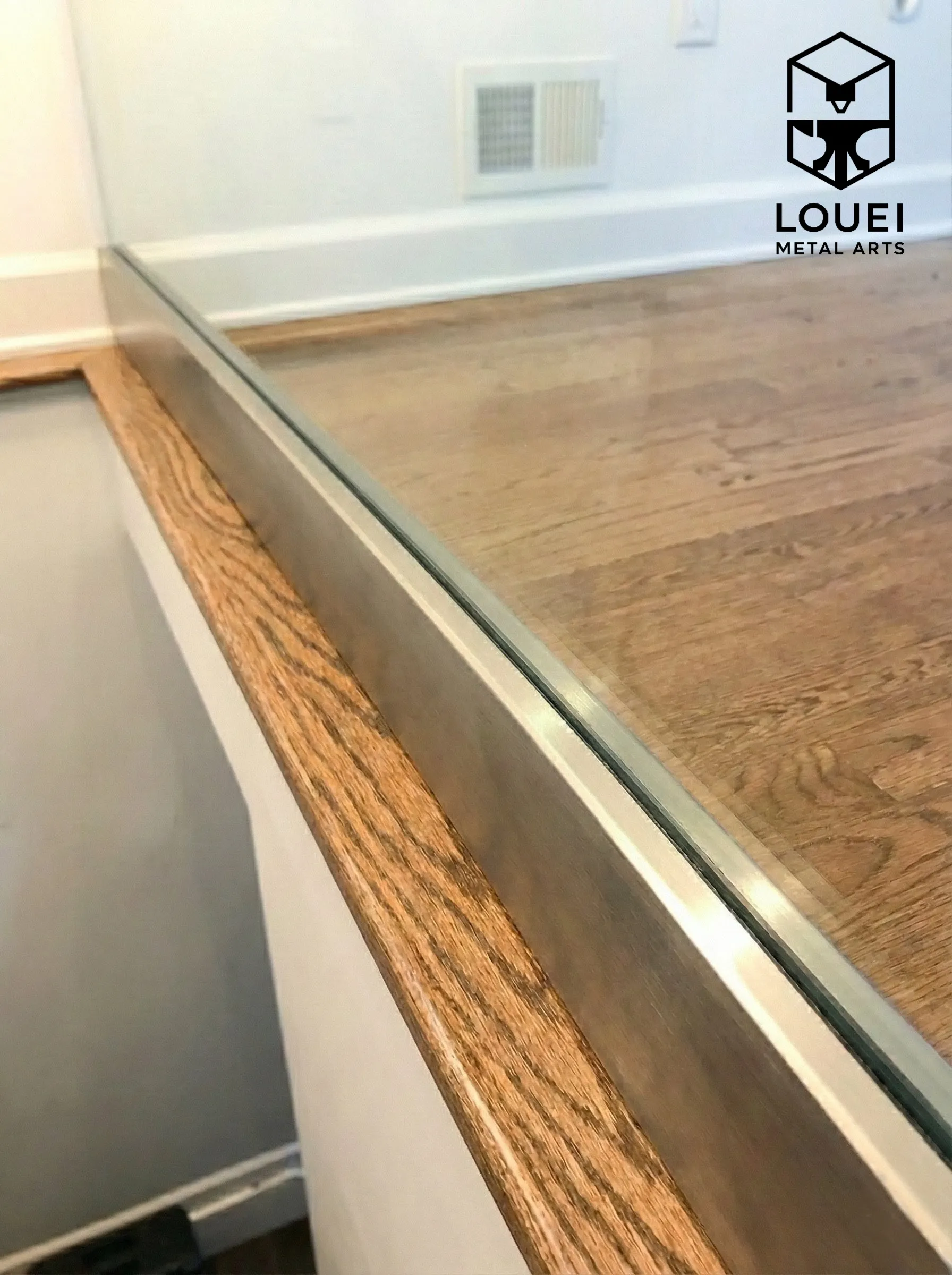
Strong for open-to-below edges, lofts, mezzanines, landings, and stair openings where the railing should protect the edge without closing the room.
Consider glass when
the space should feel open, natural light matters, the stair opening is visible from the living area, the railing should not visually interrupt the interior.
Watch for
support method, handrail requirement, cleaning, post or channel visibility, glass-to-wall transitions, finished floor attachment, whether frameless, semi-frameless, or post-supported.
Not every interior railing should disappear. Many homes need the railing to frame the stair opening, add rhythm, or become a strong architectural line.
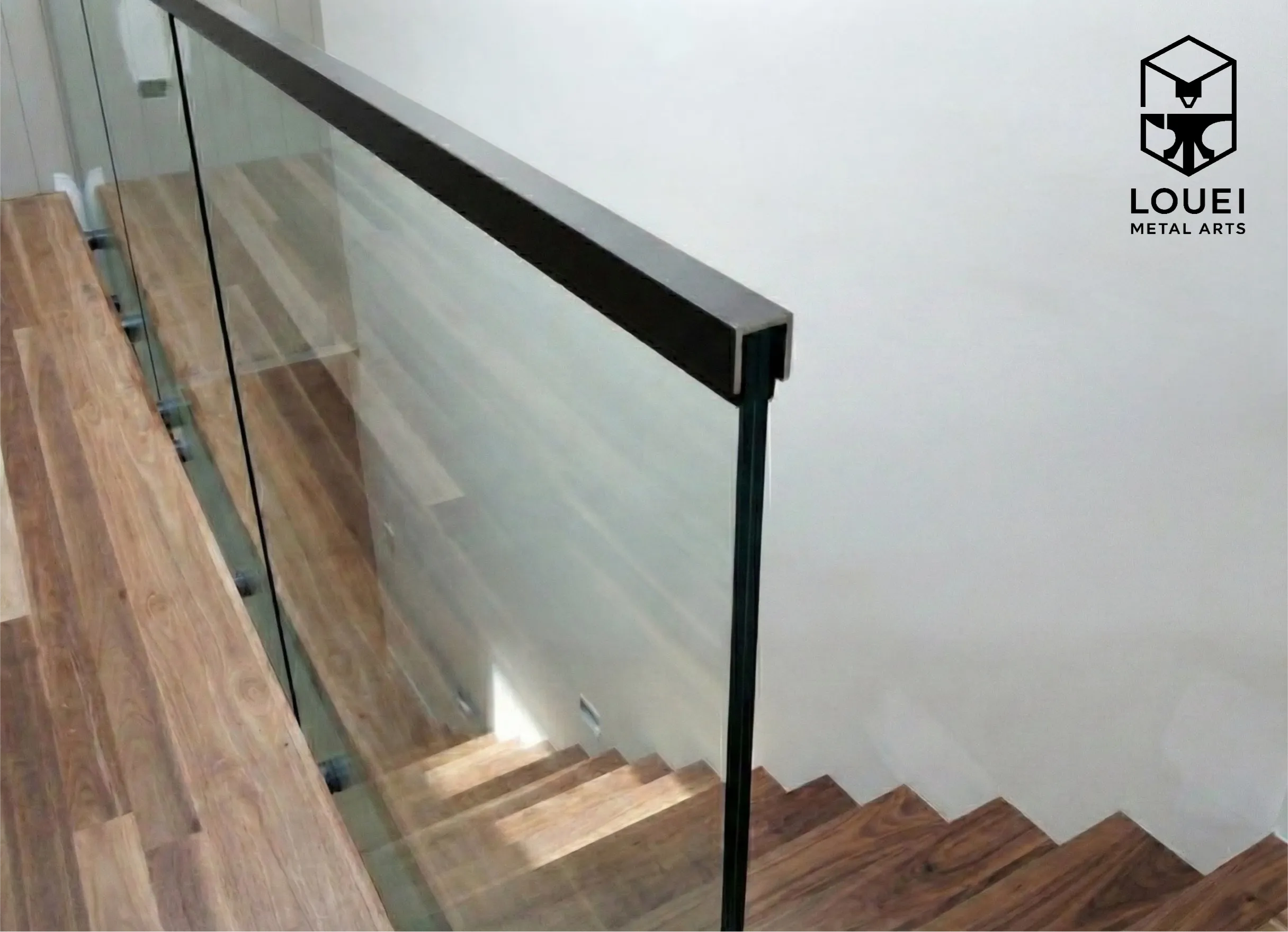
Modern interiors, contrast against light walls or wood floors, defined lines, visual framing.
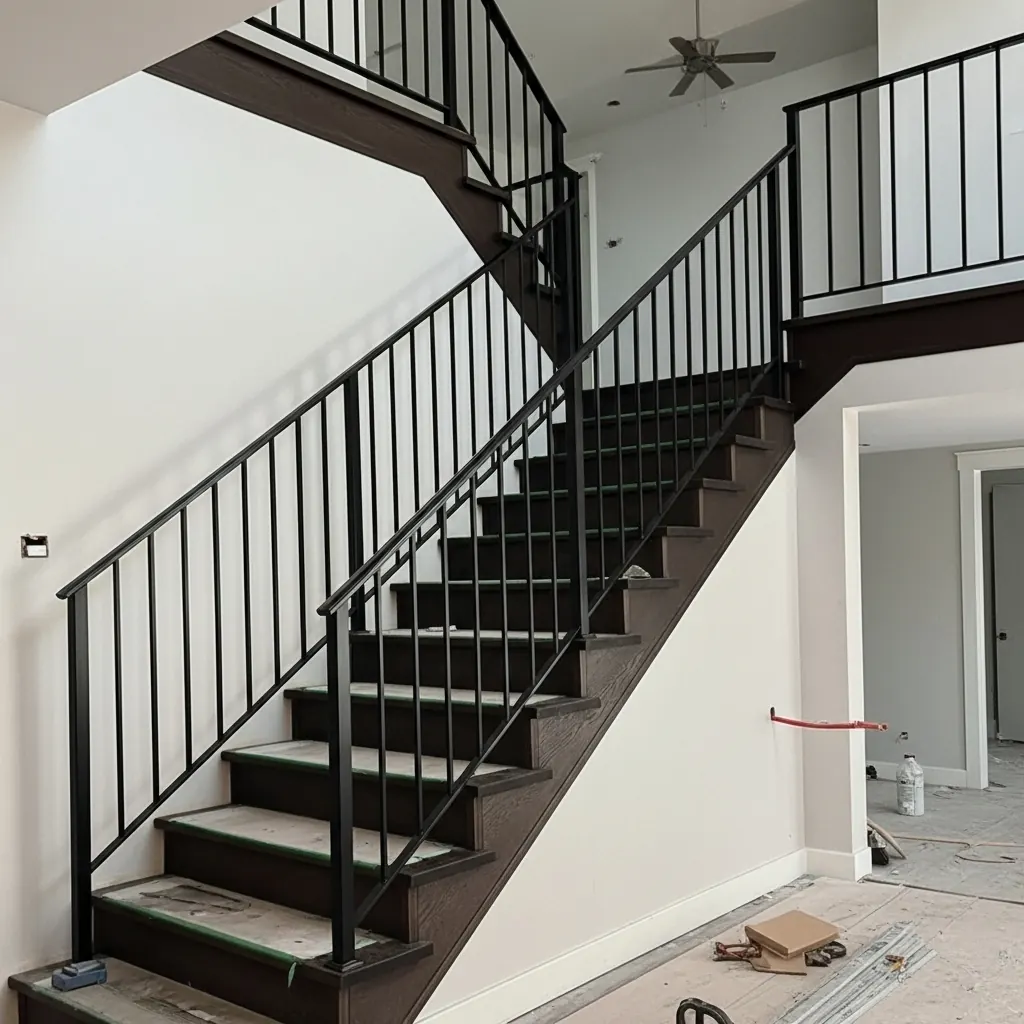
Practical guards, family homes, repeated rhythm at stairs and landings. Welded frames, clean returns.
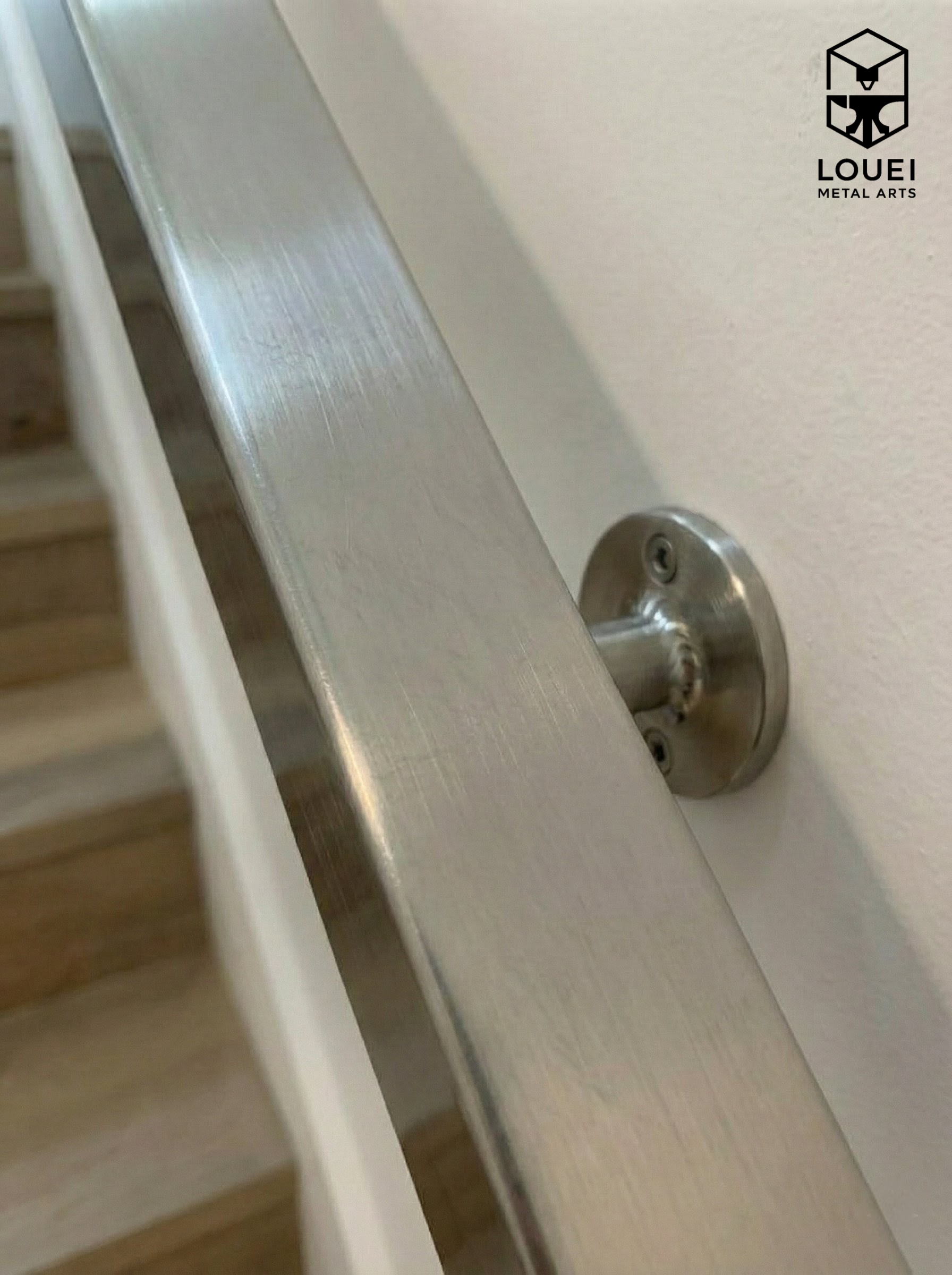
Glass hardware, handrail caps, modern accents, glass-to-metal transitions. Often a detail, not the main material.
Feature staircases, unique patterns, custom posts and brackets. Where the railing is part of the architecture.
Glass makes the railing quieter. Black metal frames the space. Picket creates rhythm. Custom welded work creates a feature. Related: Picket Railing · Metalwork.
Interior work happens after floors, walls, trim, and stairs already exist. The railing must be planned around structure AND finish — and the install must protect what you just paid to renovate.
Floor material, finished edge, old railing holes, subfloor below, baseboard conflicts. Post layout must feel intentional, not improvised.
Wall backing, drywall, trim, baseboards, stair skirt, handrail bracket locations. Bracket alignment can make or break the finished look.
Blocking, stair framing, floor structure, stringer condition. Interior guards need real structure under the finish — not just trim or fascia.
Slab or stair condition, steel stringer or frame, drill or weld access, old anchors. Common in modern homes and renovation conversions.
Old post locations, abandoned holes, finish damage from the previous railing. Often needs more planning than a fresh new build.
Finished-Surface Protection
We treat your renovated home like a finished home, not a job site:
Interior railings may act as guards, handrails, or both. Requirements change with height/drop, occupancy, stair or landing condition, openings, material, and authority having jurisdiction.
Questions that drive the answer
Interior guards and handrails are reviewed against the confirmed site condition and applicable code. Some projects require additional review depending on building type and authority having jurisdiction. Deeper code reference: BC Building Code railing guide.
LOUEI does not commit to a final code interpretation before reviewing the interior condition.
A kit can work for a simple, standard replacement where the layout is straight and the goal is an off-the-shelf railing.
Custom is usually better when
LOUEI is not a kit reseller. Custom interior railing is planned around the space, sightlines, material direction, and mounting — then fabricated and installed around the actual home.
If your interior condition affects sightlines, finished floors, or an open edge, send photos before buying parts. Send Interior Photos →
A simple handrail replacement, a glass guard around an open-to-below edge, a black metal stair railing, and a custom welded feature railing are not the same project.
Scope can change based on
LOUEI does not reduce interior railing to a public price table because the room, opening, finish, and structure matter. Photos come first. Scope follows the space.
01
Glass can be excellent inside, but not automatically. Support, cleaning, handrail need, and visual context still matter.
02
Large posts, heavy top rails, dense pickets, or dark metal can shrink a space if visual weight isn't planned.
03
A railing can look good close up but block the view from entry, kitchen, or upper landing.
04
Interior railing touches finished surfaces. Post locations, brackets, old holes, and install-day protection all need planning.
05
Kits struggle with loft edges, open-to-below guards, glass, custom openings, and finished floor constraints.
06
Interior guards and handrails — at stairs, landings, lofts, and open edges — should be reviewed at the planning stage, not after the railing is welded.
01
A wide shot of the room or stair area, plus the floor edge and walls. Phone photos are enough. The first reply lands in writing — no scheduled call unless you ask for one.
02
We narrow whether the railing should disappear, frame the space, or become a feature — and flag any code-aware or finished-surface concerns. An honest read, not a quote. No obligation. No sales pressure.
03
We measure, confirm mounting, photograph the finished surfaces around the work zone, and loop in your designer or GC if you have one.
04
System spec, finish, hardware, mounting strategy, surface protection plan, and timeline — fixed at acceptance. P.Eng. drawings rolled in when required. Only a scope change moves the number.
05
Cutting, welding, and powder coating happen at our shop, not at your home. Glass and hardware ordered and prepped to the confirmed spec.
06
Drop cloths down before the crew enters. Daily cleanup. Vacuum after each session. Warranty handover: The comprehensive 12-month warranty starts on the installation and handover date. LOUEI Metal Arts provides lifetime after-sales service. It covers breakage, weld repairs, cracks, paint or finish issues, screw and fastener issues, looseness, slack, noise, clouding or dulling, tearing, and detachment. Periodic maintenance is not required to keep the warranty valid. LOUEI Metal Arts covers the travel and inspection costs for warranty service. The warranty applies only to the person named on the invoice and is not transferable to a subsequent owner. Intentional damage is handled through lifetime after-sales service rather than the warranty.
You don't need to know the material. Phone photos are enough.
Photos
Wide shot of the room or stair area · photo from the bottom of the stairs · photo from the top or landing · view from the entry or main sightline · close-up of the floor edge · close-up of finished walls or trim · existing railing or posts · any old holes · loft / mezzanine / open-to-below edge if relevant · inspiration image if you have one.
Details
Location/city · condition type · approximate length · material preference if any · whether you want it to disappear, frame, or feature · whether existing removal is needed · project type (renovation, new build, residential, strata, commercial) · what matters most.
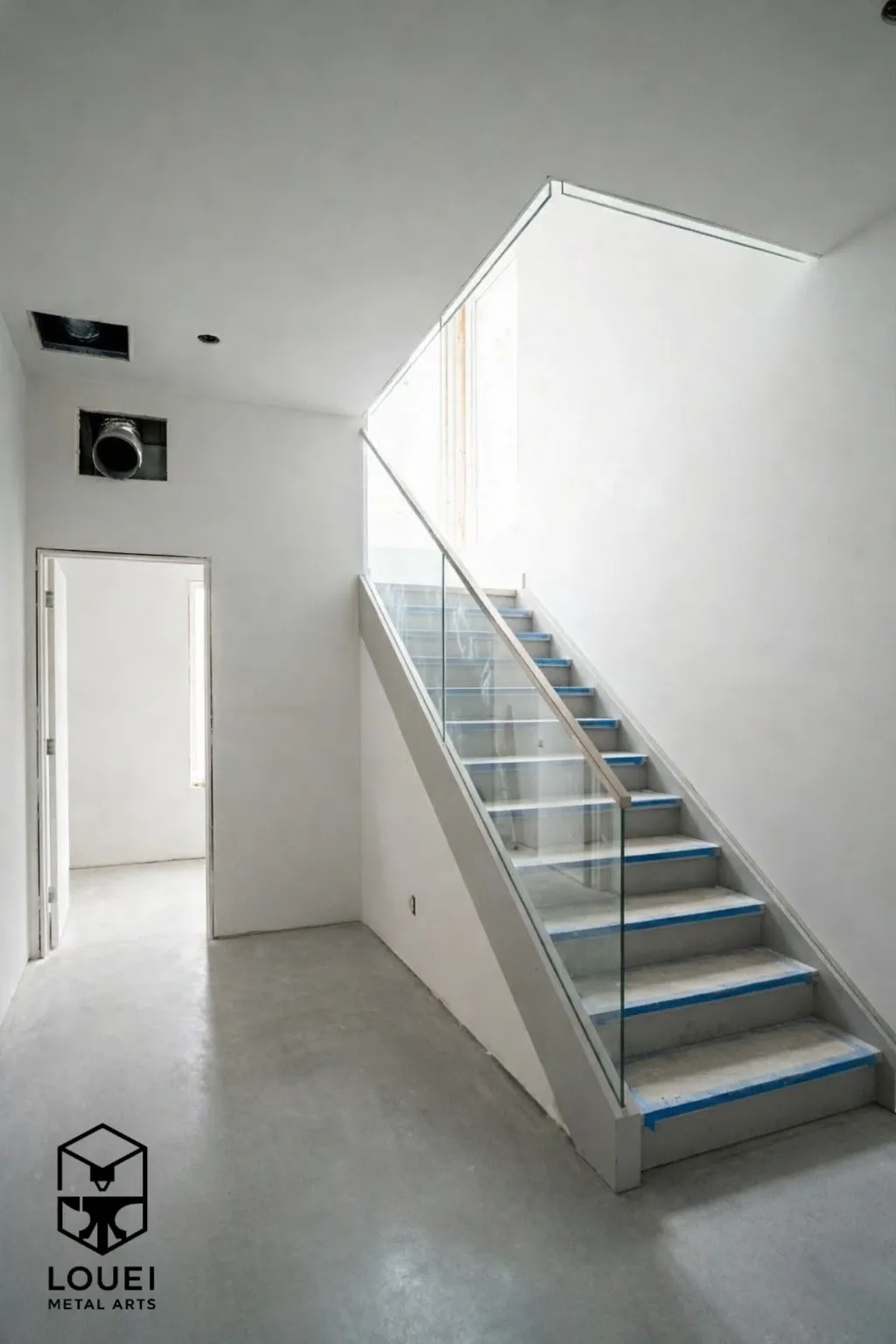
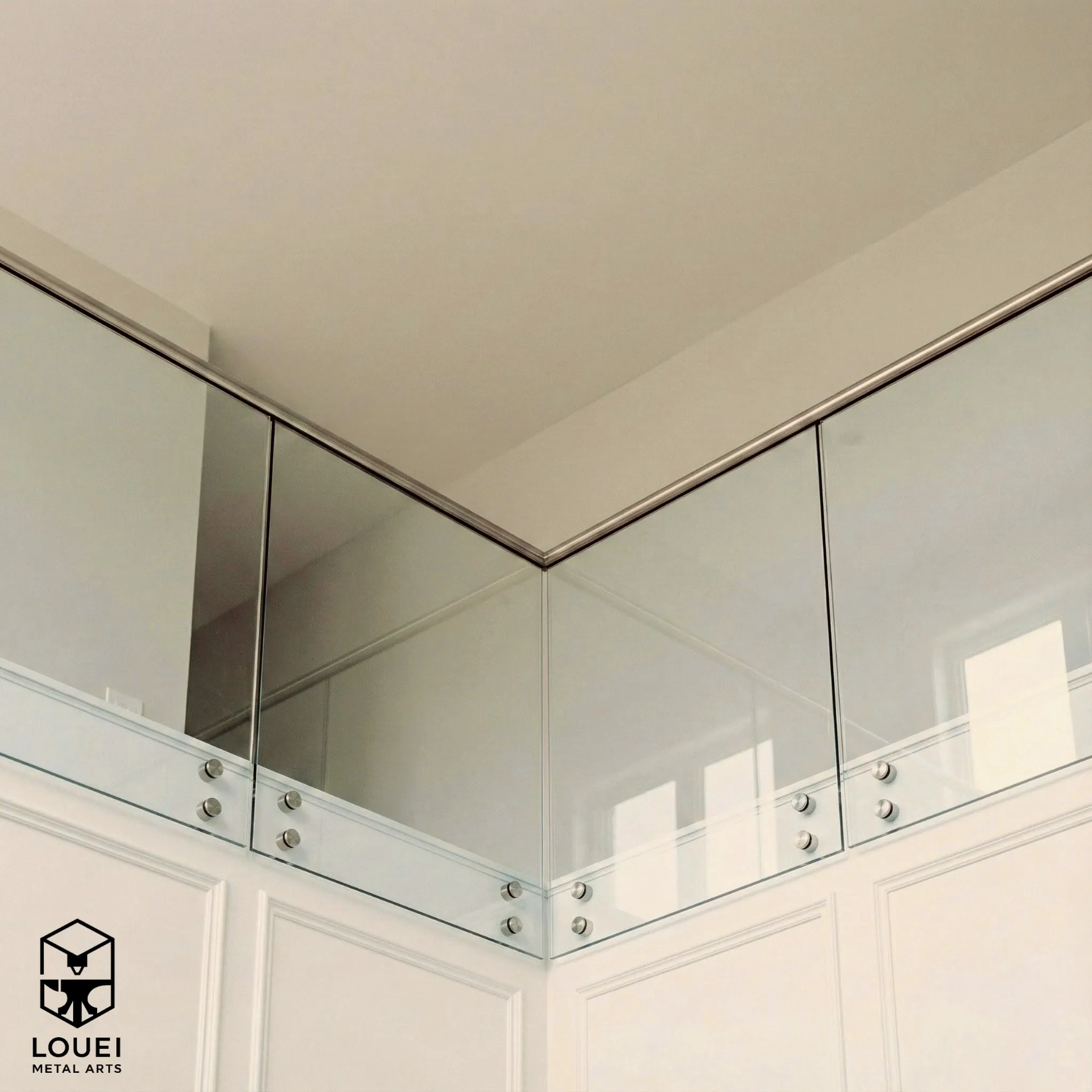
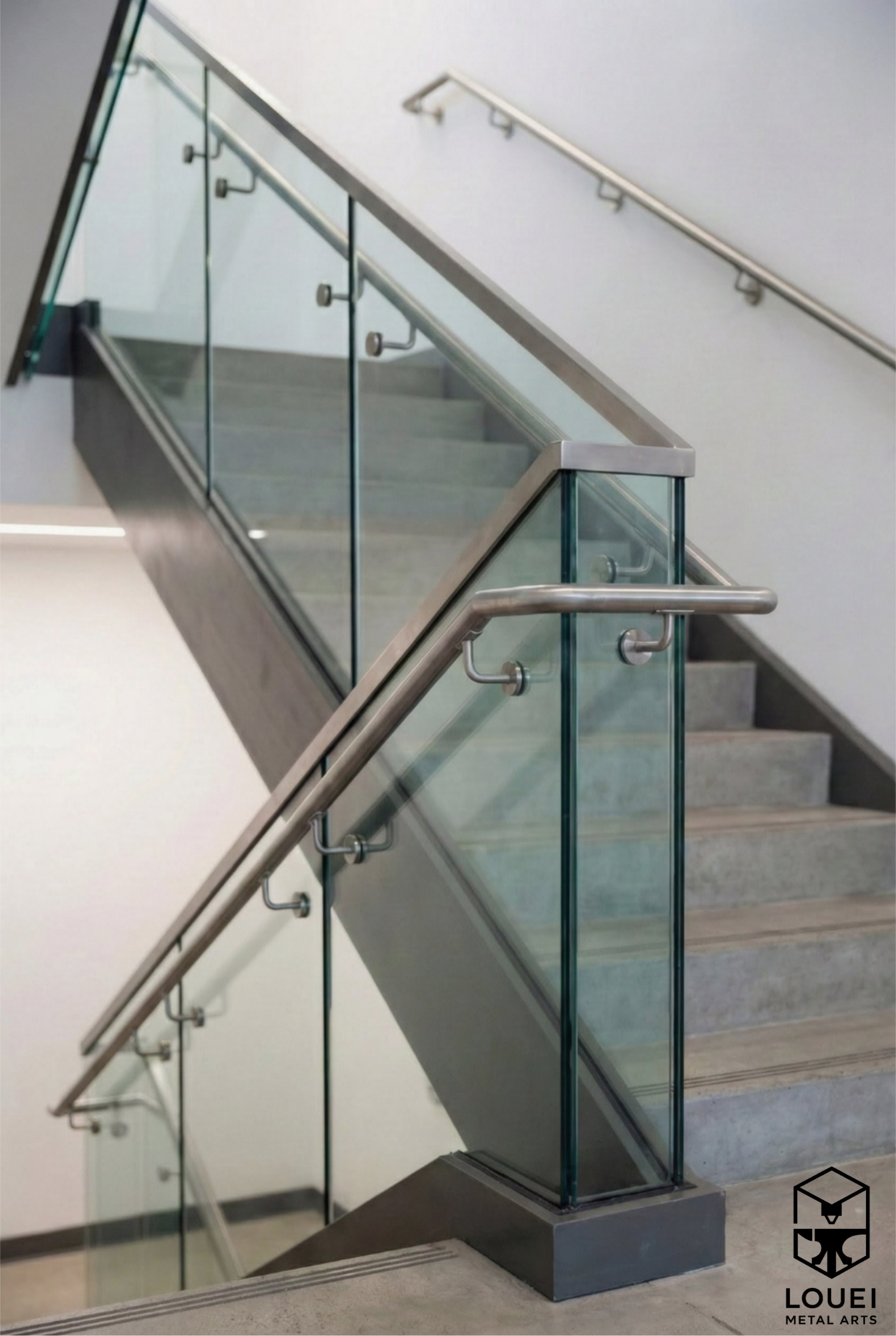
Stair opening with an open-to-below edge where openness mattered. Chosen direction: glass with a stainless top rail along a straight staircase — quiet read, light still carries the room.
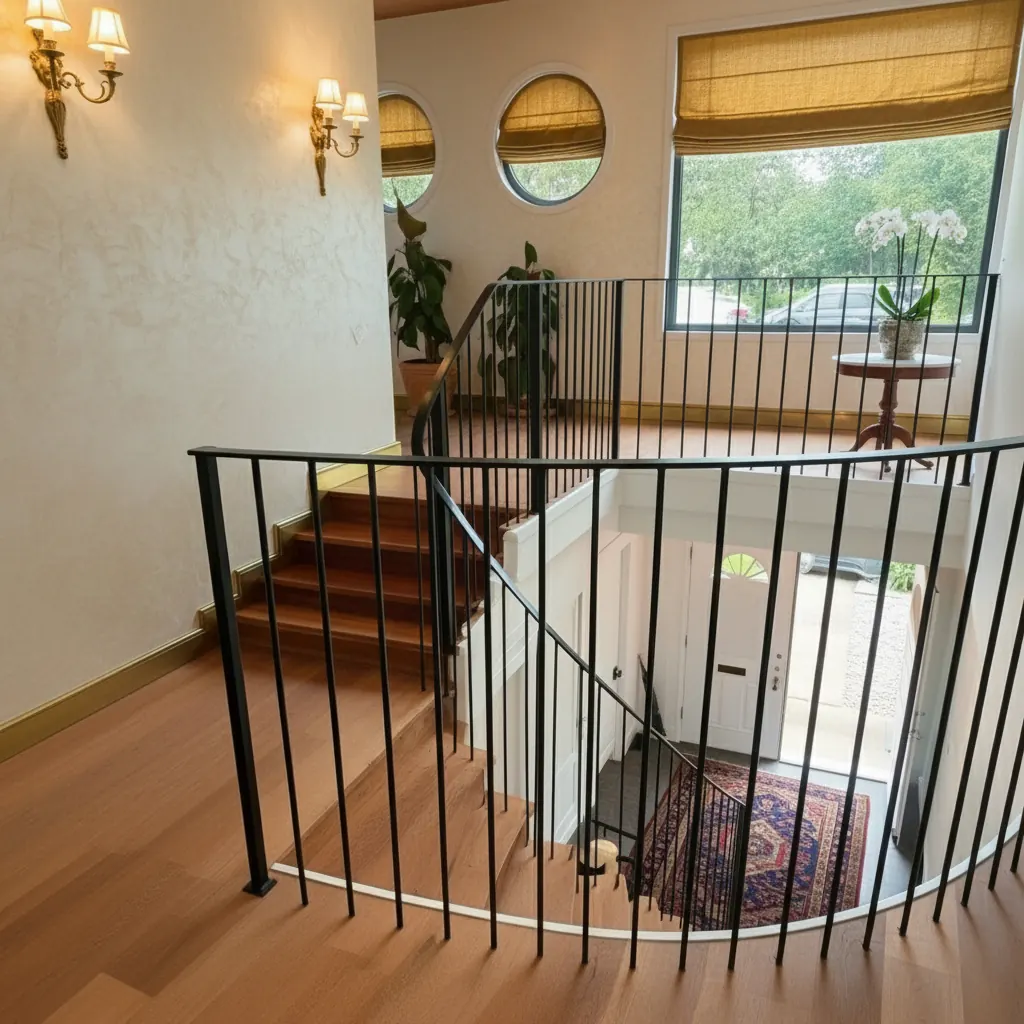
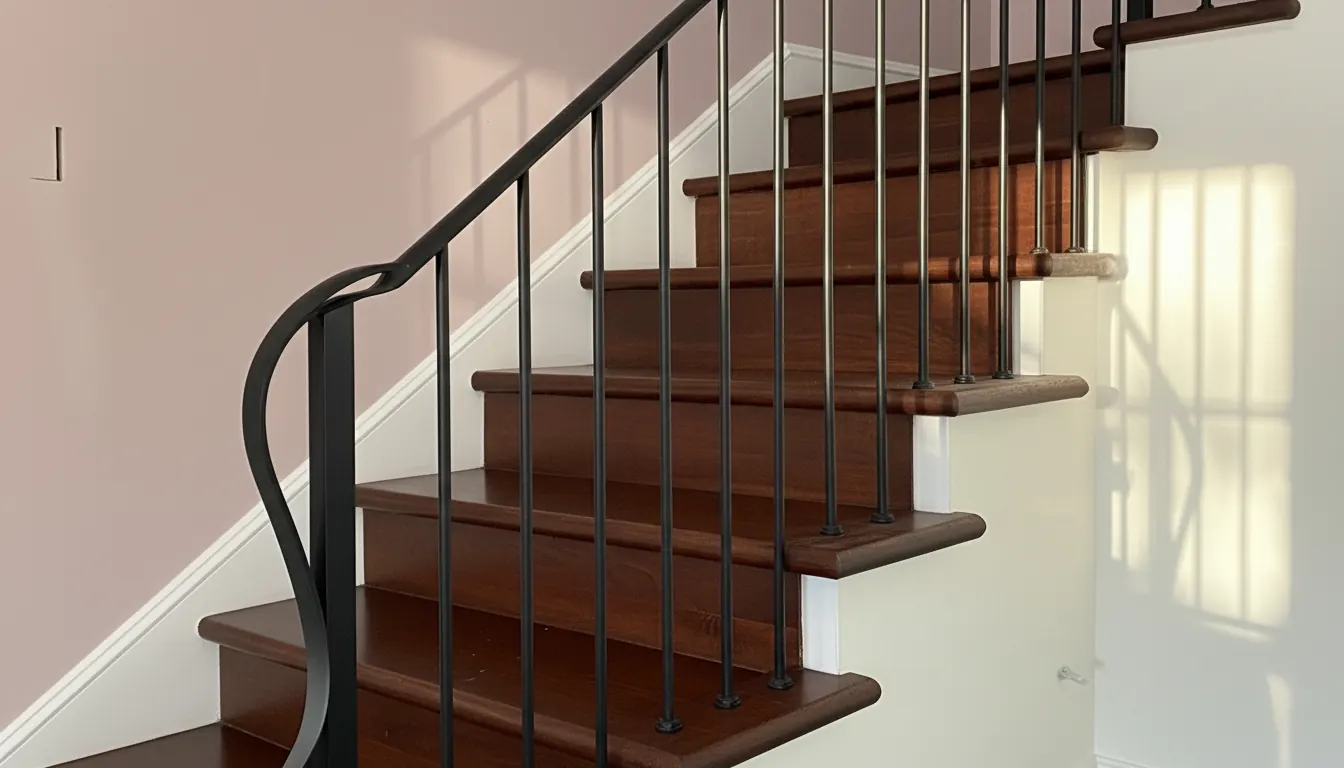
Curved stair and landing where rhythm and contrast mattered. Chosen direction: matte-black pickets with a clean top rail. Defines the opening, holds the line.
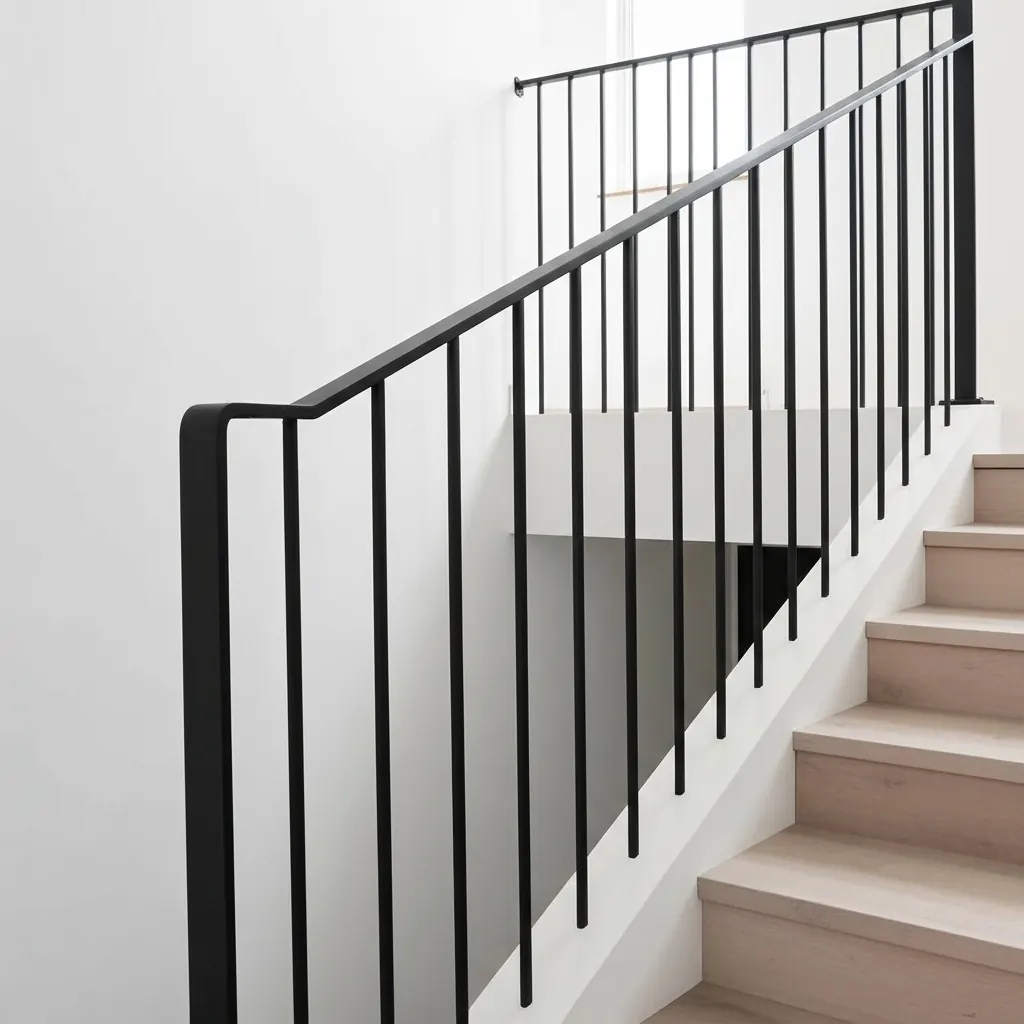
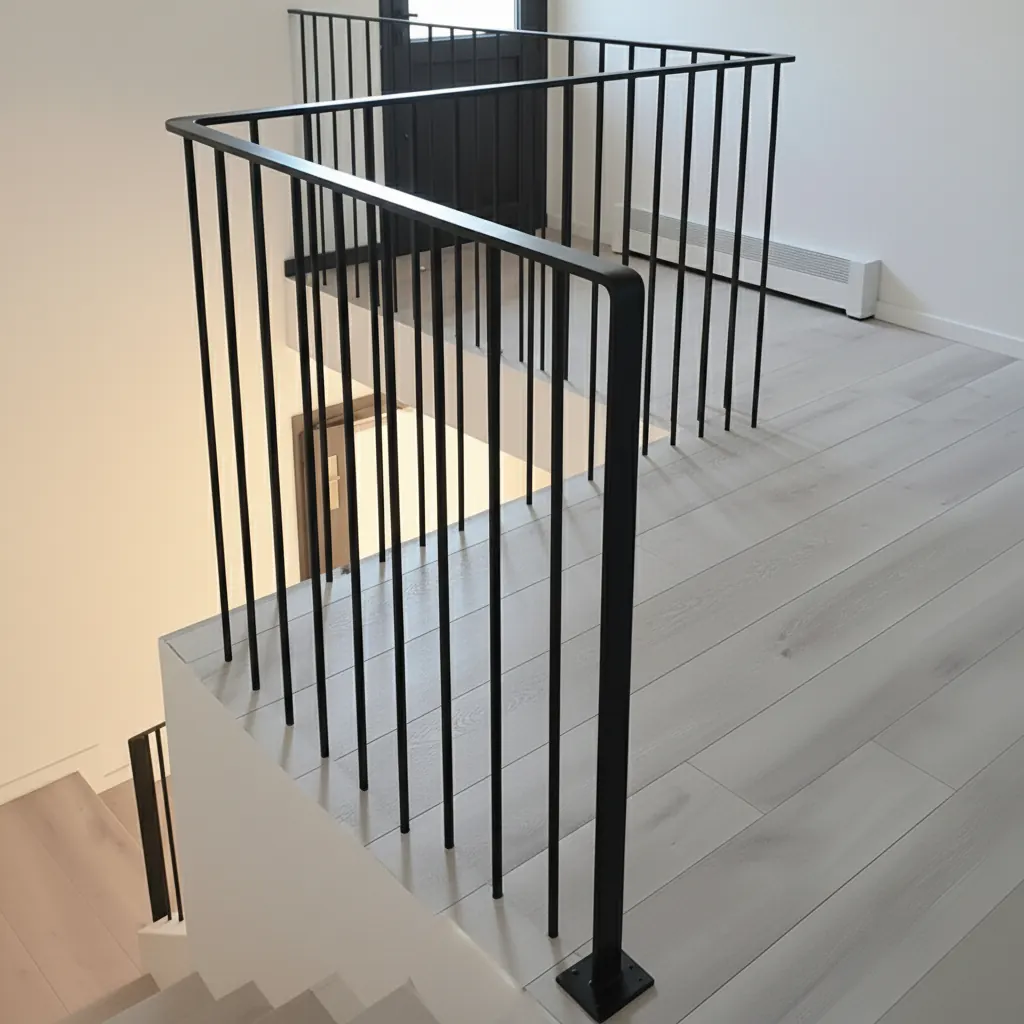
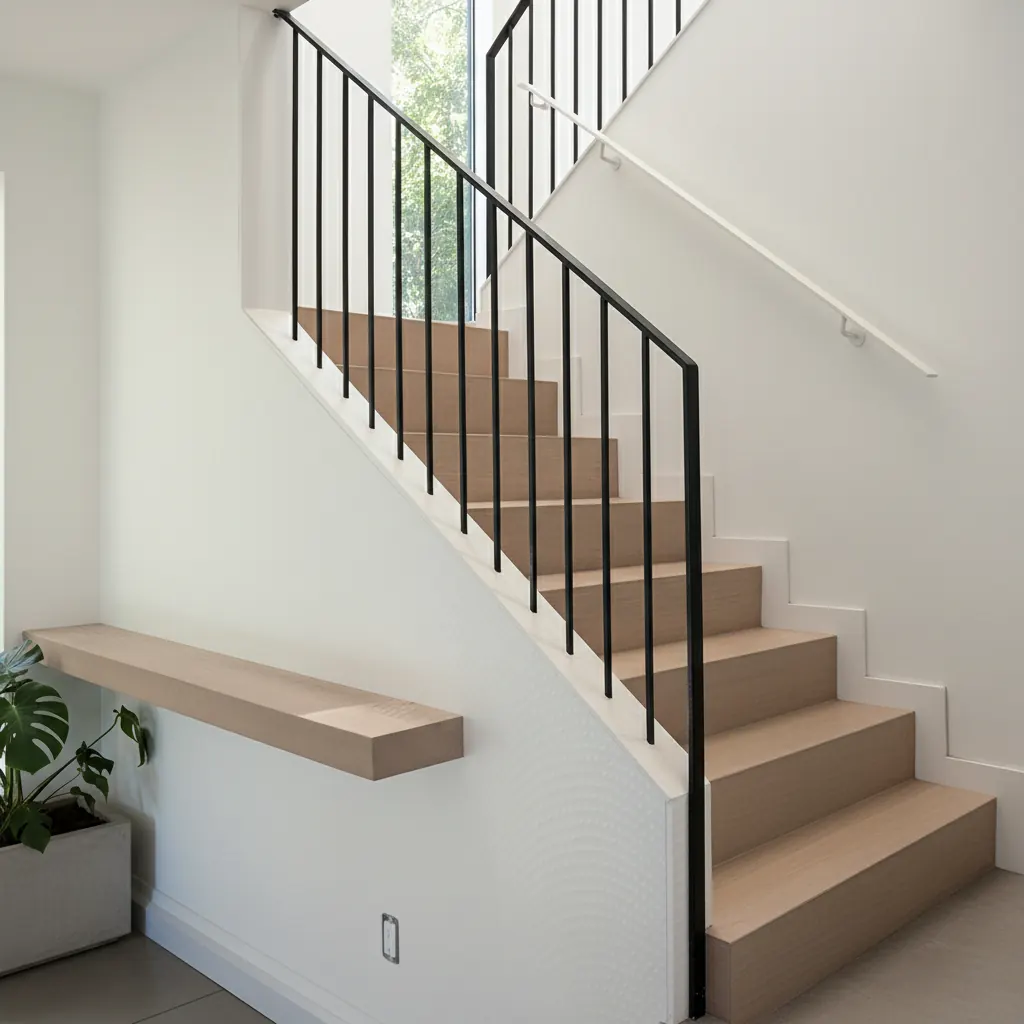
Straight-run stair where the railing was meant to be part of the design. Chosen direction: custom welded matte-black wrought-iron pickets, fascia-mounted along light wood treads — a quiet feature, not a decoration.
We treat your renovated home like a finished home. Drop cloths on every floor path. Shoe covers on the crew. Wall protection panels at any portable welding or grinding station. Daily cleanup and vacuum after each session. We photograph every finished surface near the work area before install starts. Most steel cutting happens at our Coquitlam shop.
Most fabrication happens in our shop. On site, the work is mainly anchoring, alignment, and finish — not heavy cutting. For strata projects we coordinate hours with building rules. A realistic noise window comes with the written direction.
Yes. We coordinate directly with designers, architects, GCs, flooring crews, and painters. If you're mid-renovation, we fit our install around the trades that come before and after.
The written direction is an honest design read, not a quote. Sit with it, share it with your designer, come back later. No follow-up pressure. The quote comes after you've decided to keep going.
The comprehensive 12-month warranty starts on the installation and handover date. LOUEI Metal Arts provides lifetime after-sales service. It covers breakage, weld repairs, cracks, paint or finish issues, screw and fastener issues, looseness, slack, noise, clouding or dulling, tearing, and detachment. Periodic maintenance is not required to keep the warranty valid. LOUEI Metal Arts covers the travel and inspection costs for warranty service. The warranty applies only to the person named on the invoice and is not transferable to a subsequent owner. Intentional damage is handled through lifetime after-sales service rather than the warranty.
It depends on how the railing should read in the space. Glass works when openness and light matter. Black metal or picket fits when the opening needs rhythm and contrast. Custom welded work suits homes where the railing should become a feature.
We treat finished homes carefully: drop cloths on floor paths, shoe covers on the crew, wall protection at welding or grinding stations, vacuum after every session, daily cleanup, and photo documentation of finished surface condition before work starts. Most cutting happens at our Coquitlam shop.
Yes. We coordinate directly on drawings, finish samples, and site walks, and fit our install around the other trades on mid-renovation projects.
Yes — CWB-certified welders, WorkSafeBC coverage, and commercial general liability. Insurance certificates available on request.
The comprehensive 12-month warranty starts on the installation and handover date. LOUEI Metal Arts provides lifetime after-sales service. It covers breakage, weld repairs, cracks, paint or finish issues, screw and fastener issues, looseness, slack, noise, clouding or dulling, tearing, and detachment. Periodic maintenance is not required to keep the warranty valid. LOUEI Metal Arts covers the travel and inspection costs for warranty service. The warranty applies only to the person named on the invoice and is not transferable to a subsequent owner. Intentional damage is handled through lifetime after-sales service rather than the warranty.
Interior guards and handrails are reviewed against the code that applies to the confirmed indoor condition. Requirements shift with the type of opening, fall height, occupancy, material, and the local authority having jurisdiction.
When required — open-to-below guards, non-standard openings, commercial conditions — P.Eng. sealed drawings are included in scope.
Confirmation usually lands within 24 hours, the written design read within 48. Replies stay in writing — a call only happens if you ask for one. No obligation.
Glass when the railing should disappear and let light and view carry the room. Black metal when the railing should frame the opening with clean contrast. A mix often works: glass guards with a black metal cap.
Most cutting, welding, and finishing happens at our Coquitlam shop. On-site work is mostly anchoring, alignment, and finish touch-up — keeping noise and dust off your home.
No. The first response is in writing. A call only happens if you ask for one.
No. LOUEI focuses on custom glass, metal, black steel, stainless details, picket, and fabricated interior railing systems — not wood supply or off-the-shelf kits.
You don't need to know the material. A few photos of the stair opening, landing, floor edge, walls, and main sightlines are enough.
What you get: written design direction within ~48 hours · no obligation · no sales pressure.
Trust signals
Coquitlam Shop · Finished-Surface Protection During Install
Serving Vancouver, North Vancouver, West Vancouver, Burnaby, Coquitlam, Port Moody, Port Coquitlam, New Westminster, Surrey, Langley, Richmond, Delta. See all service areas.
Primary-source code reference · checked September 24, 2026
These links go to governments, regulators and the original professional or certification bodies—not other railing businesses. Code text, older local bulletins and advisory guidance are labelled separately. This is an editorial source check, not a professional sign-off, product certification or approval of your project.
BC province versus the City of Vancouver
Use BCBC 2024 with its published amendments outside the City of Vancouver, and VBBL 2025 inside the city. Vancouver is not the same jurisdiction as North Vancouver or West Vancouver. Permit dates and transition rules matter. A newer national model code does not automatically replace the locally adopted edition.
Ordinary Part 9 guards; exceptions must be read with the clause
Articles 9.8.8.1, 9.8.8.3 and 9.8.8.5 cover when a guard is required, its height and openings. The usual trigger is a drop over 600 mm within 1.2 m of the walking surface. Default height is 1,070 mm; qualifying residential guards can use 900 mm, including certain exterior guards at no more than 1,800 mm above finished ground. The ordinary required-guard opening rule prevents a 100 mm sphere passing. Exactly 4 inches is 101.6 mm: metric limits control.
Part 9 general rules; Part 3 and accessible routes can differ
Required handrails are generally 865–1,070 mm high under 9.8.7.4, measured from the nosing line or ramp/landing surface. Part 9 requires continuous graspability, with 50 mm clearance behind the rail, or 60 mm at a rough/abrasive surface. The exemption for up to three exterior risers is limited to qualifying single-dwelling/house conditions, not every stair. Part 3 circular profiles are 30–50 mm under 3.4.6.5.(5); Part 9 uses an ergonomic graspability requirement, not a universal 30–43 mm rule.
Check the route classification before applying residential exceptions
Sections 9.8.2–9.8.6 address stair/ramp geometry and landings; 9.8.7 and 9.8.8 address handrails and guards. Part 3 articles 3.3.1.14 and 3.3.4.7 determine when exit rules or Part 9 dwelling rules apply. Accessible-path ramps use 3.8.3.5, not an unrestricted choice from the general ramp-slope table. A decorative railing must not reduce required exit width or obstruct a door swing.
Code accessibility and financial eligibility are different tests
Use Section 3.8 where an accessible path of travel is required; a general residential handrail exception does not automatically apply. BC RAHA eligibility is decided by BC Housing based on the applicant and adaptation. Do not promise a rebate solely because a handrail meets code. Check written approval and the current program rules before starting work, including any specifically accepted exception.
Read the applicable clause and its exceptions, referenced standards and amendments together. The municipal consolidated PDFs are convenience copies; enacted text controls. Proprietary standards are linked through their issuing authorities—we do not claim access to, or reproduce, paywalled standards. Explore the complete topic-by-topic official-source register.